
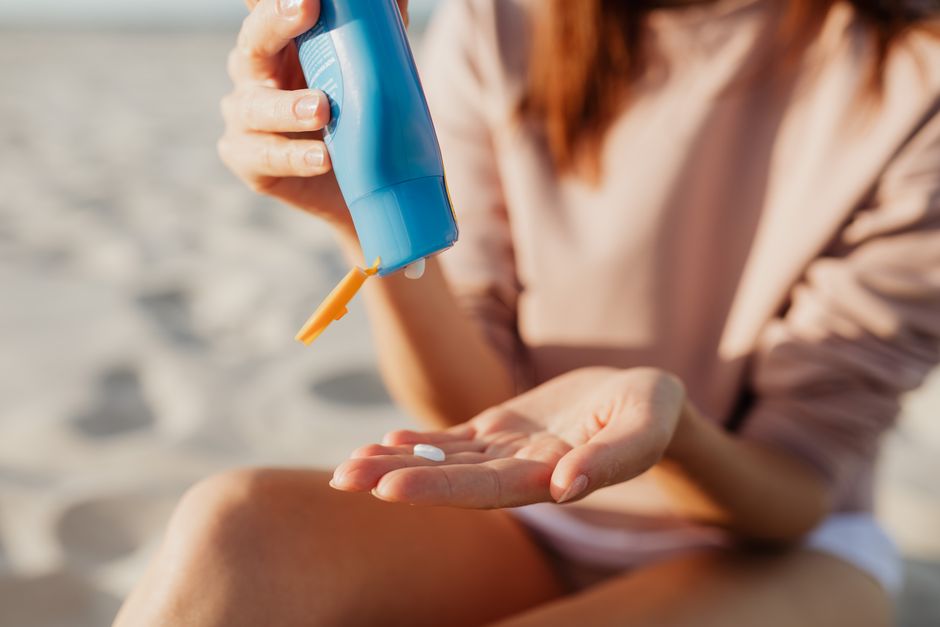
A good sunscreen protects your skin from ultraviolet (UV) damage with broad-spectrum coverage, an SPF of 30 or higher, and water resistance. It is a product you will actually use consistently, which means it needs to feel comfortable on your skin. The most effective sunscreen is the one you apply every day, even when it is cloudy.
What Does SPF Actually Mean?
SPF stands for Sun Protection Factor. It measures how well a sunscreen protects against UVB rays, the type that causes sunburn and contributes to skin cancer. SPF does not give you a simple number of minutes of protection. It tells you how much UV radiation it takes to burn your skin with the product compared to without it.
An SPF 30 sunscreen blocks about 97% of UVB rays. SPF 50 blocks about 98%. The jump from SPF 50 to SPF 100 is small in real-world protection. No sunscreen blocks 100% of UV rays. The FDA has proposed that SPF values above 60 be labeled as SPF 60+ because the extra protection is minimal.
Higher SPF numbers can give people a false sense of security. They may stay in the sun longer and skip reapplication. The result is more total UV exposure, not less.
Why Broad-Spectrum Protection Matters
Broad-spectrum sunscreen protects against both UVB and UVA rays. UVB rays burn the top layers of skin. UVA rays penetrate deeper and are linked to premature aging, wrinkles, and skin cancer. Both types damage skin DNA.
UVA rays are present all year round and can pass through clouds and window glass. They are consistent from sunrise to sunset, unlike UVB rays which are strongest at midday. A sunscreen labeled only with an SPF number may not protect you from UVA damage.
Look for the words “broad-spectrum” on the label. This means the product has been tested to provide balanced UVA and UVB protection. If the label does not say broad-spectrum, it likely only protects against UVB.
Mineral vs. Chemical Sunscreens: What Is The Difference?
There are two main types of sunscreen: mineral and chemical. They work differently on the skin.
Mineral sunscreens sit on top of the skin and reflect UV rays. The active ingredients are zinc oxide and titanium dioxide. They start working as soon as you apply them. Mineral formulas are less likely to irritate sensitive skin and are generally considered safe for coral reefs, though the evidence on reef impacts is still being studied.
Chemical sunscreens absorb UV rays and convert them into heat. The heat then releases from the skin. Common active ingredients include avobenzone, oxybenzone, octinoxate, and homosalate. These formulas tend to be thinner and easier to rub in without leaving a white cast.
Both types are effective when used correctly. The best choice depends on your skin type and preference. Some people find mineral sunscreens too thick or chalky. Others find chemical sunscreens irritating to their eyes or skin.
In 2019, the FDA proposed that mineral ingredients be classified as generally recognized as safe and effective. The same proposal noted that more safety data is needed for several chemical filters. This does not mean chemical sunscreens are dangerous. It means the FDA wants more research on how much of these ingredients absorb into the bloodstream and what that means for long-term health.
What Is A Good Sunscreen for Your Skin Type?
Skin type matters when choosing a sunscreen because comfort drives consistency. If you hate how a sunscreen feels, you will not wear it.
For oily or acne-prone skin, look for gel or fluid formulas that say “non-comedogenic” or “oil-free.” These are less likely to clog pores. Chemical sunscreens often work well here because they are lighter.
For dry skin, cream or lotion formulas with hydrating ingredients like glycerin or hyaluronic acid can help. Mineral sunscreens with a creamy base can double as a moisturizer in the morning.
For sensitive skin, mineral sunscreens with zinc oxide or titanium dioxide are usually the safest starting point. They sit on the surface and are less likely to trigger a reaction. Look for fragrance-free formulas. Fragrance is a common source of irritation, even in products labeled for sensitive skin.
For skin of color, a white cast is a common complaint with mineral sunscreens. Many brands now make tinted mineral formulas that blend into deeper skin tones. Chemical sunscreens generally disappear without a trace and are a good option here.
How Much Sunscreen Should You Use?
Most people apply far too little sunscreen. The standard recommendation is about 2 milligrams of product per square centimeter of skin. In practical terms, this means a full shot glass (about 1.5 ounces) to cover your entire body.
For your face alone, you need about half a teaspoon. That is roughly the length of two fingers squeezed from a tube. Most people apply a quarter of this amount.
Applying too little sunscreen drops the actual SPF you get. If you apply half the recommended amount of an SPF 50 sunscreen, you get closer to SPF 25. The math is not linear, but the principle is clear: thin application means less protection.
How Often Should You Reapply Sunscreen?
Reapply sunscreen every two hours. Reapply more often if you are swimming, sweating, or towel drying. Even water-resistant sunscreens lose effectiveness after about 40 to 80 minutes in the water, depending on the label.
No sunscreen lasts all day. UV filters break down in sunlight, and sweat and friction remove them from your skin. The two-hour rule applies even if you are indoors near a window or in a car, because UVA rays pass through glass.
If you wear makeup, reapplication is tricky. Options include sunscreen powders, setting sprays with SPF, or cushion compacts with sunscreen. These are generally thinner and provide less protection than a dedicated sunscreen, but they are better than nothing.
Is Sunscreen Safe for Daily Use?
Yes. The benefits of daily sunscreen use clearly outweigh the risks for most people. Skin cancer is one of the most common cancers in the United States, and UV exposure is the leading preventable cause.
Some concerns have been raised about chemical sunscreen ingredients entering the bloodstream. FDA studies have shown that certain chemical filters can be absorbed at levels above the threshold that triggers additional safety testing. This does not mean these ingredients are harmful. It means more research is needed.
Mineral sunscreens with zinc oxide and titanium dioxide are not absorbed into the skin to any significant degree. They are the safest choice for people who want to avoid chemical absorption entirely. For everyone else, the evidence does not currently show that chemical sunscreens cause harm when used as directed.
What About Spray Sunscreens?
Spray sunscreens are convenient but easy to apply unevenly. Wind can blow the product away before it lands on your skin. It is hard to tell if you have covered every area.
If you use a spray, apply it until your skin glistens, then rub it in with your hands. Never spray directly onto your face. Spray into your hands first and then apply to your face. This prevents inhaling the product and keeps it out of your eyes.
Sprays can be flammable while the alcohol-based propellant is still wet. Let the product dry completely before going near an open flame or grill.
Does Sunscreen Expire?
Yes. Sunscreen has a shelf life of about three years from the date of manufacture. Check the expiration date on the bottle. If there is no date, write the purchase date on the bottle with a marker.
Heat and sunlight degrade sunscreen over time. Do not leave your bottle in a hot car or on the beach in direct sun. Store it in a cool, shaded place when you are not using it.
If your sunscreen has changed color, consistency, or smell, throw it out. Expired sunscreen does not provide the labeled level of protection.
Do You Need Sunscreen on Cloudy Days?
Yes. Up to 80% of UV rays can pass through clouds. A cloudy day can feel cool and dim, but your skin is still receiving UV exposure. The same applies to winter. Snow reflects up to 80% of UV rays, which is why skiers get sunburned so easily.
UV rays also reflect off water, sand, and concrete. This means you can get sunburned in the shade if you are near a reflective surface. Daily sunscreen use removes the guesswork.
Frequently Asked Questions
What SPF should I use every day?
Use SPF 30 or higher for daily wear. SPF 30 blocks about 97% of UVB rays, which is sufficient for most people in most situations.
Is mineral sunscreen better than chemical sunscreen?
Neither is categorically better. Mineral sunscreens are less likely to irritate sensitive skin, while chemical sunscreens are often more cosmetically elegant and easier to wear under makeup.
Can I skip sunscreen if I am indoors all day?
No. UVA rays pass through window glass and can cause skin damage and premature aging. If you sit near a window, you need sunscreen.
Does sunscreen prevent skin cancer?
Yes. Regular sunscreen use reduces the risk of squamous cell carcinoma and melanoma, the most dangerous form of skin cancer. Research consistently supports this protective effect.
