
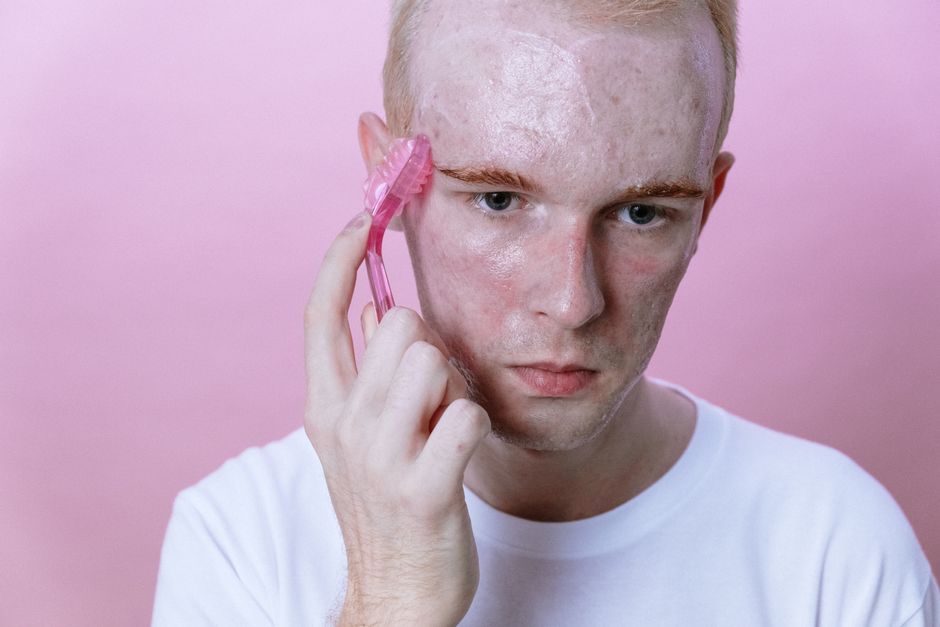
Acne is not one condition, and it does not respond to one treatment. The right approach depends on your skin type, the type of acne you have, and how your skin reacts to ingredients. Oily skin with blackheads responds to different treatments than dry, sensitive skin with red bumps. Matching treatment to skin type is the difference between clearing up and making things worse.
What Is A Good Acne Treatment For Your Skin Type?
There is no single best acne treatment. The most effective choice depends on whether your skin is oily, dry, combination, or sensitive, and on what kind of acne you have. Dermatologists generally match active ingredients to skin type because the same ingredient that helps oily skin can irritate dry skin.
Acne forms when hair follicles get blocked by oil and dead skin cells. Bacteria called Cutibacterium acnes can multiply in blocked follicles, and the immune system responds with redness and swelling. Hormones drive oil production, which is why acne often starts in the teen years and can flare around menstrual cycles or during times of hormonal change.
Treatment works by targeting one or more of these steps. Some ingredients reduce oil. Some speed up skin cell turnover so follicles do not clog. Some kill bacteria. Some calm inflammation. The trick is picking the ones that fit your skin without stripping it.
How Do You Know Your Skin Type?
Skin type is largely determined by how much oil your sebaceous glands produce and how well your skin barrier holds moisture. You can get a reasonable idea by washing your face, waiting an hour without applying anything, and noticing how your skin feels and looks.
- Oily: Shiny across most of the face, visible pores, makeup slides off within hours.
- Dry: Feels tight or rough, may flake, looks dull, rarely shiny.
- Combination: Oily in the T-zone (forehead, nose, chin) but normal or dry on the cheeks.
- Sensitive: Stings, burns, or turns red easily in response to products, heat, or friction.
Sensitive skin is not technically a “type” in the same way oily or dry is. It is a reactivity pattern that can overlap with any skin type. That matters because sensitive skin usually needs fewer active ingredients, introduced more slowly.
What Works Best for Oily Skin?
Oily skin tolerates stronger active ingredients better than dry skin. Salicylic acid is a common starting point. It is a beta-hydroxy acid that dissolves oil inside the pore and helps unclog follicles. It is available over the counter in cleansers, toners, and spot treatments.
Benzoyl peroxide is another well-established option. It reduces C. acnes bacteria and helps clear inflammatory acne. It can dry the skin, so it is usually started at a lower concentration and applied to the whole affected area rather than just single spots. Some people find it bleaches towels and pillowcases, which is worth knowing before you start.
Niacinamide is often included in products for oily skin. Some studies suggest it can reduce oil production and calm inflammation, though results vary and it is not as strong as prescription options.
For oily skin with moderate to severe acne, prescription treatments such as topical retinoids, oral antibiotics, or isotretinoin may be needed. These require a doctor’s involvement.



What Works Best for Dry Skin?
Dry skin needs acne treatments that do not strip the barrier further. Benzoyl peroxide and salicylic acid can both be too drying at full strength. Lower concentrations, less frequent use, and pairing with a moisturizer usually help.
Adapalene is a topical retinoid available over the counter in some countries. It helps prevent clogged pores and is generally better tolerated than older retinoids, though it can still cause dryness and peeling in the first few weeks. Starting with a pea-sized amount two or three nights a week and building up is common practice.
Hyaluronic acid and ceramide-containing moisturizers do not treat acne directly, but they support the skin barrier so active ingredients are less likely to cause irritation. A damaged barrier can make acne look worse, so moisturizing is not optional for dry skin.
What Works Best for Combination Skin?
Combination skin is the most common pattern and often the trickiest to treat. The T-zone may need oil control while the cheeks need moisture. Using one strong product across the whole face often backfires.
A practical approach is to treat different areas differently. A salicylic acid cleanser on the T-zone, a gentle cleanser on the cheeks, and a light moisturizer everywhere. Spot treatments can be applied only where needed.
Adapalene or another retinoid applied to the whole face at night can help prevent new breakouts in both zones, as long as it is introduced slowly and buffered with moisturizer if needed.
What Works Best for Sensitive Skin?
Sensitive skin needs the fewest ingredients and the slowest introduction. Strong actives can trigger redness, stinging, and peeling that look like a worsening breakout but are actually irritation.
Azelaic acid is often recommended for sensitive skin. It has both antibacterial and anti-inflammatory effects and tends to be gentler than benzoyl peroxide or retinoids. Some people still experience tingling in the first week.
Niacinamide at low concentrations is usually well tolerated and may help with redness. Fragrance-free, alcohol-free products are generally preferred. Physical sunscreens with zinc oxide or titanium dioxide are often better tolerated than chemical sunscreens on reactive skin.
If sensitive skin does not improve with gentle over-the-counter options, a dermatologist can assess whether the issue is acne, rosacea, or another condition that looks similar. This distinction matters because treatments differ.
When Should You See a Dermatologist?
See a dermatologist if acne is moderate to severe, causes scarring, or does not improve after about two to three months of consistent over-the-counter treatment. Also see one if acne is accompanied by dark hair growth, irregular periods, or other signs that might point to a hormonal cause such as polycystic ovary syndrome.
Prescription options include stronger topical retinoids, topical antibiotics, oral antibiotics, hormonal treatments for women, and isotretinoin for severe cases. Isotretinoin is highly effective but requires monitoring because of side effects, including serious risks in pregnancy. It is not used in pregnancy, and pregnancy prevention is required during treatment.
Scarring is the main reason not to delay. Once acne scars form, treating them is harder than treating the acne itself.
What About Diet and Lifestyle?
Diet plays a smaller role than many people assume, but it is not zero. Some research suggests that high-glycemic diets and possibly dairy may worsen acne in some people. The evidence is not strong enough to say these cause acne in everyone, and cutting out entire food groups is not usually necessary.
What does matter is consistency. Acne treatments take weeks to show results. Skipping days, layering too many actives at once, or switching products every week makes it hard to know what is working.
Picking at acne increases the risk of scarring and infection. So does scrubbing the skin hard. Gentle cleansing twice a day and keeping hands off the face are basic but genuinely helpful.
How Long Until You See Results?
Most acne treatments take four to eight weeks to show clear improvement, and some take up to twelve weeks. Retinoids often cause a temporary worsening in the first few weeks before skin improves. This is expected and not a reason to stop, though it is worth knowing in advance.
If there is no improvement at all after three months of correct use, the treatment is probably not the right fit. That is a signal to try something different, not to give up on treatment altogether.
Frequently Asked Questions
Can I use more than one acne treatment at the same time?
Yes, but layering multiple strong actives increases the risk of irritation. A common approach is one active in the morning and a different one at night, introduced one at a time.
Does toothpaste work on pimples?
No. Toothpaste is not an acne treatment and can irritate or burn the skin. It should not be used on pimples.
Is acne caused by not washing your face enough?
No. Acne is driven mainly by hormones, oil production, and blocked follicles. Overwashing can actually irritate skin and make acne worse.
Can acne come back after it clears?
Yes. Acne can return, especially with hormonal changes or if treatment is stopped. Ongoing maintenance with a gentle routine often helps prevent flares.
