
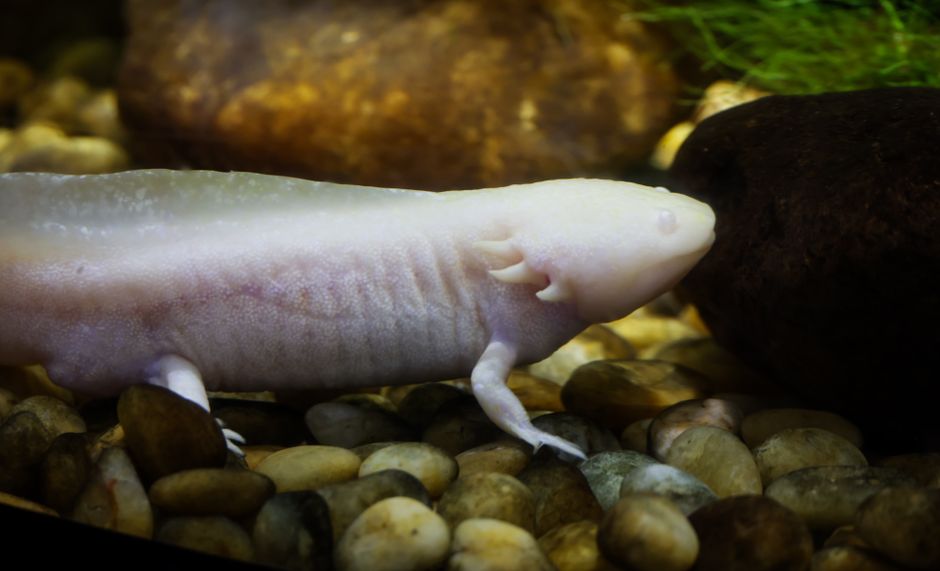
A GFP axolotl is an axolotl that carries a gene for green fluorescent protein, originally taken from a jellyfish. The gene makes the animal glow green under certain kinds of light. Scientists use it as a visual marker, not as a pet feature. It is a laboratory tool that has since spread into the pet trade, which is where most people now encounter it.
The axolotl itself is a real and unusual animal. It is a salamander that stays in its larval form for life, keeps its feathery external gills, and can regrow lost limbs. Adding a fluorescent marker to that animal created one of the most recognizable lab organisms in modern biology. Here is what the glowing gene actually is, how it works, and what it does and does not mean for the animal.
What Is A Gfp Axolotl The Glowing Gene Explained?
GFP stands for green fluorescent protein. It is a protein first isolated from a jellyfish, Aequorea victoria, and it has one useful property: when blue or ultraviolet light hits it, it absorbs that energy and re-emits it as green light. The animal does not produce light on its own the way a firefly does. It glows only when the right light shines on it. That distinction matters, and it is the single most misunderstood part of how these animals work.
The gene that codes for GFP is inserted into the axolotl’s DNA. Once it is there, the animal’s own cells read that gene and build the protein, the same way they build any other protein. Because the gene is in the animal’s genome, the protein shows up throughout the body, and the animal passes the gene to its offspring.
How the glow actually works
Fluorescence is not the same as bioluminescence. Bioluminescence is a chemical reaction that produces light, and it happens in the dark. Fluorescence is absorption and re-emission, and it needs an external light source. A GFP axolotl in a normal tank under normal room light looks like an ordinary pale axolotl. Shine a blue or UV light on it in a dark room and the green signal appears.
This is why the glow is described as a reporter. The protein reports where the gene is active and where it is not. In research, that lets scientists track cells, tissues, or transplanted organs in a living animal without cutting it open.
Why Do Scientists Put GFP in Axolotls?
The axolotl’s main scientific value is its ability to regenerate. It can regrow limbs, parts of its heart, and sections of its spinal cord. Researchers want to understand how that works, partly because the answers might inform human wound repair and regenerative medicine.
GFP makes that research easier to watch. If a scientist labels a group of cells with GFP and then amputates a limb, the glowing cells can be followed as the new limb forms. The marker shows which cells contribute to the regrowth and which do not. Without a visible tag, tracking individual cells in a living, moving animal is far harder.
The axolotl genome is large and complex, and it has been sequenced, which made it a more practical model organism. The fluorescent marker is one tool in that toolkit, not the point of the research.
Are GFP Axolotls Real Pets or Only Lab Animals?
Both. GFP axolotls were created for research, and fluorescent axolotls have since become available in the pet trade. This is where honesty is needed. The glowing trait was not bred for beauty or health. It was a laboratory marker that got carried into commercial breeding.
If you are considering one, understand what you are buying. The glow is a genetic modification, and the animal behind it has the same care needs as any axolotl. It needs cold, clean water, a proper tank cycle, and a diet of worms and other suitable prey. The fluorescence does not make it easier or harder to keep. It is cosmetic.
One practical point: many axolotl owners never see the glow at all. It requires a specific light setup, and ordinary aquarium lighting will not trigger it visibly. If a seller promises a tank that glows on its own, that is not how fluorescence works.
Does the Glowing Gene Harm the Axolotl?
The evidence on welfare is limited, and that should be stated plainly. GFP itself is generally considered biologically inert in the animals where it has been studied. It is a small protein that does not appear to interfere with normal cell function in a major way. That is why it became such a widely used marker.
But “the protein is inert” is not the same as “the animal is unaffected.” Inserting a gene can disrupt other genes depending on where it lands, and creating a modified line involves procedures that carry their own risks. Published research on the long-term health and lifespan of GFP axolotls specifically is sparse. No large studies have compared the health outcomes of fluorescent and non-fluorescent axolotls over a full lifespan.
So the honest position is this: there is no evidence of a serious health problem tied to GFP in axolotls, and there is also no strong body of evidence confirming long-term safety. Anyone who tells you either extreme with total confidence is going beyond what has been shown.
How Is the Gene Put Into an Axolotl?
In research settings, the gene is introduced at the embryo stage. The most common approach uses a piece of DNA that carries the GFP gene along with a promoter, which is a genetic switch that tells cells when and where to turn the gene on. The DNA is delivered into a fertilized egg or early embryo, and as the embryo divides, the gene becomes part of the animal’s cells.
Getting a stable line takes more work. Only embryos that incorporate the gene into the cells that become eggs or sperm will pass it on. Researchers screen for those animals and breed them over generations to establish a line that reliably carries the marker.
There is a common mix-up worth clearing up. Some fluorescent animals in the pet trade, including certain fish, are marketed under names that suggest they glow in the dark. They do not. The same is true here. Fluorescence needs light. If a seller claims an animal glows without any light source, that claim is not accurate for GFP animals.
What Colors Do GFP Axolotls Come In?
The original GFP is green. Over time, scientists developed related fluorescent proteins in other colors, including red, orange, yellow, and cyan, by modifying the original jellyfish protein or using proteins from corals and other organisms. Some of these variants have been used in axolotl research.
The axolotl’s own skin color also matters. Axolotls come in several natural color types, and the fluorescent signal shows up differently against different backgrounds. A pale or albino axolotl will look different under blue light than a dark one. The green signal is the marker; the animal’s base color is separate.
What Should You Know Before Getting One?
Axolotls are not beginner pets, and that is true whether or not they carry GFP. They are fully aquatic, they need cool water, and they are sensitive to poor water quality. They also live a long time, so this is a long commitment, not a novelty purchase.
- They need cold water, and warm tanks are a common cause of illness.
- They need a properly cycled tank, because ammonia and nitrite are dangerous to them.
- They are carnivores and need a suitable diet, not general fish food.
- Their legal status varies by state and country, so check local rules before buying.
The fluorescence is the least important part of their care. If the glow is the main reason you want one, the animal will still need everything else on that list. A GFP axolotl is an axolotl first.
Frequently Asked Questions
Do GFP axolotls glow in the dark?
No. GFP is fluorescent, not bioluminescent, so it only glows when a suitable blue or UV light shines on it. In the dark with no light source, it looks like any other axolotl.
Is a GFP axolotl genetically modified?
Yes. The green fluorescent protein gene is inserted into the animal’s DNA, so it is a genetically modified organism. The gene is passed to offspring.
Are GFP axolotls safe to keep as pets?
The evidence on long-term health effects is limited, and no large studies have compared their lifespan to non-fluorescent axolotls. Their basic care needs are the same as any axolotl.
What does GFP stand for in axolotls?
Green fluorescent protein. It is a protein originally found in jellyfish that emits green light when exposed to blue or ultraviolet light.
