
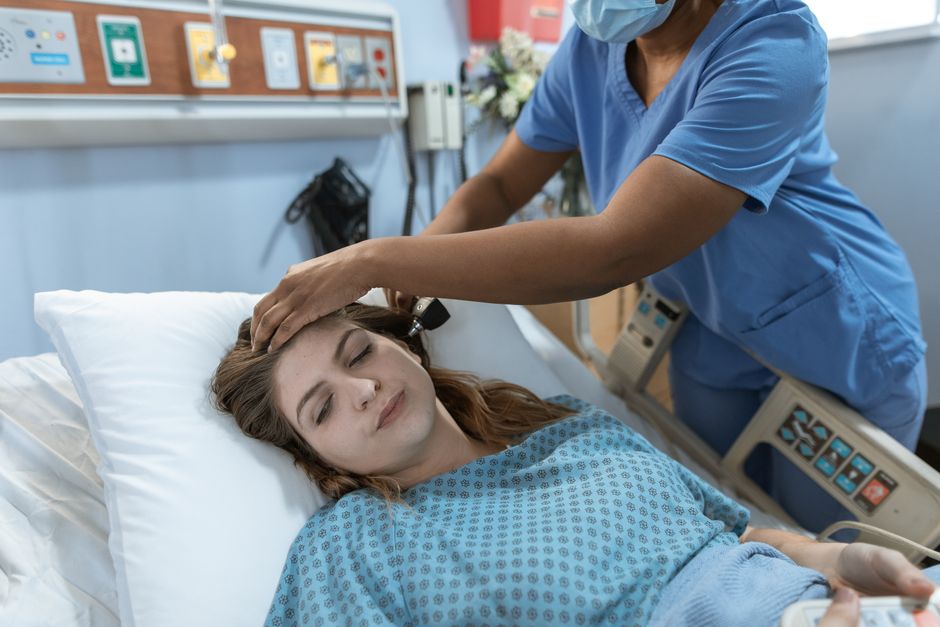
Most people have heard of a doula. Fewer have heard the term “doula nurse,” which blends two roles that are actually quite different. A doula nurse is a registered nurse who also provides doula-style support — continuous emotional, physical, and informational care during labor and birth — alongside their clinical duties. The term is not a formal certification, and no single credential defines it. What matters is understanding what each role does, where they overlap, and what the evidence actually shows about how this kind of support affects birth.
What Is A Doula Nurse And How Do They Support Birth?
A doula nurse combines two skill sets: the clinical training of a registered nurse and the continuous, non-clinical support a doula provides. In practice, this usually means a labor and delivery nurse who stays with a laboring person through contractions, offers comfort measures, explains what is happening, and advocates for their preferences — in addition to monitoring vital signs, administering medications, and communicating with the physician or midwife.
The distinction matters because the two roles are governed differently. Nursing is a licensed profession with defined scope of practice, state regulation, and clinical accountability. Doula work is largely unlicensed and varies widely in training and certification. There is no nationally recognized “doula nurse” credential in the United States. When you see the term, it describes a person who holds both kinds of training, not a protected title.
This is a non-obvious point worth stating clearly: in most US hospitals, a labor and delivery nurse already provides some doula-like support. What separates a dedicated doula — nurse or not — is continuity. A hospital nurse typically cares for more than one patient at a time and may change shifts mid-labor. A doula’s defining feature is staying with one person continuously.
How Is A Doula Nurse Different From A Regular Doula?
A regular doula provides support without clinical responsibilities. A doula nurse can do both — but the clinical role usually takes priority in a hospital setting, because that is what the license and the employer require. This is the central tension in the combined role.
A traditional doula does not perform medical tasks. They do not check cervical dilation, monitor fetal heart tones, administer medication, or interpret test results. Their work is comfort and advocacy: positioning, breathing support, massage, reassurance, and helping a birthing person understand their options. Most doula certifications explicitly separate this role from clinical care to avoid conflicts of interest.
A doula nurse, by contrast, is bound by nursing protocols. If they are employed by the hospital, their first duty is to the institution and to safe clinical care. That can create a genuine conflict when a patient’s preferences differ from hospital policy. Some doula nurses work independently and are hired directly by families, which reduces that conflict but does not eliminate it — they still cannot exceed their nursing scope or practice outside their license.
Some families hire both: a hospital nurse for clinical care and an independent doula for continuous support. That arrangement keeps the roles clean.
What Does The Evidence Say About Continuous Labor Support?
The strongest evidence in this field is about continuous support during labor — not specifically about doula nurses. Research consistently shows that people who receive continuous support during labor are somewhat less likely to use pain medication, less likely to report negative feelings about their birth experience, and more likely to have a spontaneous vaginal birth. These findings come largely from a well-known systematic review of randomized trials of continuous labor support, updated over the years, and the direction of the effect has been stable.
The details matter. The benefits are clearest when the support comes from someone who is not a hospital employee and who is present continuously. In trials where the support person was a member of staff, the effects were smaller or absent. That is a meaningful caveat for anyone assuming that a doula nurse employed by the hospital automatically delivers the same benefits as an independent doula.
What the evidence does not show: continuous support does not appear to reduce cesarean rates in a dramatic way across all settings, and it is not a treatment for any medical condition. It improves the experience of labor and modestly shifts some outcomes. It is not a substitute for clinical care, and no responsible source claims it prevents complications.
One clarification worth making: much of this research predates the modern obstetric environment and varies by hospital, population, and culture. The general direction is reliable; specific numbers should be treated with caution.
What Does A Doula Nurse Actually Do During Labor?
The work is a mix of clinical monitoring and hands-on support, and the balance shifts as labor progresses. In early labor, a doula nurse might help with positioning, walking, hydration, and explaining what to expect. As labor intensifies, the clinical tasks — checking vital signs, monitoring contractions and fetal heart rate, coordinating with the care team — take more of their attention.
Support tasks commonly include:
- Coaching breathing and relaxation through contractions
- Suggesting positions that may ease discomfort or help labor progress
- Applying counterpressure or massage
- Explaining procedures, medications, and options in plain language
- Helping the person communicate preferences to the medical team
- Supporting a partner so they can participate without feeling lost
Clinical tasks depend on the setting and the nurse’s assignment. In a hospital, that means following orders, documenting care, and escalating concerns. In a birth center or home setting, the scope may look different and is governed by state law and the supervising provider.
The emotional dimension is real but hard to measure. Many people describe continuous support as the difference between feeling alone in a room full of people and feeling accompanied. That is a legitimate outcome even when it does not show up in a complication rate.
Are There Risks Or Limitations To The Doula Nurse Role?
The main limitation is structural, not medical. A nurse employed by a hospital answers to that hospital. If a patient wants something the facility does not routinely offer — delayed cord clamping beyond policy, a specific position, declined interventions — the nurse may be constrained in ways an independent doula is not. This is a conflict of role, not a failure of the individual.
Staffing is the second issue. Hospital nurses are frequently assigned multiple patients. Continuous support requires being in the room, and a nurse covering several laboring patients cannot provide it consistently. The “doula” part of the job often gets squeezed by the clinical part.
There is also the question of training standards. Because “doula nurse” is not a regulated title, the quality and depth of doula-specific training varies. Some nurses complete formal doula certification; others use the term loosely. Families should ask directly what training and certification a person holds, and whether they are being hired independently or assigned by the hospital.
None of this means the role is unsafe. It means the label tells you less than it seems to. Ask about the specifics.
How Do You Decide Whether To Hire One?
The decision usually comes down to what kind of support you want and where you are giving birth. If you want a clinician who can also provide comfort and advocacy, a doula nurse hired independently may fit. If you want someone whose only job is to stay with you and support your preferences, an independent doula without nursing duties may serve that goal more cleanly.
Questions worth asking before hiring anyone:
- What certification or training do you hold, and from which organization?
- Are you employed by the hospital or hired by me directly?
- How do you handle a conflict between my preferences and hospital policy?
- Will you stay continuously through labor, including shift changes?
- What is your backup plan if you cannot attend?
Cost and insurance coverage vary. Some insurance plans and Medicaid programs in certain states have expanded doula coverage, but availability is uneven and changes over time. Check with your plan directly rather than assuming.
There is no single right answer. The evidence supports continuous support during labor as a reasonable choice for many people. Whether that support comes from a nurse, a doula, or a trained partner is a personal decision that should rest on clear information about what each person will and will not do.
Frequently Asked Questions
Is a doula nurse the same as a labor and delivery nurse?
Not exactly. A labor and delivery nurse provides clinical care, while a doula nurse adds continuous emotional and physical support on top of that clinical role. Many hospital nurses already offer some of this support, but staffing often limits how continuous it can be.
Does having a doula reduce the chance of a cesarean section?
Research on continuous labor support shows modest improvements in some outcomes, but a dramatic reduction in cesarean rates is not consistently demonstrated across settings. Benefits appear strongest when the support person is not a hospital employee and is present continuously.
Do I need a doula if I already have a supportive partner?
Not necessarily. A trained support person can help a partner participate more effectively, but many people do well with an engaged partner and a good clinical team. The value of a doula is continuous, experienced support, which some families want and others do not.
Is doula support covered by insurance?
Coverage varies by plan and state, and some Medicaid programs have expanded doula benefits in recent years. Check directly with your insurer, since availability is uneven and policies change.
