
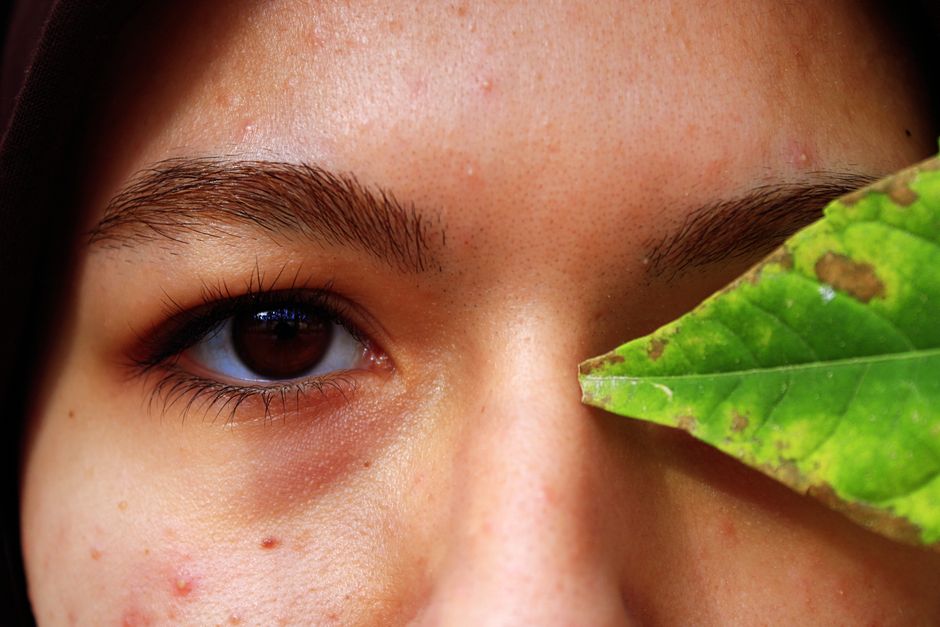
A double eyelid is a crease in the upper eyelid that creates a visible fold when the eye is open. People often call it a “double” eyelid because the skin appears in two sections — the part below the crease and the part above it. An eyelid without this crease is called a single eyelid, or monolids.
The difference is anatomical, not a sign of health or beauty. It comes down to how the skin of the upper lid connects to the muscle underneath. Both types are normal human variation, and both are common around the world.
What Is A Double Eyelid and How Does It Form?
The crease forms because of a connection between the skin of the upper eyelid and the muscle that lifts it, called the levator palpebrae superioris. In a double eyelid, small fibers of connective tissue anchor the skin to this muscle or to the tissue just beneath it. When the muscle contracts to open the eye, it pulls that anchored skin inward, and a fold appears.
In a single eyelid, that anchoring is weak or absent. The skin sits more loosely over the muscle, so it drapes down without folding back. There may also be more fat in the upper lid area, which can make the lid look fuller.
This is why the crease is not simply “extra skin.” It reflects an actual structural difference in how tissue layers connect. Surgeons who perform eyelid surgery rely on this anatomy when they create a crease.
Why Do Some People Have Double Eyelids and Others Don’t?
Eyelid shape is largely inherited. It is a physical trait, like dimples or earlobes, and it is influenced by many genes rather than a single one. That means parents with one eyelid type can have children with the other.
Double eyelids are common in people of European, African, and South Asian descent. Single eyelids are especially common in people of East Asian descent, though plenty of East Asian people have double eyelids too. Neither pattern is universal within any group.
Age changes the picture. Some children are born with a single eyelid and develop a crease as they grow, because the tissue in the lid changes with development. In other people, a crease that was always there can become less defined over time as skin loses elasticity. These shifts are normal.
Is Having a Double Eyelid a Health Issue?
No. Eyelid crease type is a cosmetic trait, not a medical condition. Having a single eyelid or a double eyelid does not affect how well you see or how your eye functions.
There is one important distinction to keep clear. A double eyelid is a natural crease. A drooping upper lid that blocks vision is a separate issue called ptosis, and it has its own causes and medical evaluation. Ptosis is not the same as having a single eyelid, and it is not caused by eyelid crease type.
If an eyelid suddenly droops, especially on one side, or if it comes with double vision, muscle weakness, or a severe headache, that warrants prompt medical attention rather than a cosmetic conversation. Sudden changes are not part of normal eyelid variation.
What Is Double Eyelid Surgery and What Does the Evidence Show?
Double eyelid surgery, also called blepharoplasty or Asian blepharoplasty, is a cosmetic procedure that creates a crease in an upper eyelid that does not have one. It is one of the more commonly performed facial cosmetic surgeries worldwide, particularly in parts of East Asia.
Surgeons generally use one of two broad approaches. In the incisional method, the surgeon makes a cut along the planned crease line and creates a permanent attachment between skin and the deeper lifting structures. In the suture or non-incisional method, stitches are placed to form the crease without removing tissue. The suture method is less invasive but is generally considered less durable, and it works best for certain eyelid types.
Here is where honesty matters. These procedures are widely performed, and many patients report satisfaction. But high-quality, long-term comparative studies on satisfaction rates, revision rates, and how the crease holds up over decades are limited. Much of the published literature consists of case series from individual surgical practices rather than large controlled trials. That does not mean the surgery doesn’t work — it means the evidence base is thinner than the procedure’s popularity might suggest.
Risks are real and include bleeding, infection, scarring, asymmetry, a crease that is too high or too low, difficulty fully closing the eye, and the need for revision surgery. Anyone considering it should discuss these with a qualified surgeon, including what that particular surgeon’s own outcomes and revision rates look like.
How Do People Create a Double Eyelid Without Surgery?
Non-surgical methods exist, and they are temporary. Eyelid tape and eyelid glue are the most common. Both work by pressing or sticking the skin of the upper lid into a folded position, which can hold a crease for hours while worn.
These products do not permanently change eyelid anatomy. The crease disappears when the product is removed. Some users report that repeated use seems to train a crease to last longer, but no solid clinical evidence confirms a permanent effect. Treat claims of lasting results with caution.
There are also practical concerns. Adhesives applied near the eye can irritate sensitive skin. Repeated pulling and stretching of eyelid skin can cause irritation or looseness over time, though the evidence on long-term effects is limited. Anyone with sensitive skin, eczema, or eye conditions should be cautious, and anyone who develops redness, swelling, or eye irritation should stop using these products.
Double Eyelid vs. Single Eyelid: What’s the Difference?
The table below summarizes the main differences. These are general patterns, not rules — individual eyelids vary widely within both categories.
| Feature | Double Eyelid | Single Eyelid |
|---|---|---|
| Visible crease | Yes, a fold appears when the eye is open | No visible crease |
| Skin-to-muscle attachment | Present, anchoring skin to the lifting muscle | Weak or absent |
| Typical appearance | Skin appears in two sections | Skin drapes smoothly over the lid |
| Upper lid fullness | Often less full | Often fuller due to fat and skin position |
| Health impact | None | None |
Why Does Double Eyelid Matter Culturally?
In many East Asian countries, double eyelids have at times been treated as a beauty standard, and that has fueled demand for cosmetic surgery and eyelid tape. This is a social and cultural phenomenon, not a medical one.
It is worth separating appearance pressure from health. A single eyelid is not a defect, and it does not need correcting. The growing visibility of diverse eyelid shapes in media has pushed back on the idea that one type is preferable. For anyone weighing surgery, the honest framing is that this is an elective cosmetic choice with real risks — not a medical necessity, and not a fix for a problem.
Frequently Asked Questions
Is a double eyelid genetic?
Yes, eyelid crease type is largely inherited and influenced by multiple genes. Parents with either eyelid type can have children with the other.
Can eyelid tape make a double eyelid permanent?
No clinical evidence confirms that eyelid tape or glue creates a permanent crease. These products hold a temporary fold that disappears when removed.
Is double eyelid surgery safe?
It is a real surgical procedure with risks including bleeding, infection, scarring, asymmetry, and the need for revision. Safety depends heavily on the surgeon’s skill and the patient’s individual anatomy, so outcomes vary.
Does having a single eyelid affect vision?
No, eyelid crease type does not affect vision. A drooping lid that blocks sight is a separate condition called ptosis and should be evaluated by a doctor.
