
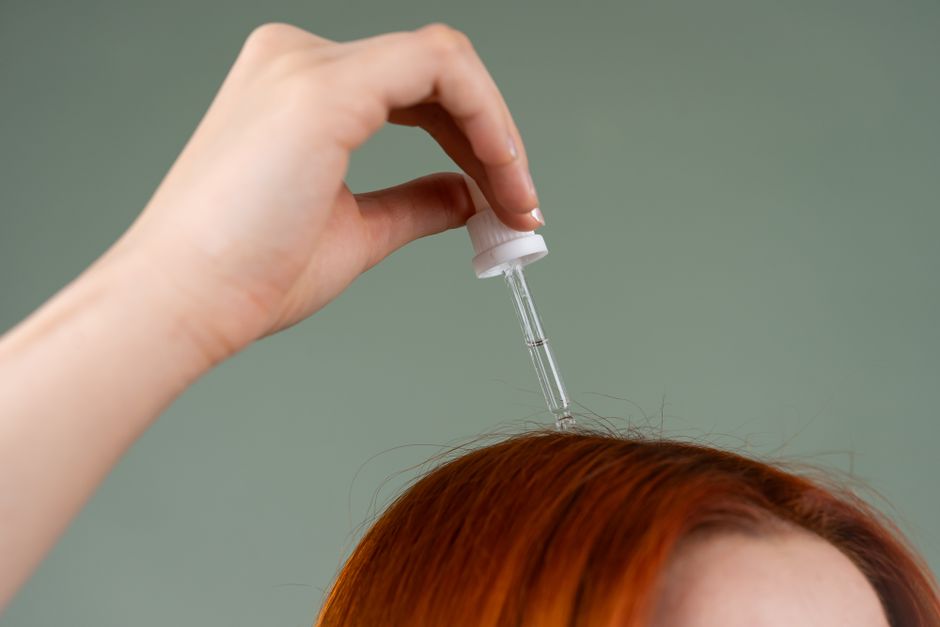
DHT blockers are substances that reduce the amount of dihydrotestosterone (DHT) in your body or stop it from attaching to receptors in your hair follicles. DHT is a hormone made from testosterone, and in people who are genetically sensitive to it, DHT can shrink hair follicles over time. This shrinking process, called miniaturization, is the main cause of male and female pattern hair loss. By limiting DHT’s activity, these blockers aim to slow or stop that shrinking process and help hair stay on your head longer.
What Exactly Is DHT and Why Does It Affect Hair?
DHT is a naturally occurring hormone. Your body makes it when an enzyme called 5-alpha-reductase converts testosterone into DHT. This conversion happens in several places, including the scalp, prostate, and skin.
DHT is not inherently bad. In fact, it is essential for male development during puberty. The problem starts when DHT interacts with genetically sensitive hair follicles on the top of the head.
In these sensitive follicles, DHT binds to androgen receptors. This binding triggers a chain of events that shortens the hair growth phase (anagen) and lengthens the resting phase (telogen). Over multiple hair cycles, the follicle produces thinner, shorter, and lighter hairs. Eventually, the follicle becomes so small that it stops producing visible hair altogether.
This process is why pattern hair loss follows a predictable shape. The hair at the temples and crown is most sensitive to DHT, while hair on the sides and back of the head is largely resistant. This is why hair transplant surgeons move follicles from the back of the head to the front — those donor hairs do not respond to DHT the same way.
What Is a DHT Blocker and What Are the Main Types?
A DHT blocker works in one of two ways. It either reduces the amount of DHT your body produces, or it prevents the DHT that exists from binding to receptors in the follicle.
The most well-studied DHT blockers are prescription medications. These are the only options with strong clinical evidence showing they can slow hair loss and sometimes regrow hair.
There are also many over-the-counter supplements and topical products marketed as DHT blockers. Most of these have limited evidence behind them, and the quality of research varies widely.
Prescription DHT Blockers
Finasteride is the most widely used prescription DHT blocker for hair loss. It works by inhibiting the type II enzyme 5-alpha-reductase. This enzyme is responsible for most of the DHT production in the scalp. Studies have consistently shown that finasteride lowers scalp DHT levels by about 60 percent and serum DHT levels by roughly 70 percent.
Dutasteride is a similar medication that inhibits both type I and type II forms of the 5-alpha-reductase enzyme. It lowers DHT more effectively than finasteride — some research shows a reduction of over 90 percent in serum DHT. However, it is not approved by the FDA for hair loss, though some doctors prescribe it off-label.
Both medications require a prescription and ongoing use. If you stop taking them, the DHT levels return to normal and hair loss resumes within several months.
Topical and Natural Products
Topical finasteride has become more common in recent years. It works on the scalp directly, and some research suggests it may reduce systemic side effects compared to the oral pill. However, it still enters the bloodstream to some degree, and it is not entirely free of the same risks.
Ketoconazole shampoo is sometimes grouped with DHT blockers. It is primarily an antifungal, but some studies suggest it may have weak anti-androgen effects on the scalp. The evidence here is limited, and it is generally used alongside proven treatments rather than as a standalone therapy.
Botanical extracts like saw palmetto, pumpkin seed oil, and green tea are common in supplements marketed for hair loss. Saw palmetto is the most studied of these. Some small studies suggest it may have a mild effect on DHT production, but the results are not consistent enough to compare it with finasteride. No supplement has shown the same level of efficacy in clinical trials as prescription DHT blockers.
How Effective Are DHT Blockers for Hair Regrowth?
It helps to be clear about what these medications can and cannot do. DHT blockers are far better at preventing further hair loss than at regrowing hair that has already been lost.
Clinical trials on finasteride have shown that the majority of men with mild to moderate hair loss either maintain their existing hair or experience some regrowth after one to two years of daily use. Regrowth, when it happens, is usually modest. The most reliable outcome is stabilization — hair stops thinning and the scalp does not become more visible.
Results are not instant. Hair cycles take time. Most people will not see noticeable changes until they have been using the medication consistently for at least three to six months. The full effect typically appears after one year of treatment.
For women, the picture is different. Finasteride is not approved for hair loss in women, and it is dangerous during pregnancy because it can cause birth defects in a male fetus. Postmenopausal women are sometimes prescribed it off-label, but the evidence of benefit is less robust than it is for men.
What Are the Side Effects and Risks?
DHT blockers affect hormone pathways, so side effects are possible. It would be misleading to suggest otherwise.
Finasteride and dutasteride can cause sexual side effects in some men. These include reduced libido, erectile dysfunction, and decreased ejaculate volume. The rates reported in clinical trials are low — typically 2 to 4 percent — but some men report symptoms that persist even after stopping the medication. This condition, sometimes called post-finasteride syndrome, is not fully understood, and no large controlled studies have confirmed a clear mechanism.
There is also a small risk of mood changes and depression. Anyone with a history of depression should discuss this with a doctor before starting treatment.
Dutasteride carries a longer half-life than finasteride. This means it stays in your system longer, which can be a concern if you experience side effects and want them to resolve quickly after stopping.
How Do DHT Blockers Compare to Other Hair Loss Treatments?
DHT blockers are one part of the hair loss treatment picture. They are not the only option, and for many people, they work best when combined with other approaches.
Minoxidil is the other major treatment for pattern hair loss. It does not block DHT. Instead, it is a vasodilator that stimulates hair follicles and prolongs the growth phase. Minoxidil is available over the counter as a topical foam or liquid, and it is also available as an oral tablet at a low dose.
The two treatments work through different mechanisms, which is why they are often used together. A common clinical approach is to use a DHT blocker to stop the follicle from shrinking while using minoxidil to stimulate the follicle to grow. This combination addresses both the cause and the symptom.
Low-level laser therapy is another option that some dermatologists recommend. The evidence for its effectiveness is mixed, and it is generally considered a supportive treatment rather than a primary one.
Hair transplant surgery is the only permanent solution for follicles that have already died. It does not prevent continued thinning in untreated areas, which is why doctors often recommend continuing a DHT blocker after surgery to protect the remaining hair.
How to Choose a DHT Blocker Safely
If you are considering a DHT blocker, the first step is to confirm that your hair loss is actually pattern hair loss. Telogen effluvium, nutritional deficiencies, thyroid problems, and other conditions can cause shedding that looks similar. A dermatologist can examine your scalp and determine the cause before you spend time and money on the wrong treatment.
If pattern hair loss is confirmed, prescription options require a doctor’s evaluation. Blood tests are not always needed, but a doctor will want to review your medical history and discuss potential risks.
For over-the-counter supplements, the key is to be realistic. No supplement has been proven in large clinical trials to stop or reverse pattern hair loss. Some people report benefits, but these reports are anecdotal. If you choose to try a supplement, look for one that lists its ingredients clearly and buy from a reputable manufacturer. Supplements are not regulated by the FDA for safety or effectiveness before they reach the market.
One more point worth noting: more is not better. Taking multiple DHT blockers at once does not necessarily increase effectiveness, but it does increase the risk of side effects. There is no evidence that stacking supplements with prescription finasteride provides additional benefit.
Frequently Asked Questions
How long does it take for a DHT blocker to work?
Most people need to use a DHT blocker consistently for three to six months before seeing any change. The full effect is usually visible after one year of daily use.
Can DHT blockers regrow hair that has already been lost?
DHT blockers are most effective at stopping further hair loss, and some people do experience modest regrowth. Follicles that have been dead for many years are unlikely to recover.
Are natural DHT blockers as effective as prescription ones?
No clinical evidence shows that natural supplements match the effectiveness of finasteride or dutasteride. Prescription medications are the only DHT blockers with strong trial data supporting their use for hair loss.
Do DHT blockers work for women with hair loss?
Finasteride is not approved for hair loss in women and is dangerous during pregnancy. Some postmenopausal women use it off-label, but the evidence of benefit is weaker than it is for men.
