
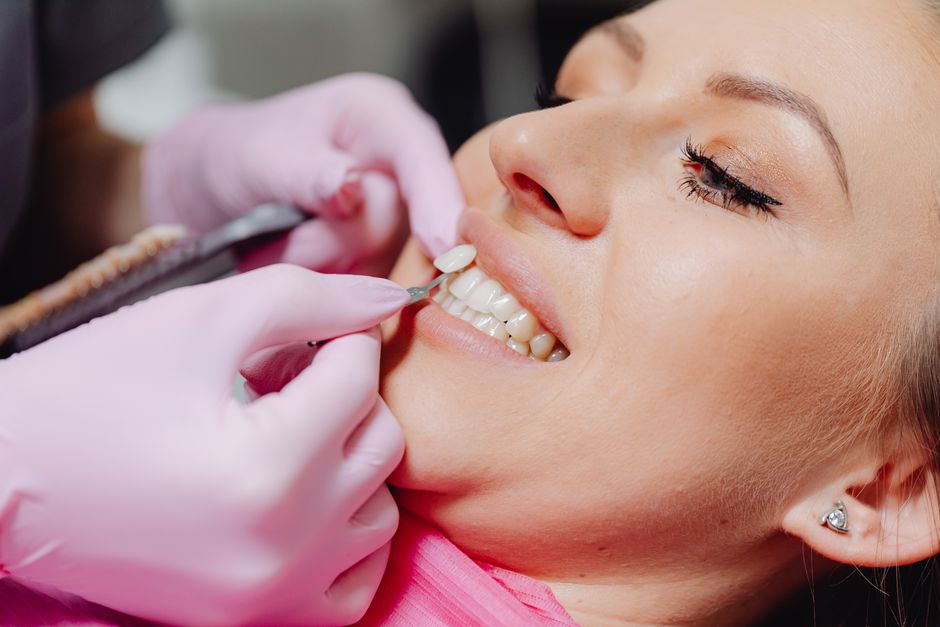
A dental veneer is a thin shell of material — usually porcelain or a composite resin — bonded to the front surface of a tooth to change its color, shape, size, or apparent alignment. The procedure typically involves removing a small amount of enamel, taking an impression or digital scan, and cementing a custom-made shell in place. Veneers are a cosmetic treatment, not a repair for decay or structural damage, and they are permanent in the sense that the enamel removed does not grow back.
What Is a Dental Veneer and What Does It Actually Do?
A veneer covers the visible face of a tooth. It does not replace the whole tooth, and it does not strengthen a weakened tooth the way a crown can. Its job is appearance.
Dentists most often use veneers on the front teeth — the ones people see when you smile. They can change the color of a discolored tooth, close small gaps, lengthen short teeth, or make slightly crooked teeth look straighter without orthodontics. What they cannot do is fix a bite problem, replace a missing tooth, or correct significant misalignment. Those need orthodontic or restorative treatment.
One point worth being clear about: a veneer is not reversible in the usual sense. In most cases the dentist removes some enamel to make room for the shell. That enamel is gone for good. This is why the decision deserves more thought than a haircut or a whitening session.
What Are the Different Types of Dental Veneers?
The two main categories are porcelain veneers and composite resin veneers. They differ in material, how they are made, how long they tend to last, and cost.
Porcelain veneers are made in a dental lab from a custom mold or digital scan of your teeth. They resist staining well and reflect light in a way that resembles natural enamel. They usually require two or more visits.
Composite resin veneers are applied directly to the tooth by the dentist, layer by layer, and shaped by hand. They can often be done in a single visit. They cost less but tend to stain more easily and may need more frequent repair or replacement.
There is also a category sometimes called “no-prep” or minimal-prep veneers. These are ultra-thin and may require little or no enamel removal. They sound appealing, but they are not right for every mouth. Thin veneers can look bulky if the underlying tooth is not already well positioned, and some clinicians question how well they perform long term. Whether you are a candidate depends on your tooth position, bite, and goals. Ask your dentist directly rather than assuming.
A note on “instant” or same-day veneers marketed heavily online: some are legitimate lab-fabricated restorations, and some are direct composite bonding presented under a veneer label. The distinction matters for durability and cost.
What Happens During the Veneer Procedure?
The process usually follows a predictable sequence, though details vary by dentist and material.
- Consultation and exam. The dentist checks your teeth, gums, and bite, and discusses what you want to change.
- Preparation. A small amount of enamel — often less than a millimeter — is removed from the front of the tooth. Some cases need none.
- Impression or scan. A mold or digital scan is taken and sent to a lab, or used to design the veneer.
- Temporary veneers. These are often placed while the permanent ones are being made.
- Bonding. The permanent veneer is checked for fit and color, then cemented to the tooth with a light-cured resin and polished.
For composite veneers, the dentist builds and shapes the resin directly on the tooth in one appointment, then hardens and polishes it.
Discomfort during the procedure is usually managed with local anesthetic. Afterward, some people have mild sensitivity to hot or cold for a short time. If sensitivity persists or worsens, that is worth a call to the dentist — it can sometimes indicate a bite issue or a problem under the veneer.
How Long Do Dental Veneers Last?
There is no single reliable lifespan. Durability depends on the material, the skill of the dentist, your bite, and how well you care for them.
General clinical experience suggests porcelain veneers tend to outlast composite ones, but you will see a wide range of numbers quoted online. Be skeptical of any source that gives one precise figure for everyone. What is well established is that veneers are not permanent restorations — they eventually need repair or replacement.
Things that shorten their life include grinding or clenching your teeth, biting nails or hard objects, and poor oral hygiene. If you grind your teeth, tell your dentist before the procedure. A night guard may be recommended afterward, because untreated grinding can crack or dislodge veneers.
How Do You Care for Dental Veneers?
Veneers need the same basic care as natural teeth, with a few adjustments.
- Brush twice a day with a soft-bristled brush and fluoride toothpaste.
- Floss daily, being gentle along the gum line where the veneer meets the tooth.
- Avoid biting hard objects — ice, pens, fingernails.
- Limit staining drinks like coffee, tea, and red wine, especially with composite veneers.
- Wear a night guard if your dentist recommends one.
- Keep regular dental checkups and cleanings.
One thing people often get wrong: whitening products do not change the color of porcelain veneers. If you whiten your natural teeth after getting porcelain veneers, your teeth may end up a different shade than the veneers. This is a common reason people end up unhappy with the result. If whitening is part of your plan, discuss the order of treatment with your dentist first.
What Are the Risks and Downsides of Veneers?
Veneers are generally considered safe when done by a qualified dentist, but they carry real trade-offs, and the evidence on long-term outcomes is not as strong as marketing suggests.
The main issues include:
- Permanent enamel removal. Once removed, enamel does not return. This commits the tooth to a restoration going forward.
- Sensitivity. Some people experience lasting sensitivity, particularly if too much enamel was removed.
- Damage or detachment. Veneers can chip, crack, or come loose. Repair is not always simple.
- Gum irritation. Poorly fitted veneers can irritate the gums.
- Color mismatch. If only some teeth are veneered, matching them to the rest can be difficult.
- Underlying problems. A veneer can hide a developing cavity or gum issue until it becomes more serious.
None of this means veneers are a bad choice. It means they are a commitment, and the quality of the dentist matters a great deal. A poorly placed veneer is harder to fix than one done well the first time.
How Much Do Dental Veneers Cost?
Veneers are almost always considered cosmetic by dental insurance, which means most plans do not cover them. Cost varies widely by region, dentist, and material.
Composite veneers generally cost less than porcelain, and porcelain veneers are typically the most expensive option. Because prices vary so much and change over time, the honest answer is that you should get a written estimate from your dentist rather than rely on a national average. Ask what the fee includes — the consultation, temporaries, the veneers themselves, and any follow-up adjustments.
It is also worth asking whether a less expensive or less invasive option would meet your goal. Bonding, whitening, or orthodontics sometimes address the same concern for less money and less permanent change.
Who Is a Good Candidate for Veneers?
Veneers tend to work best for people with healthy teeth and gums who want to change the appearance of their front teeth. If you have active gum disease, untreated decay, or significant bite problems, those usually need to be addressed first.
Veneers are a poor fit if you grind your teeth heavily, if your teeth are badly misaligned, or if you are looking for a solution that can be undone. They are also not a substitute for orthodontic treatment when the underlying problem is the position of the teeth.
The most useful thing you can do is have an honest conversation with a dentist about what you want to change and what the realistic result will look like. Ask to see examples of their work. Ask what happens if a veneer fails. Ask what your teeth will look like in ten or twenty years.
Frequently Asked Questions
Are dental veneers permanent?
Yes, in the sense that the enamel removed to place them does not grow back, so the tooth will always need a restoration. The veneer itself is not permanent and will eventually need repair or replacement.
Do dental veneers ruin your teeth?
They do not ruin healthy teeth when done properly, but they do require permanent enamel removal in most cases. Problems are more likely when veneers are placed on unhealthy teeth or by an inexperienced dentist.
How long do porcelain veneers last?
There is no single reliable lifespan, and quoted numbers vary widely. Porcelain generally lasts longer than composite, but durability depends on your bite, habits like grinding, and how well you care for them.
Can you whiten dental veneers?
No. Whitening products do not change the color of porcelain or composite veneers, only natural teeth. This is why the order of whitening and veneer placement should be planned with your dentist.
