

Platelets are the tiny cell fragments that rush to a damaged blood vessel and plug the leak. When their numbers fall low enough, that plug can fail. The count most clinicians treat as the threshold for spontaneous bleeding risk is below 20,000 platelets per microliter (written as 20 × 10⁹/L). Below 10,000, bleeding can happen without any injury at all. Above 50,000, most people can still form a clot after minor trauma, though surgery and serious injury carry added risk.
Those numbers matter because platelet counts are measured constantly — before surgery, during chemotherapy, in pregnancy, and in routine blood work. Knowing where the danger zones actually sit helps you understand what your doctor is watching for and why.
What Is A Critical Platelet Count For Bleeding?
A platelet count under 20,000 per microliter is the level at which doctors generally expect spontaneous bleeding to become a real possibility. This is not a line where risk switches on like a light. It is a zone. Risk climbs steadily as the count drops.
Doctors divide low platelet counts into grades. Mild thrombocytopenia sits between 100,000 and 150,000. Moderate falls between 50,000 and 100,000. Severe is anything under 50,000. Within the severe group, counts under 20,000 get the closest attention.
The normal range is roughly 150,000 to 450,000 platelets per microliter. That range comes from large population studies and is used by essentially every clinical lab in the United States.
Here is the part many people miss. The number is not the whole story. A person with a count of 30,000 who has stable, chronic low platelets from an immune condition may bleed less than someone whose count crashed from 200,000 to 30,000 in three days. How fast the count fell, why it fell, and whether the platelets that remain actually work all change the picture.
Platelet Count Ranges And What They Mean
Different count ranges carry different practical concerns. The table below reflects thresholds widely used in clinical practice.
| Platelet Count (per microliter) | Typical Clinical Concern |
|---|---|
| 150,000 – 450,000 | Normal range |
| 100,000 – 150,000 | Mildly low; usually no bleeding |
| 50,000 – 100,000 | Moderately low; minor bleeding possible with trauma or surgery |
| 20,000 – 50,000 | Severe; bruising and bleeding more likely, especially with injury |
| Below 20,000 | High risk of spontaneous bleeding |
| Below 10,000 | Severe spontaneous bleeding risk, including internal bleeding |
A count between 50,000 and 100,000 rarely causes bleeding on its own. Many people in that range feel completely normal and only find out through a routine blood test. Dental work and minor procedures are usually safe in that range, though this depends on the specific procedure and the patient.
Between 20,000 and 50,000, the risk of bruising and bleeding after a bump or fall rises. Below 20,000, bleeding can start without any clear trigger.
Why Does The Number Alone Not Tell The Whole Story?
Platelet count measures quantity. It says nothing about quality. Some platelets are dysfunctional even when the count looks fine. Others are being consumed faster than the lab can track.
Three factors change how a given number translates into real bleeding risk.
- How fast the count dropped. A slow decline gives the body time to adapt. A sudden crash does not.
- The underlying cause. Platelets destroyed by an immune attack behave differently from platelets that are simply not being produced in the bone marrow.
- Other bleeding risks. Medications like aspirin or blood thinners, liver disease, and clotting factor problems all stack on top of a low platelet count.
This is why two people with the same count of 15,000 can have very different outcomes. The number is a starting point, not a verdict.




What Causes Platelet Counts To Drop?
Low platelets come from one of three broad problems: the bone marrow makes too few, the body destroys or uses them too quickly, or they get trapped somewhere they should not be.
Reduced production happens when the bone marrow is suppressed. Chemotherapy, radiation, certain viral infections, heavy alcohol use, and bone marrow disorders can all slow platelet manufacturing. Some medications, including certain antibiotics and seizure drugs, can do the same.
Increased destruction is the most common cause of severe drops. Immune thrombocytopenia (ITP) is a condition where the immune system mistakenly attacks platelets. It can appear suddenly in otherwise healthy people. Infections like dengue, HIV, and hepatitis C can also trigger destruction. So can some drugs, including heparin — a blood thinner that paradoxically causes platelets to fall in a small number of patients.
Trapping and dilution are less common but real. An enlarged spleen can hold a large share of the body’s platelets. Massive blood transfusions can dilute what is left.
Pregnancy deserves a separate note. Mild drops are common in pregnancy and often harmless. Severe drops are not, and they need proper evaluation because they can affect both mother and baby.
What Are The Warning Signs Of Dangerous Bleeding?
Bleeding from a very low platelet count looks different from the bleeding most people picture. It tends to be small, scattered, and often on the skin.
- Petechiae — tiny red or purple dots, usually on the legs or ankles, that do not fade when pressed
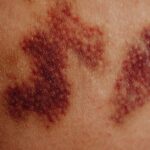
- Purpura — larger flat purple patches, similar to bruises but without injury
- Easy bruising — marks that appear without a clear cause
- Bleeding gums — especially when brushing teeth
- Nosebleeds — that last longer than usual or stop and restart
- Blood in urine or stool — stool may look black and tarry
- Heavy menstrual bleeding — much heavier than a normal period
- Headache with confusion or vision changes — a possible sign of bleeding in the brain, which is a medical emergency
Bleeding into the brain is rare but is the most feared complication of very low platelet counts. Any neurological symptom in someone with a known low count needs immediate emergency care.
When Do Doctors Treat Low Platelets?
Treatment depends on the cause and the count, not on the count alone. A stable count of 25,000 in someone with chronic ITP may need no treatment at all. A count of 25,000 in someone about to have surgery almost certainly does.
For a count under 10,000, or under 20,000 with active bleeding, platelet transfusions are common. Transfusions raise the count temporarily, but the effect fades because the underlying problem continues. In immune conditions, transfused platelets may be destroyed quickly.
Corticosteroids and intravenous immune globulin are used in immune-mediated cases. Newer drugs that boost platelet production are also used in some chronic conditions. Removing the spleen helps some patients with ITP but is not a first-line option and carries its own risks.
Some clinicians recommend avoiding medications that impair platelet function — aspirin, ibuprofen, and similar drugs — when counts are low. This is widely practiced but not supported by large trials in every situation. It is a reasonable precaution rather than a proven rule.
If you have a low platelet count, the most useful thing you can do is understand your own trend over time. A single number in isolation rarely tells the full story.
Frequently Asked Questions
At what platelet count does bleeding start?
Spontaneous bleeding becomes a real concern below 20,000 platelets per microliter, and risk rises sharply below 10,000. Counts above 50,000 rarely cause bleeding without an injury or procedure.
Is a platelet count of 30,000 dangerous?
A count of 30,000 falls in the severe range and raises the risk of bruising and bleeding, especially after injury. Whether it needs treatment depends on the cause, how fast it dropped, and whether any bleeding is already happening.
Can you survive with a platelet count of 5,000?
Yes, people do survive counts that low, but they are at serious risk of spontaneous bleeding, including internal bleeding. Counts this low usually need urgent medical care and often a platelet transfusion.
What is the lowest platelet count that is safe for surgery?
Many hospitals prefer a count above 50,000 before major surgery, though the exact threshold varies by procedure and institution. For surgery involving the brain or eyes, higher counts may be required.
