
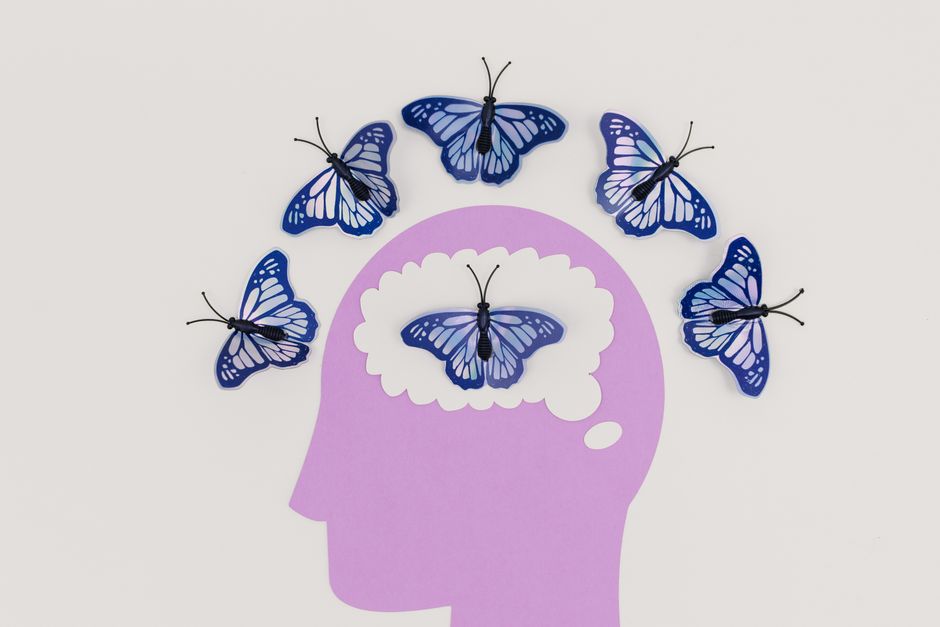
Every day your brain makes thousands of quick decisions. Most happen without you noticing. These mental shortcuts are efficient but not perfect. A cognitive bias is a systematic pattern of deviation from rational judgment. Your brain takes a shortcut and sometimes lands in the wrong place. These biases are not random errors — they are predictable and consistent. Psychologists Daniel Kahneman and Amos Tversky first mapped them in the 1970s. Their work earned Kahneman a Nobel Prize. Understanding cognitive biases matters because they shape how you see the world, make decisions, and interact with others.
What Causes Cognitive Biases in the First Place?
Your brain processes an enormous amount of information every second. It cannot analyze every detail deeply. So it uses mental shortcuts called heuristics. These shortcuts work most of the time. But they also create blind spots. Cognitive biases are the side effects of these shortcuts.
Think of it like your phone’s autocomplete. It guesses what you will type next. Usually it is right. But sometimes it suggests something completely wrong. Your brain does the same thing with information. It fills in gaps based on past experience and patterns. When the pattern is misleading, the bias kicks in.
Evolution plays a role too. Early humans needed fast decisions to survive. If you heard a rustle in the bushes, running first and asking questions later kept you alive. That same fast-response system still runs today. But modern problems — like investing, relationships, or health choices — need slower thinking. The fast system does not always serve you well here.
What Are the Most Common Types of Cognitive Biases?
Researchers have identified over 200 cognitive biases. Some are well-studied. Others are still being explored. Here are the ones most relevant to daily life.
- Confirmation bias: You look for information that supports what you already believe. You ignore evidence that challenges it. This is one of the most powerful and common biases.
- Anchoring bias: The first piece of information you see influences everything that follows. If a shirt is marked $200 then discounted to $50, $50 feels like a steal. The $200 anchor changed your judgment.
- Availability heuristic: You judge how likely something is based on how easily examples come to mind. Plane crashes feel common because they make headlines. Car accidents kill far more people but feel less threatening.
- Dunning-Kruger effect: People with low ability at a task overestimate their skill. People with high ability underestimate theirs. The less you know, the more confident you often feel.
- Hindsight bias: After something happens, you believe you knew it all along. “I knew that stock would crash” is easy to say after the fact. You probably did not know it beforehand.
These are not personality flaws. They are how human brains work. Recognizing them is the first step to making better decisions.
How Do Cognitive Biases Affect Your Daily Decisions?
Biases touch every part of your life. You notice them in big choices like buying a house or choosing a doctor. But they also show up in small moments you barely notice.
Consider grocery shopping. The items at eye level sell more. Stores know this. They put the most profitable products there. That is not a bias by itself. But your brain treats eye-level items as the best choice without thinking. That is availability bias at work. You pick what is easiest to see.
Social media is a bias factory. The algorithm shows you content you agree with. That feeds confirmation bias. You start to believe everyone thinks like you. You forget that the platform is showing you a filtered version of reality. Research published in Science in 2018 found that false news spreads faster than true news on social media. Confirmation bias helps drive that spread.
Health decisions are especially vulnerable. A 2019 study in JAMA Internal Medicine found that patients often choose treatments based on how options are framed, not on the actual medical evidence. If a surgeon says “the survival rate is 90 percent” instead of “the mortality rate is 10 percent,” patients make different choices. The facts are identical. The framing changed the decision.




Can You Overcome Cognitive Biases?
This is where many articles get it wrong. They promise you can “train your brain” to be bias-free. That is not realistic. Research shows that simply knowing about biases does not eliminate them. A 2015 meta-analysis in Perspectives on Psychological Science found that bias awareness training has modest effects at best. Knowing you have a bias does not stop it from operating.
What does help is changing your environment. If you want to avoid confirmation bias, do not rely on willpower. Curate your information sources instead. Follow people who disagree with you. Read publications with different editorial slants. The bias still runs in the background. But you reduce its influence by changing what enters your field of view.
Slowing down also helps. Many biases thrive on speed. When you make a quick decision, your brain leans on heuristics. When you force yourself to pause and ask “what am I missing?” you engage slower, more deliberate thinking. This is not always possible. But for high-stakes decisions, it is worth the extra time.
Another practical strategy is the pre-mortem. Before you make a major decision, imagine it went badly. Ask yourself what could have gone wrong. This forces your brain to consider alternatives it would otherwise ignore. It is a simple technique with solid evidence behind it.
What Is A Cognitive Bias Comparison Across Decision Types
The following table shows how different biases affect different kinds of decisions. This is based on findings from behavioral economics research published by Kahneman and others.
| Bias | Financial Decisions | Health Decisions | Social Decisions |
|---|---|---|---|
| Confirmation bias | You seek out only positive news about a stock you own | You read only success stories about a treatment you prefer | You surround yourself with people who share your views |
| Anchoring bias | The first price you see for a car sets your budget | A doctor’s first diagnosis influences your acceptance of later opinions | Your first impression of someone colors all future interactions |
| Availability heuristic | You overestimate the risk of market crashes because recent ones are memorable | You fear rare diseases more than common ones because they get more news coverage | You assume a friend’s opinion is common because it is the one you hear most |
| Hindsight bias | You believe you predicted a market downturn after it happened | You think you always knew a diagnosis was correct | You claim you saw a relationship failing long before it did |
Notice a pattern. Each bias pushes you toward overconfidence and under-consideration of alternatives. That is the common thread across all cognitive biases. They make you feel more certain than the evidence justifies.
What Does Research Actually Show About Cognitive Biases?
The research on cognitive biases is deep and well-established. Kahneman and Tversky published their first major paper on the topic in 1974 in Science. Since then, thousands of studies have replicated and expanded their findings. The core insight holds up: human judgment is systematically flawed in predictable ways.
But not all bias research is equally strong. Some claims have been exaggerated. A 2021 analysis in Nature Human Behaviour found that some classic bias studies had smaller effects than originally reported. The biases exist. But their real-world impact is sometimes weaker than popular psychology books suggest.
For example, the Dunning-Kruger effect is real. But it is strongest in controlled lab settings. In real life, people often have more accurate self-assessments than the lab studies predict. The bias is there. It just does not run your life as much as some articles claim.
The most reliable finding across all bias research is this: biases are context-dependent. They show up more when you are tired, distracted, or under time pressure. They show up less when you are well-rested, focused, and using deliberate reasoning. That is good news. It means you can reduce bias influence by managing your mental state, not by trying to rewire your brain.
Common Misconceptions About Cognitive Biases
Several myths about cognitive biases spread faster than the facts. Here is what the evidence actually says.
Myth: Cognitive biases are always bad.
Not true. Some biases helped humans survive. The negativity bias — paying more attention to threats than rewards — kept our ancestors alive. In modern life, it can cause unnecessary anxiety. But the bias itself is not evil. It is a tool that sometimes misfires.
Myth: Smart people have fewer biases.
Research shows that intelligence does not protect you from cognitive biases. A 2012 study in Journal of Personality and Social Psychology found that people with higher IQ scores showed just as many biases as everyone else. In some cases, they were better at rationalizing their biased decisions. Smart people are not immune. They are just better at explaining away their mistakes.
Myth: You can train yourself to be bias-free.
As noted earlier, awareness alone does not eliminate biases. The most effective interventions change the decision environment, not the person. For example, making information easier to compare reduces anchoring effects. Checklists reduce overconfidence in medical diagnoses. These work because they change the system, not the thinker.
Myth: Biases only affect other people.
This is called the bias blind spot. You recognize biases in others but not in yourself. Research shows that most people rate themselves as less biased than the average person. That is statistically impossible. It is also a bias itself. You are not the exception.
Frequently Asked Questions
Can cognitive biases ever be useful?
Yes, in some situations. They allow fast decision-making when time is limited. The key is knowing when speed matters and when accuracy matters more.
How many cognitive biases exist?
Researchers have identified over 200 distinct biases. The exact number depends on how you define and categorize them. New ones are still being proposed.
Do children have cognitive biases?
Yes. Children show many of the same biases as adults, including confirmation bias and anchoring. Biases appear early in development and persist throughout life.
Can meditation reduce cognitive biases?
Some studies suggest mindfulness meditation may reduce certain biases like the sunk cost fallacy. The evidence is preliminary but promising. More research is needed.
