
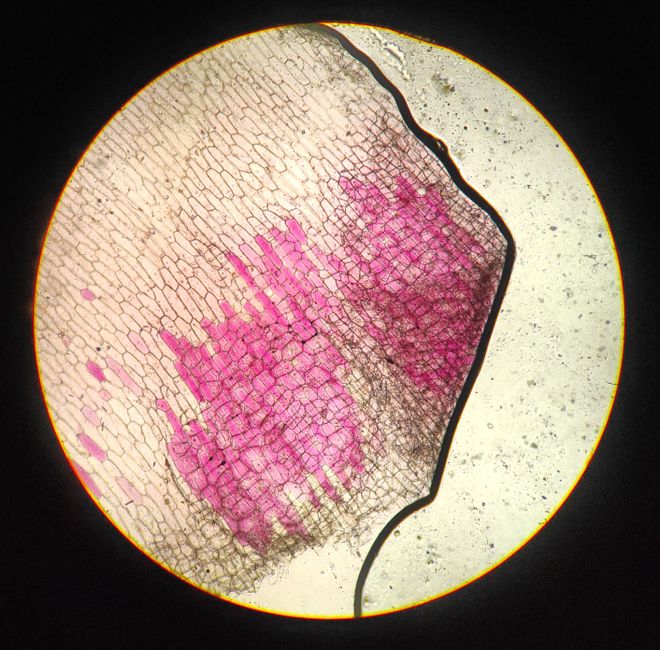
A clearing agent in histology is a chemical solution used to make tissue samples transparent before they are viewed under a microscope. It works by replacing the alcohol used to dehydrate the tissue with a substance that has a similar refractive index to the tissue’s proteins, allowing light to pass through the sample clearly instead of scattering. This step is essential for preparing high-quality slides that pathologists and researchers use to diagnose disease and study cellular structure.
Why Do Tissue Samples Need Clearing?
Before a tissue sample can be examined, it must undergo a series of preparation steps. The goal is to preserve the tissue’s structure and make it firm enough to slice into extremely thin sections. These thin slices, usually only a few micrometers thick, are placed on a slide and stained to reveal the cells.
The problem is that water and alcohol, which are used early in the process, do not mix with the paraffin wax that is used to support the tissue during slicing. Water and alcohol also scatter light, making the tissue appear opaque. A clearing agent solves both problems. It removes the alcohol and leaves the tissue saturated with a liquid that is miscible with paraffin. Because this liquid has an optical property similar to the tissue itself, the sample appears clear or “cleared,” which is where the name comes from.
What Is A Clearing Agent In Histology and How Does It Work?
The mechanism is straightforward. After a sample is fixed and dehydrated in increasing concentrations of alcohol, it is placed in the clearing agent. The agent diffuses into the tissue and displaces the alcohol. Once the tissue is fully infiltrated with the clearing agent, it can then be placed in molten paraffin wax. The wax replaces the clearing agent, embedding the tissue in a solid block ready for sectioning.
This process relies on a physical property called the refractive index. When two materials have a similar refractive index, light passes from one to the other without bending much. The dehydrated tissue has a high refractive index. Most clearing agents, such as xylene, also have a high refractive index. The match makes the tissue transparent. If the refractive indices are different, light scatters and the tissue looks cloudy or dark.
What Are the Most Common Clearing Agents Used Today?
Xylene has been the standard clearing agent for decades. It is highly effective, works quickly, and is relatively inexpensive. It is also a hazardous chemical. Xylene is a neurotoxin and a skin irritant, and it requires use in a fume hood with proper protective equipment. Many laboratories are actively trying to reduce its use.
Several alternatives exist. Some are less toxic, and some are more expensive. The table below compares the most common options.
| Clearing Agent | Common Use | Key Consideration |
|---|---|---|
| Xylene | Routine histology and staining | Fast and effective but toxic and flammable |
| Limonene-based agents | Citrus oil substitutes for xylene | Safer for staff but slower and can leave residue |
| Aliphatic hydrocarbons | Commercial substitutes like Histo-Clear | Less toxic than xylene but more expensive |
| Mineral oil | Special protocols and some automated systems | Non-toxic but very slow penetration |
No single alternative has completely replaced xylene. Each has trade-offs between safety, speed, cost, and final slide quality. The choice often depends on the laboratory’s equipment, budget, and safety policies.





How Long Does Tissue Stay in a Clearing Agent?
There is no universal time. It depends on the size and type of tissue, the agent used, and the temperature. Small biopsies may clear in 30 to 60 minutes. Larger pieces, like whole organs, may need several hours or overnight.
Over-clearing is a real problem. Leaving tissue in a clearing agent too long makes it hard and brittle. The tissue can crack during sectioning, ruining the slide. Under-clearing is also a problem. If alcohol remains in the tissue, the paraffin wax will not infiltrate properly, and the sections will be poorly preserved. Most laboratories run timed protocols that have been validated for their specific tissue types and equipment.
What Happens If You Skip the Clearing Step?
Skipping clearing leads to poor results. If alcohol is left in the tissue, the paraffin wax cannot penetrate. When the microtome cuts the tissue, the sections will fragment or tear. The staining process will also fail. Water and alcohol can wash out the dyes, and the slide will not show the cellular detail needed for diagnosis.
In practical terms, a slide made without proper clearing is often unreadable. The tissue appears dark, distorted, and lacks contrast. In a clinical setting, this could delay a diagnosis or require the pathologist to request a new biopsy. The clearing step is not optional; it is a required part of the standard tissue processing pipeline.
Are There Modern Methods That Avoid Clearing Agents?
Yes. Some newer techniques bypass traditional clearing entirely. Frozen sectioning is one example. In this method, the tissue is rapidly frozen, cut while solid, and stained immediately. No alcohol dehydration or paraffin embedding is needed, so no clearing agent is used. This is common during surgery when a surgeon needs a quick diagnosis while the patient is still on the operating table.
There are also advanced imaging techniques for whole tissues. These methods, sometimes called optical clearing, use chemical cocktails to make entire organs transparent for 3D imaging. These are research tools, not routine clinical diagnostics. They are not a replacement for standard histology but rather a complementary approach for studying large volumes of tissue in detail.
Another emerging area is the use of non-toxic, water-based clearing solutions for research applications. Some studies suggest these can preserve fluorescent proteins better than traditional organic solvents. However, these are not yet standard in clinical pathology. The evidence for their routine use is still developing, and most clinical labs continue to rely on established clearing agents like xylene or its substitutes.
Safety Concerns With Clearing Agents
Xylene exposure is a significant occupational health issue. Short-term exposure can cause headaches, dizziness, and irritation of the eyes, skin, and respiratory tract. Long-term exposure has been linked to more serious neurological effects. Because of these risks, regulatory agencies have set strict exposure limits for xylene in the workplace.
Laboratories use several controls to reduce risk. Fume hoods vent vapors away from workers. Gloves and lab coats protect the skin. Some facilities use closed automated processors that minimize worker contact with the chemicals. Even with these controls, many labs are transitioning to less hazardous alternatives where possible.
It is important to note that “safer” alternatives are not completely harmless. Citrus-based agents can cause skin irritation and allergic reactions in some people. They are also flammable. Any clearing agent should be handled with the same care as any other laboratory chemical.
How to Choose the Right Clearing Agent
The choice depends on the specific application. For routine diagnostic histology, speed and reliability matter most. Xylene remains the fastest and most consistent option, which is why it is still widely used despite its toxicity. For labs prioritizing worker safety, a limonene-based agent or an aliphatic hydrocarbon substitute may be preferred, even if processing times are longer.
For research applications, the choice may depend on what is being studied. If the goal is to preserve specific proteins for antibody staining, some clearing agents may damage the antigens. In this case, gentler alternatives or specialized protocols may be necessary. The published literature on tissue processing methods is extensive, and researchers should consult validated protocols for their specific tissue type and downstream applications.
Frequently Asked Questions
What is the purpose of a clearing agent?
It removes alcohol from dehydrated tissue and makes the sample transparent so paraffin wax can infiltrate it. This prepares the tissue for thin sectioning and microscopic examination.
Is xylene the only clearing agent?
No, xylene is the most common but not the only one. Limonene-based citrus agents, aliphatic hydrocarbons, and mineral oil are all used as alternatives.
Can you skip clearing in histology?
No, skipping it produces poor quality slides with torn sections and unreadable staining. It is a required step in standard paraffin-embedded tissue processing.
Are clearing agents dangerous?
Xylene is toxic and requires proper ventilation and protective equipment. Some alternatives are less toxic, but all clearing agents are chemicals and should be handled with care.
