
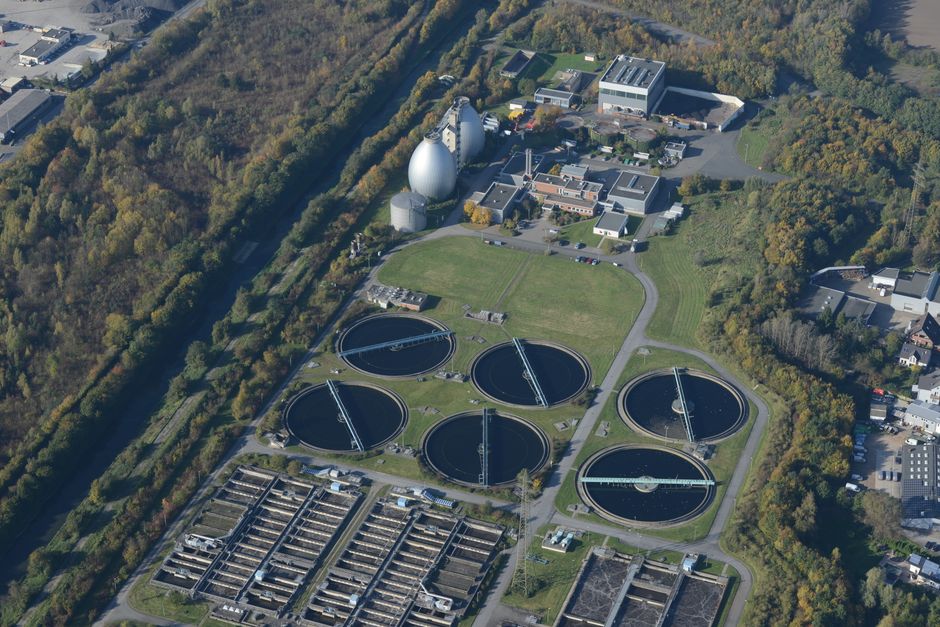
A clarifier tank is a large settling basin used in water and wastewater treatment to remove suspended solids from water. It works by slowing the water flow enough that heavier particles naturally sink to the bottom, where they are collected and removed. This process is a core step in most municipal water treatment plants and industrial wastewater systems.
How Does a Clarifier Tank Work?
The basic principle is simple: gravity. Water entering a clarifier moves slowly and quietly. This calm environment allows particles—like dirt, sand, and organic matter—to settle out of the water column and form a layer of sludge at the bottom.
Clarifiers are designed to be large and shallow. The larger the surface area, the slower the water moves upward. This upward velocity is critical. If water rises too fast, it will carry particles out with it. If it moves slowly enough, particles have time to sink.
Most clarifiers use mechanical scrapers on the bottom. These slowly move the settled sludge toward a collection hopper. From there, the sludge is pumped out for further treatment or disposal. Cleaner water, called effluent, flows over weirs at the top of the tank and moves to the next treatment stage.
What Is the Difference Between Clarifiers and Settling Tanks?
In practice, the terms are often used interchangeably. Both refer to tanks that use gravity to separate solids from liquids. However, there is a subtle distinction in how the industry uses the words.
A settling tank is a general term for any basin where solids settle by gravity. A clarifier typically refers to a specific piece of engineered equipment with mechanical sludge removal systems. Clarifiers also often include components that enhance the settling process, such as inlet baffles and effluent troughs.
If you hear someone say “primary clarifier” or “secondary clarifier,” they are usually talking about a specific stage in a wastewater treatment plant. These are engineered systems, not just simple ponds or basins.
What Are the Main Types of Clarifier Tanks?
There are two primary designs used in modern water treatment: rectangular and circular. Both achieve the same goal but have different operational strengths.
Circular clarifiers are the most common in municipal wastewater plants. Water enters the center of the tank through a feed well and flows outward. Solids settle to the floor, where a rotating rake assembly pushes them to a central sludge pit. Circular designs are efficient, reliable, and easy to maintain.
Rectangular clarifiers are often used where space is limited or where multiple units must share a common wall. Water flows from one end to the other. A chain-and-flight system scrapes sludge along the bottom to a hopper at the inlet end. Rectangular tanks use space more efficiently but require more mechanical parts.
There is also a third type gaining attention: the plate or tube settler. These use angled plates or tubes inside the tank to dramatically increase the effective settling area. They are much smaller than conventional clarifiers but achieve similar or better solids removal. Many plants retrofit these into existing tanks to boost capacity.





Why Do Water Treatment Plants Need Clarifiers?
Clarifiers protect everything downstream in the treatment process. If suspended solids are not removed early, they clog filters, reduce disinfection effectiveness, and create sludge in pipes and pumps.
In drinking water treatment, clarifiers usually follow coagulation and flocculation. These chemical steps cause tiny particles to clump together into larger, heavier flocs. The clarifier then removes these flocs before the water goes to sand or membrane filters. Removing most solids here means filters run longer between cleanings and produce more consistent water quality.
In wastewater treatment, clarifiers serve two distinct roles. Primary clarifiers remove raw solids from incoming sewage before biological treatment. Secondary clarifiers follow the biological treatment step, where bacteria have consumed dissolved organic matter. The secondary clarifier settles out the bacteria and other biomass, producing clear effluent that can be disinfected and discharged.
Without clarifiers, treatment plants would need much larger filters or would discharge water with unacceptable levels of suspended solids. Clarifiers are one of the most cost-effective ways to remove large volumes of solids from water.
What Happens to the Sludge Collected in a Clarifier?
Sludge is the concentrated solids removed from the bottom of the clarifier. It is not waste that can be simply dumped. It requires its own treatment process.
In wastewater plants, primary sludge and secondary sludge are often combined and sent to anaerobic digesters. These heated tanks use bacteria to break down organic matter in the absence of oxygen. Digestion reduces the volume of sludge and produces biogas—mostly methane—which many plants use to generate heat or electricity.
After digestion, the sludge is dewatered using centrifuges, belt presses, or drying beds. The resulting solid material can be applied to farmland as fertilizer, composted, or sent to a landfill. The exact fate depends on local regulations and the quality of the sludge.
In drinking water plants, sludge is mostly inorganic—clay, silt, and metal hydroxides from the coagulation process. This sludge is typically dewatered and sent to a landfill. It has limited beneficial reuse compared to wastewater sludge.
What Factors Affect Clarifier Performance?
Several conditions influence how well a clarifier removes solids. Operators monitor these closely because even small changes can significantly affect effluent quality.
Flow rate is the most critical factor. A sudden surge in incoming water reduces detention time and can wash solids over the weirs. Most plants limit flow to a specific hydraulic loading rate to prevent this.
Temperature matters because cold water is more viscous. It settles particles more slowly. Plants in cold climates often see reduced clarifier performance in winter and may need to adjust chemical dosing to compensate.
Particle characteristics also play a role. Dense, heavy particles settle quickly. Light, fluffy particles—like biological floc—settle slowly and can be easily disturbed by currents. This is why secondary clarifiers are designed more conservatively than primary clarifiers.
Wind can even affect performance. On large open tanks, wind creates surface currents that disrupt the quiescent conditions needed for settling. Some large plants install wind barriers around their clarifiers.
Short-circuiting is another common problem. This happens when some water flows through the tank faster than the theoretical detention time. Inlet baffles and proper weir placement are designed to minimize this issue.
How Do Clarifiers Compare to Other Solids Removal Methods?
Clarifiers are not the only way to remove solids from water. Filtration, dissolved air flotation, and membrane systems all accomplish similar goals. Each has strengths and weaknesses.
| Method | Typical Use | Advantages | Limitations |
|---|---|---|---|
| Clarifier | High-flow municipal and industrial treatment | Low energy use, handles large volumes, low operating cost | Large footprint, requires sludge handling |
| Dissolved Air Flotation | Low-density solids, algae-laden water, oil and grease removal | Removes particles that will not settle well | Higher energy use, more mechanical complexity |
| Granular Media Filtration | Polishing after clarification | Very high effluent quality | Clogs quickly without upstream removal |
| Membrane Filtration | High-quality drinking water or water reuse | Excellent removal of pathogens and particles | High energy use, membrane fouling, higher cost |
Most large plants do not choose one method over another. They use them in series. Clarifiers remove the bulk of solids cheaply, and filters or membranes polish the remaining water to a higher quality.
How Long Does Water Stay in a Clarifier?
Detention time varies by plant type and design. In municipal wastewater treatment, typical hydraulic retention time ranges from 1.5 to 3 hours for primary clarifiers. This means the water entering the tank takes that long to pass through.
Secondary clarifiers generally have shorter detention times, often around 1 to 2 hours. The biological floc settles faster than raw sewage solids, so less time is needed.
Drinking water clarifiers can have similar retention times, though this depends heavily on the raw water quality and the effectiveness of upstream coagulation. Plants treating very turbid water may need longer detention or additional chemical dosing.
These are general ranges. Actual design values depend on settling tests performed on the specific water being treated. Engineers do not guess at these numbers—they run laboratory tests to determine the correct size.
Frequently Asked Questions
What is the purpose of a clarifier tank?
Clarifier tanks remove suspended solids from water using gravity settling. This protects downstream filters and improves overall water quality.
How does a clarifier tank work step by step?
Water enters the tank slowly, allowing particles to sink to the bottom. Mechanical scrapers collect the settled sludge, while clean water flows over weirs at the top.
What is the difference between primary and secondary clarifiers?
Primary clarifiers remove raw solids from incoming wastewater before biological treatment. Secondary clarifiers settle out bacteria and biomass after the biological treatment step.
Can a clarifier remove bacteria and viruses?
Clarifiers remove some pathogens attached to settling particles, but they are not designed for disinfection. Bacteria and viruses must be inactivated later through chlorination, UV light, or other disinfection methods.
