
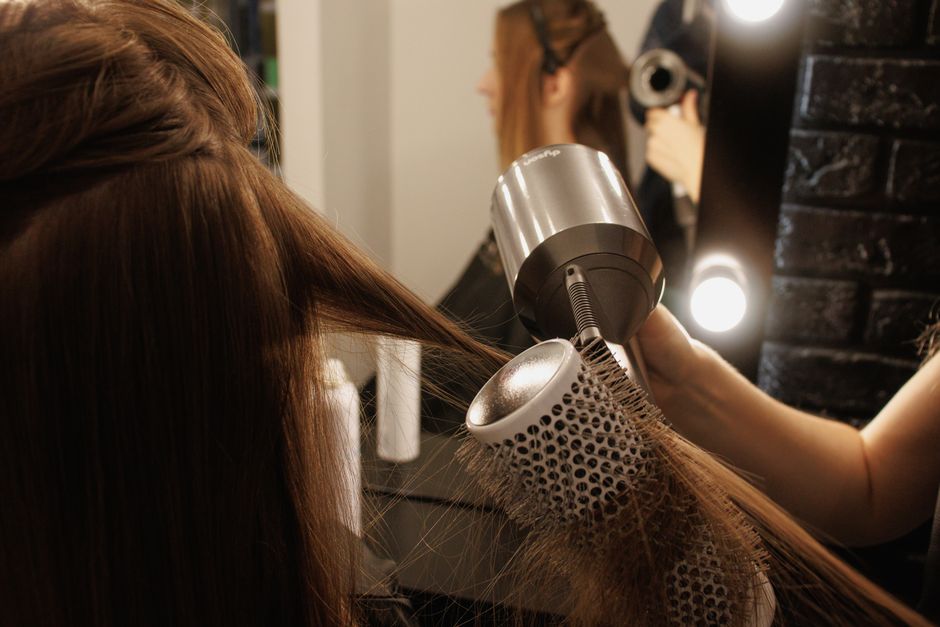
A Brazilian hair blowout is a salon smoothing treatment that uses a liquid formula, usually containing keratin or a similar protein, applied to the hair and then sealed in with high heat from a flat iron. It is not the same as a blow-dry style. The result is hair that dries smoother and takes less time to style for weeks after the appointment. The treatment goes by several names, including Brazilian keratin treatment and protein treatment, and the exact formula varies by salon and brand.
What Is A Brazilian Hair Blowout and How Does It Work?
The process works by coating the hair and using heat to bind the formula to the surface of the strand. The stylist washes the hair, applies the solution section by section, then blows it dry and passes a flat iron at high temperature over each section. That heat step is what sets the treatment.
The smoothing effect comes mostly from a temporary coating on the outside of the hair shaft. The treatment fills in rough spots on the cuticle, the outer layer of the hair, so strands lie flatter against each other. That is why hair looks shinier and feels softer right away.
One point that gets lost in marketing: a Brazilian blowout does not permanently change the structure of your hair the way a chemical relaxer does. The effect fades over time as the coating wears off and new hair grows in. Most people notice the smoothing starts to diminish after a few weeks, though how long it lasts varies a lot from person to person.
How Long Does a Brazilian Blowout Last?
Most people see the smoothing effect fade over roughly two to four months, but this range is a general expectation, not a fixed rule. Several things affect how long it lasts.
- How often you wash your hair. Frequent washing tends to shorten the effect.
- The strength of the shampoo you use. Clarifying or sulfate-heavy shampoos can strip the coating faster.
- Your hair type and how porous it is. Porous or damaged hair may hold the treatment differently than healthy hair.
- The specific formula and concentration used by your stylist.
Salons often quote a timeline that matches their product, but there is no single standard. If a salon promises a precise number of weeks, treat that as an estimate rather than a guarantee.
Is a Brazilian Blowout Safe? What About Formaldehyde?
Safety depends heavily on the formula, and this is the part worth understanding before you book. Some Brazilian-style smoothing treatments have contained formaldehyde or chemicals that release formaldehyde when heated. Formaldehyde is a known human carcinogen when inhaled at sufficient levels, and the flat-iron step produces fumes.
This is not a minor concern. Health agencies have investigated reports of eye irritation, breathing problems, and headaches among stylists and clients exposed to fumes during these treatments. Some countries and some US states have placed restrictions on formaldehyde in hair smoothing products.
Many salons now advertise “formaldehyde-free” formulas. That label needs scrutiny. Some products labeled formaldehyde-free still contain ingredients that release formaldehyde when heated, such as methylene glycol. The label does not always tell the full story.
If you are considering the treatment, ask your stylist directly what is in the formula and whether it has been tested for formaldehyde release. A salon that cannot answer clearly is a reason to pause. Good ventilation during the appointment matters too, since the fumes are the main exposure route.
People who are pregnant, have asthma, or have sensitive skin or breathing may want to be especially cautious and discuss it with a doctor first. Established guidance on formaldehyde exposure supports limiting inhalation, and that applies here.
Brazilian Blowout vs Keratin Treatment: What Is the Difference?
The two terms are often used interchangeably, and in practice the difference is blurry. Both are smoothing treatments applied in a salon and sealed with heat. The main distinction is the formula and, sometimes, the strength of the effect.
Brands and salons use these names loosely, so the label on the service menu does not reliably tell you what is in the bottle. What matters more than the name is the actual ingredient list and whether the formula releases formaldehyde when heated.
Some keratin treatments are described as more intense and longer-lasting, while some Brazilian-style treatments are positioned as gentler. Those are marketing categories more than consistent technical ones. Ask about ingredients rather than relying on the name of the service.
What Should You Expect During and After the Appointment?
A typical appointment takes a few hours depending on hair length and thickness. The stylist applies the solution, then flat-irons each section at high heat. The room may smell strongly during this step, which is the fumes from the formula being heated.
Afterward, most salons give aftercare instructions. Common ones include waiting a set period before washing, avoiding certain shampoos, and skipping tight hair ties or clips for a while. Follow the specific instructions your stylist gives, since they vary by product.
Some people notice their hair feels different in the days after, sometimes a little flat or stiff before it settles. Others see an immediate change. Results are not identical from person to person, and how your hair responds depends on its condition and type.
Who Should Avoid a Brazilian Blowout?
People with certain health conditions should think carefully before getting one. Because the main risk is inhaling fumes during the heat step, anyone with asthma or other breathing conditions may want to consult a doctor first. The same goes for people who are pregnant or breastfeeding, given the uncertainty around formaldehyde exposure.
Anyone with a sensitive scalp, recent chemical damage, or a history of reactions to hair products should raise it with the stylist and possibly a dermatologist. A patch test before the full treatment is a reasonable request, though not all salons offer one.
If you have had a reaction to a previous smoothing treatment, that is a strong signal to be cautious about repeating it.
Are There Safer Alternatives for Smoother Hair?
If the formaldehyde question concerns you, there are other routes to smoother hair. None of them replicate a salon smoothing treatment exactly, and results vary.
- Deep conditioning treatments can improve softness and reduce frizz temporarily.
- Heat-free styling methods and gentle drying can lower day-to-day frizz.
- Sulfate-free shampoos and leave-in conditioners may help maintain smoothness between washes.
- Trimming damaged ends removes the roughest part of the hair, which can make the rest look and feel smoother.
These approaches do not coat the hair the way a salon treatment does, so the effect is different in kind, not just in degree. They are lower-risk options worth knowing about, especially if you have health concerns about fumes.
Frequently Asked Questions
How long does a Brazilian blowout last?
Most people see the smoothing fade over roughly two to four months, though this varies by hair type and how often you wash it. There is no fixed timeline that applies to everyone.
Is a Brazilian blowout the same as a keratin treatment?
The names are often used interchangeably and the formulas overlap, so the service name alone does not tell you what is in the product. What matters is the ingredient list and whether it releases formaldehyde when heated.
Does a Brazilian blowout contain formaldehyde?
Some formulas have contained formaldehyde or chemicals that release it when heated, though many salons now use formulas marketed as formaldehyde-free. Ask your stylist for the specific ingredients rather than relying on the label.
Can you get a Brazilian blowout while pregnant?
There is no established safety guidance confirming these treatments are safe during pregnancy, given the fumes involved. Talk to your doctor before booking one.
