
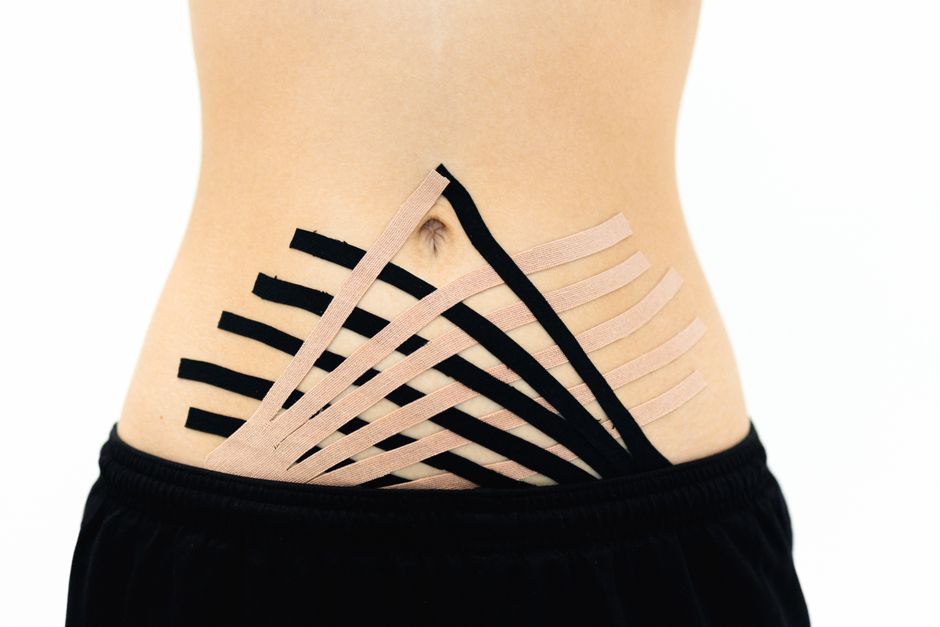
A pregnancy belly band is a stretchy support garment worn around the lower abdomen and pelvis. People use it mainly to take some of the weight of a growing belly off the lower back and pelvic joints. It does not treat or prevent medical conditions, and it is not a required part of prenatal care. Think of it as a comfort and support tool that some pregnant people find helpful and others do not need at all.
What Is a Belly Band Used For During Pregnancy?
The main purpose is mechanical support. As pregnancy progresses, the uterus grows and shifts the body’s center of gravity forward. That change pulls on the muscles and ligaments of the lower back and pelvis. A belly band wraps around the hips and under the belly to give that weight something to rest against.
People commonly use one for a few reasons:
- To ease general lower back discomfort that comes with a heavier belly
- To support the pelvic area if the joints there feel unstable or painful
- To reduce the pulling sensation some people feel in the lower abdomen when walking or standing for long periods
- To feel more steady on their feet during everyday activity
It is worth being clear about what a belly band is not. It is not a treatment for a diagnosed condition. It does not prevent preterm labor, preeclampsia, or any pregnancy complication. It does not make labor easier, and it does not help a baby grow or position itself. Any product claiming those things is overstepping the evidence.
The honest position is that belly bands are widely sold and widely used, but the research on how well they work is limited. That gap between popularity and proof matters, and it comes up again below.
How Does a Belly Band Actually Work?
A belly band works by external compression and lift. The fabric presses inward and upward on the lower abdomen, which transfers some of the downward and forward load of the uterus to the band itself rather than to your back and pelvic ligaments.
This is a straightforward physical mechanism, and it is well established. Think of it the way a lumbar support belt works for a warehouse worker lifting boxes. The belt does not strengthen anything. It just redistributes force for the time it is worn.
That last point is important. The support is temporary. Once you take the band off, the mechanical situation returns to what it was. A belly band does not train muscles, strengthen the core, or create lasting change in how your body carries weight.
Some people also report that the gentle pressure feels calming or grounding. That is a real subjective experience, but it is not the same as a measured clinical benefit, and it is hard to separate from the simple fact that wearing something supportive can feel reassuring.
Is There Real Evidence That Belly Bands Help?
The evidence is limited. This is the part most product pages leave out.
Some studies suggest that maternity support belts may reduce self-reported lower back pain in pregnancy. The problem is that many of these studies are small, and blinding is nearly impossible — you know whether you are wearing a belt. That makes it hard to rule out placebo effect, which is genuinely strong for pain.
For pelvic girdle pain, the picture is similar. Some clinicians recommend support belts as one part of a broader approach, alongside physical therapy and targeted exercise. That is common clinical practice. It is not the same as strong trial evidence showing the belt itself is the active ingredient.
Here is the non-obvious part. A pregnant person’s back pain is often reported as improving on its own over weeks regardless of what is done, which makes any single intervention look better than it may be. That is why small unbinded studies of support garments need to be read with caution.
What can be said with confidence is that belly bands are generally low-risk for most people and that some users find them helpful. What cannot be said is that they reliably treat pain or outperform other approaches.




When Might a Belly Band Be Worth Trying?
The most reasonable time to try one is when you have discomfort that gets worse with standing, walking, or prolonged activity, and you want to see whether external support changes it. Many people first consider one in the second or third trimester as the belly gets heavier.
It is often more useful as one tool among several rather than as a standalone fix. Other approaches with better or comparable evidence include:
- Physical therapy with a provider trained in prenatal care
- Targeted strengthening for the deep core, hips, and pelvic floor
- Activity modification and pacing through the day
- Supportive footwear and avoiding prolonged standing on hard surfaces
If pain is severe, one-sided, comes with fever, bleeding, fluid leakage, or changes in your baby’s movement, that is not a belly band situation. Contact your prenatal care provider. Those symptoms point to something that needs evaluation, not support wear.
How Do You Choose and Wear One?
Fit matters more than brand. A band should feel supportive but not tight. If it digs in, restricts your breathing, or leaves deep marks on your skin, it is too snug.
Key points on wearing one:
- Position it low, around the hips and under the belly, not across the middle of your bump
- Wear it during activity and remove it when resting or sleeping
- Take it off if you feel short of breath, numb, or uncomfortable
- Adjust it as your body changes — a fit that worked at 24 weeks may not work at 34
There are two broad styles. Wrap-style bands use overlapping fabric you adjust yourself. Belt-style supports often have straps that go over the shoulders or around the pelvis. Neither has been shown to clearly outperform the other. The best one is the one you will actually wear comfortably.
Do not sleep in a belly band unless a clinician specifically tells you to. There is no established reason to wear one overnight, and prolonged compression is not something to do without a clear purpose.
Are There Risks or Downsides?
For most pregnant people, a properly fitted belly band is low-risk. Serious harm from a support garment is not well documented. But low-risk is not the same as risk-free, and there are real downsides to know about.
Wearing one too tight can cause discomfort, skin irritation, and pressure that is simply unpleasant. Some people find that relying on a band makes them less likely to work on the underlying strength and movement patterns that could help more over time. That is a reasonable concern, though it has not been firmly proven in studies.
Anyone with certain skin conditions, circulation concerns, or specific pregnancy complications should check with their provider before using one. No clinical guidelines set out clear rules for who should avoid belly bands, so this is a case where your individual situation and your provider’s input matter more than any general rule.
One more honest note. Belly bands are not a substitute for prenatal care, physical therapy, or medical evaluation of pain. If you are reaching for a band to manage pain that is getting worse, that is a signal to talk to a clinician, not to tighten the strap.
Do You Actually Need One?
No. A belly band is optional. Many pregnant people never use one and do fine. Others find it genuinely helpful for specific discomfort. Both are normal.
If you are considering one, the sensible approach is to treat it as an experiment. Try it during the activities that bother you. Pay attention to whether it actually helps. If it does, keep using it within reason. If it does not, there is no obligation to keep wearing it, and no reason to feel you are doing something wrong by stopping.
The bigger picture is that pregnancy discomfort is common and often manageable, but the tools that help most are usually the unglamorous ones — movement, strength, rest, and guidance from a provider who knows your situation. A belly band can be a small part of that. It is not the whole answer, and no product should be sold as if it were.
Frequently Asked Questions
What is a belly band used for during pregnancy?
It is used to support the lower abdomen and pelvis and to take some weight off the lower back. People mainly use it for comfort during standing, walking, and daily activity.
Do belly bands actually help with pregnancy back pain?
Some studies suggest they may reduce self-reported lower back pain, but the evidence is limited and most studies are small. Many people find them helpful even though strong proof is lacking.
When should you start wearing a belly band?
There is no set week to start. Most people consider one in the second or third trimester when the belly feels heavier, or whenever discomfort with activity begins.
Can you sleep in a belly band?
No, there is no established reason to wear one overnight. Use it during activity and remove it when resting unless a clinician tells you otherwise.
