
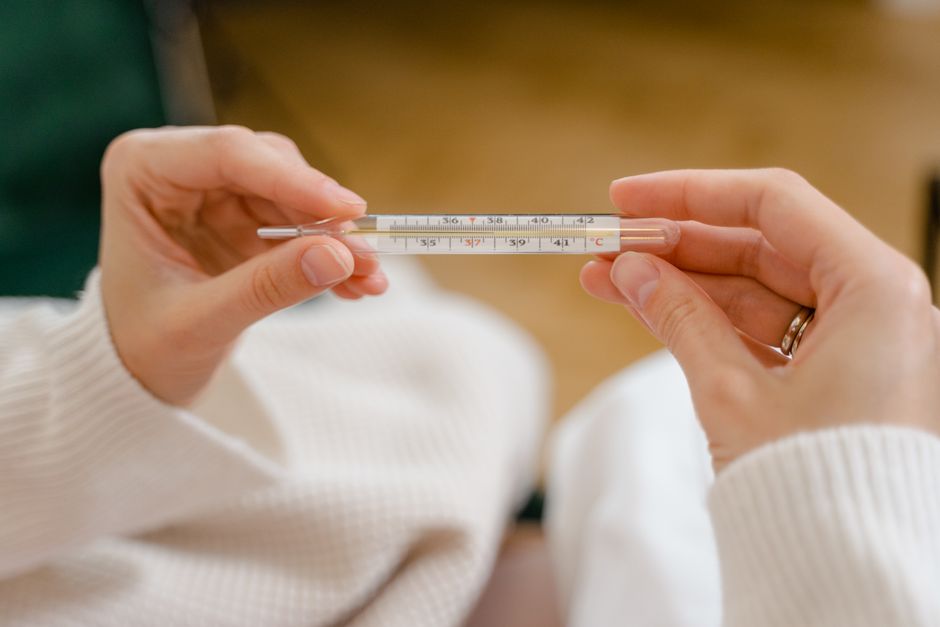
36.7 degrees Celsius equals 98.1 degrees Fahrenheit. That is the direct conversion, and it lands right inside the range most clinicians consider normal body temperature. If you took your temperature and the thermometer showed 36.7 °C, you do not have a fever.
The math behind it is simple: multiply the Celsius reading by 1.8, then add 32. For 36.7, that is (36.7 × 1.8) + 32 = 98.1 °F. Below you will find how that number fits into the bigger picture of normal body temperature, why the “98.6” figure you grew up with is not as fixed as it sounds, and when a reading like 36.7 deserves attention.
What Is 36.7 Celsius In Fahrenheit?
36.7 °C is 98.1 °F. The conversion formula is °F = (°C × 1.8) + 32.
This is a normal, healthy body temperature for most adults. It sits just below the long-quoted average of 98.6 °F (37 °C). A reading of 36.7 °C is not low, and it is not a fever. It is right where a lot of people land on any given day.
To put it in perspective, here is how a few nearby Celsius readings convert:
| Celsius (°C) | Fahrenheit (°F) | General context |
|---|---|---|
| 36.1 | 97.0 | Lower end of normal for some people |
| 36.7 | 98.1 | Normal |
| 37.0 | 98.6 | Traditional “average” |
| 38.0 | 100.4 | Generally considered a fever |
Those reference points matter because body temperature is not one fixed number. It moves around during the day, and what counts as normal depends partly on how and where you measure it.
Why Isn’t Normal Body Temperature Always 98.6?
The 98.6 °F figure comes from 19th-century measurements that were treated as a universal standard for well over a century. More recent research has shown that average body temperature is often a bit lower than that.
A widely cited study of healthy adults, published in the journal BMJ in 2017, found an average oral temperature closer to 97.9 °F (about 36.6 °C). Other large studies have landed in similar territory. The exact average shifts depending on the population studied and the measurement method used.
So 36.7 °C (98.1 °F) is not a low reading. It is right around where many healthy adults actually sit. The old 98.6 number is a rough midpoint, not a target your body has to hit.
What Affects Your Body Temperature Reading?
Your temperature is not constant. It rises and falls through the day, and several everyday factors can shift it by a fraction of a degree or more.
- Time of day: Temperature tends to be lowest in the early morning and highest in the late afternoon or evening.
- Measurement site: Rectal readings run highest, oral readings sit in the middle, and armpit (axillary) readings tend to run lowest. Ear and forehead readings vary by device.
- Activity: Exercise, heavy clothing, or a hot environment can nudge a reading upward temporarily.
- Age: Older adults often run cooler than younger adults.
- Recent food or drink: Hot or cold drinks just before an oral reading can skew the result.
- Hormones: Menstrual cycle phase can shift baseline temperature slightly in some people.
Because of all this, a single reading of 36.7 °C tells you very little on its own. What matters more is how it compares to your own usual range and whether you feel unwell.





Is 36.7 Celsius Considered a Low Temperature?
No. 36.7 °C (98.1 °F) is within the normal range for adults. It is not hypothermia, and it is not a sign that something is wrong by itself.
Hypothermia is a different situation entirely. It is generally defined as a core body temperature dropping below 95 °F (35 °C), and it comes with symptoms like shivering, confusion, slurred speech, and drowsiness. A reading of 36.7 °C is nowhere near that threshold.
Some people naturally run a little cooler than others. If your normal baseline is around 36.5 °C and you measure 36.7 °C, that is simply you on a normal day. If your usual baseline is 37 °C and you suddenly drop to 36.7 °C with no other symptoms, that is still within normal limits for most people.
Context matters more than the number alone. A temperature reading is one data point, not a diagnosis.
When Does a Temperature Become a Fever?
In adults, a temperature of 100.4 °F (38 °C) or higher is generally considered a fever. That is the threshold most clinical references use.
Below that, readings between about 99 °F and 100.4 °F are sometimes called a low-grade temperature, though definitions vary. Many clinicians do not treat a mildly elevated reading as a true fever unless it crosses the 100.4 °F mark.
A fever is not an illness by itself. It is a sign that the body’s immune system has raised its internal set point, usually in response to an infection. The fever is part of the response, not the problem.
For adults, a fever is often not dangerous on its own. What matters is the cause and how the person feels. A high fever, a fever that lasts more than a few days, or a fever with severe symptoms like stiff neck, rash, confusion, or trouble breathing needs medical attention.
How Do You Convert Celsius to Fahrenheit?
The formula is straightforward: multiply the Celsius temperature by 1.8, then add 32.
For 36.7 °C: 36.7 × 1.8 = 66.06, then 66.06 + 32 = 98.06, which rounds to 98.1 °F.
If you want a rough mental shortcut, doubling the Celsius number and adding 30 gets you close for everyday temperatures. For 36.7, that gives about 103 — too high, so the shortcut has limits. The exact formula is the one to trust.
Going the other way, from Fahrenheit to Celsius, you subtract 32 first, then divide by 1.8. So 98.1 °F back to Celsius: 98.1 − 32 = 66.1, then 66.1 ÷ 1.8 = 36.7 °C. The math checks out both directions.
Does the Measurement Method Change What Counts as Normal?
Yes, and this is one of the most overlooked details in temperature reading. Where and how you measure changes what number you should expect.
Rectal temperatures tend to read highest and are often treated as closest to true core temperature. Oral readings usually run slightly lower. Axillary (armpit) readings tend to run lowest of the common methods. Ear and forehead (temporal artery) thermometers vary by device and technique.
This means a 36.7 °C reading from an armpit thermometer and a 36.7 °C reading from a rectal thermometer are not quite the same thing physiologically. In practice, though, both sit within normal limits for adults.
For home use, the key is consistency. If you are tracking a temperature over time, use the same method, the same device, and roughly the same time of day. That gives you a more meaningful comparison than switching methods between readings.
What Should You Do If Your Temperature Is 36.7 Celsius?
If you feel fine, nothing. A reading of 36.7 °C (98.1 °F) with no other symptoms is normal and does not require any action.
If you feel unwell, the number alone should not be your guide. Symptoms matter more than a single reading. Fatigue, cough, sore throat, body aches, or a general sense of being sick are worth paying attention to even if your temperature is normal.
Some infections do not always produce a fever, especially early on or in older adults. A normal temperature does not rule out illness. It also does not confirm health. It is one piece of information among many.
If you are concerned about how you feel, contact a healthcare provider. They can assess the full picture rather than relying on a single number.
Frequently Asked Questions
Is 36.7 Celsius a fever?
No. 36.7 °C equals 98.1 °F, which is within the normal range for adults. A fever in adults is generally defined as 100.4 °F (38 °C) or higher.
Is 36.7 Celsius normal body temperature?
Yes, 36.7 °C (98.1 °F) is a normal adult body temperature. It sits just below the traditional 98.6 °F average, which recent research suggests is a bit higher than the true average for many healthy adults.
What is 36.7 Celsius in Fahrenheit for a baby?
The conversion is the same: 36.7 °C is 98.1 °F. However, normal temperature ranges and fever thresholds for infants differ from adults, so a pediatrician should be consulted for any concerns about a baby’s temperature.
Is 36.7 Celsius too low?
No. 36.7 °C (98.1 °F) is not a low temperature. Hypothermia is generally defined as a core temperature below 95 °F (35 °C), which is far below this reading.
