
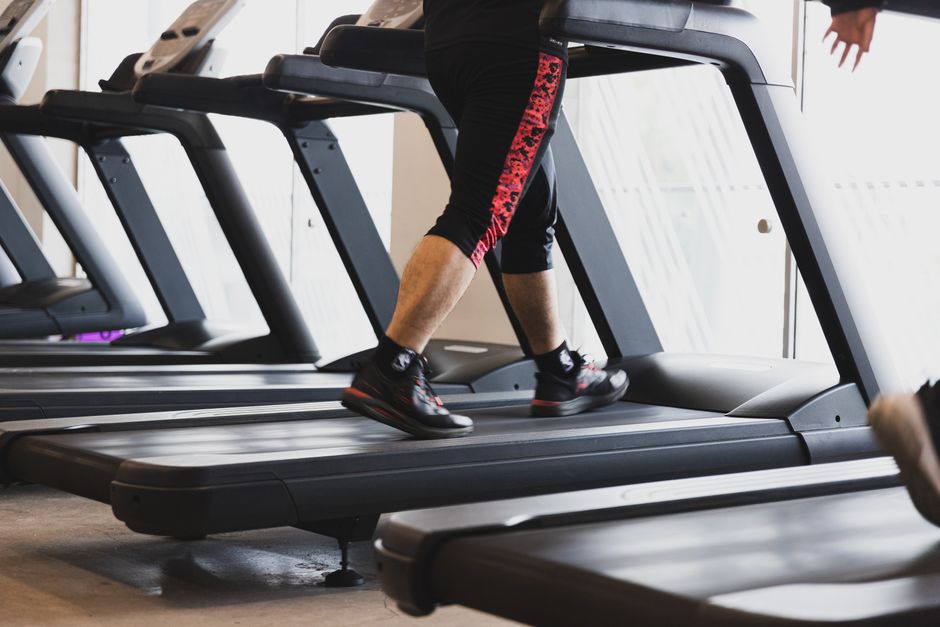
A treadmill incline of 1% to 2% is a reasonable starting point for most healthy adults who want to mimic outdoor walking. If you are new to incline walking, begin at 0% to 1% and build up. If you are training for hills or want more intensity, 5% to 10% is a common working range. Anything above 10% to 12% shifts the effort noticeably and is usually reserved for specific training goals.
There is no single correct number. The right incline depends on your fitness, your joints, your goals, and how long you plan to walk. What follows is what the research and clinical guidance actually support — and where the evidence gets thin.
What Incline Should You Walk On a Treadmill for General Fitness?
For general cardiovascular fitness, most people do well somewhere between 1% and 5% incline. A 1% grade is often used because walking on a flat treadmill belt removes the small hills and uneven ground of outdoor walking. Adding a slight incline brings the effort closer to walking outside.
The American College of Sports Medicine has long recommended moderate-intensity aerobic activity for most adults — roughly 150 minutes per week of activity where you can talk but not sing. Incline walking is one way to reach that intensity without running. The grade itself matters less than whether your heart rate and breathing land in that moderate zone.
A practical way to think about it: pick the incline that makes the walk feel like a brisk outdoor walk, not a climb and not a stroll. If you can carry on a broken conversation, you are probably in the right range. If you are gasping, drop the incline or the speed.
One clarification worth making: incline and speed are not the same lever. Raising the incline at a slow speed can feel easier on your joints than raising speed on a flat belt. Many people find they can walk longer and more comfortably by adding grade instead of pace.
How Does Incline Change the Effort of Walking?
Walking uphill increases the work your muscles do with every step. Your hip extensors, quadriceps, calves, and glutes all contribute more as the grade rises. Your heart has to pump harder to deliver oxygen to those working muscles, so heart rate climbs even if your speed stays the same.
This is well-established physiology. The relationship between incline and energy cost is one of the more studied areas in exercise science. As grade increases, oxygen consumption increases — meaning you burn more energy for the same amount of time. That part is not in dispute.
What is less certain is exactly how many more calories any individual burns at a given incline. Estimates depend on body weight, speed, stride, and fitness. Online calorie calculators that claim precise numbers for incline walking are working from broad averages, not your personal data. Treat them as rough guides, not measurements.
The downhill side matters too. Walking downhill — which you cannot really do on most treadmills — puts different stress on the knees and quadriceps. Since treadmill walking is almost always uphill or flat, it avoids that particular load. That is one reason some clinicians suggest incline walking for people who want cardio with less pounding than running.
Is a Higher Incline Always Better?
No. Higher incline means more intensity, but intensity is only useful if you can recover from it and repeat it. A 15% grade that leaves you sore for three days is not better than a 5% grade you can do four times a week.
There is also a joint and tendon consideration. Steep inclines load the Achilles tendon, the calves, and the front of the knee more heavily. For people with existing Achilles issues, plantar fasciitis, or patellofemoral pain, very steep grades can aggravate symptoms. This is a general clinical observation rather than something proven by large trials, so it is worth discussing with a clinician if you have a specific diagnosis.
There is a common belief that holding the handrails makes steep incline walking safe. It does reduce the load on your legs, but it also changes the exercise. Gripping the rails shifts weight to your arms and reduces the work your lower body does. If you need the rails to stay on at a given incline, that incline is probably too steep for now.
A reasonable approach is to find the highest incline you can sustain with good posture and without holding on. That is your working grade. It will change as you get fitter.





What Incline Should You Walk On a Treadmill If You Are New to It?
Start at 0% to 1%. Walk at a comfortable pace for 10 to 20 minutes. If that feels easy, add 1% to 2% the next session. Small increases are easier to tolerate than big jumps.
New incline walkers often make the same mistake: they set a steep grade on day one because it feels productive. The result is sore calves for a week. Your calf muscles and Achilles tendons adapt to grade gradually. Give them time.
A simple progression looks like this:
- Week 1 to 2: 0% to 2% incline, comfortable pace
- Week 3 to 4: 2% to 4% incline, same or slightly faster pace
- Week 5 and beyond: add 1% every week or two as long as you feel good
These are general progressions, not prescriptions. There is no clinical guideline that specifies exact weekly incline increases for treadmill walking. The principle — gradual overload with recovery — is well supported. The specific numbers are practical guidance, not trial-tested thresholds.
If you have heart disease, uncontrolled blood pressure, or joint problems, talk to a clinician before starting an incline program. Incline walking raises heart rate more than flat walking at the same speed, and that matters if you have a cardiac condition.
Does Incline Walking Help With Weight and Blood Sugar?
Incline walking is a form of moderate-intensity aerobic exercise, and moderate-intensity aerobic exercise has well-documented benefits for cardiovascular health and blood sugar control. The incline itself is a way to reach that intensity, not a separate magic ingredient.
Research on walking and blood sugar has generally looked at walking after meals, and some studies suggest that walking after eating can blunt the post-meal rise in blood glucose compared with sitting. Whether incline adds anything beyond the effect of walking itself is not well established. The incline increases energy expenditure, which could matter over time, but no large trial has isolated incline walking as a distinct intervention for blood sugar.
For weight, the honest position is that exercise alone rarely produces large weight loss. Incline walking burns more calories than flat walking at the same speed, which can contribute to an energy deficit. But diet is the bigger lever for most people. Framing incline walking as a weight-loss tool oversells it. Framing it as a way to improve fitness, which supports overall health, is more accurate.
How Do You Choose the Right Incline for Your Goal?
The incline you choose should match what you are trying to do. Different goals point to different ranges.
| Goal | Typical incline range | Notes |
|---|---|---|
| General fitness | 1% to 5% | Moderate effort, sustainable most days |
| Hill or hiking training | 5% to 10% | Builds leg endurance for outdoor terrain |
| Higher-intensity cardio | 8% to 12% | Raises heart rate without running |
| Joint-friendly cardio | 2% to 6% | Lower impact than running, still challenging |
These ranges are practical guidance drawn from common training practice, not from controlled trials that tested each range against the others. Use them as a starting map, then adjust based on how you feel and what your body tolerates.
Two variables matter as much as the number: how long you walk and how often. A 20-minute walk at 3% three times a week is a different stimulus than a 45-minute walk at 3% five times a week. Both can be useful. Neither is inherently right.
When Should You Lower the Incline?
Lower the incline if you feel sharp pain, if your calves or Achilles are sore for more than a day or two, or if you cannot maintain an upright posture without leaning heavily on the rails. Discomfort that builds during a session and fades quickly is usually fine. Pain that lingers is a signal to back off.
Dizziness, chest pressure, or unusual shortness of breath are reasons to stop and seek medical attention. Those are not training adjustments — they are potential medical events.
If you are returning from an injury or surgery, the right incline is whatever your rehabilitation clinician clears you for. General fitness advice does not apply cleanly to a healing joint or a recent procedure.
Frequently Asked Questions
What incline should I walk on a treadmill to burn more calories?
Any incline above 0% increases energy expenditure compared with flat walking at the same speed. Most people see a meaningful increase somewhere between 3% and 8%, though exact calorie burn depends on your weight, speed, and fitness.
Is 12% incline walking too much?
For many healthy adults, 12% is a hard but manageable grade for shorter sessions. It places more load on the calves, Achilles, and knees, so it is usually not the best choice for beginners or people with joint issues.
Should I hold the handrails when walking on an incline?
Holding the rails reduces the work your legs do and changes your posture. If you need the rails to stay on at a given incline, that incline is likely too steep for your current fitness.
Does incline walking replace running for cardio?
Incline walking can raise your heart rate into a moderate-to-vigorous range, which supports cardiovascular fitness. It does not match the intensity of running for most people, but it is lower impact and easier to sustain.
