

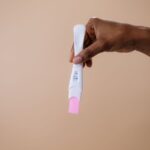
A pregnancy test with no lines at all is different from a negative test. A negative result shows one line in the control window, which means the test worked and did not detect hCG. A completely blank test means the strip or window did not function, so the result tells you nothing about whether you are pregnant. The test either failed, was used incorrectly, or was defective. You need to test again with a new device.
That distinction matters more than most people realize. A blank test is not a “no.” It is a “no information.” Treating it as a negative result can delay a real answer, and treating it as a positive can cause unnecessary worry. The next sections explain why blank tests happen, what hCG actually does, and how to get a result you can trust.
What Does It Mean When No Lines Show On A Pregnancy Test?
It means the test did not complete its run. Home pregnancy tests are built around a control line — a line that should appear every time the device works, whether or not you are pregnant. The control line proves the test absorbed urine, the chemicals were active, and the strip processed correctly. No control line means the test is invalid.
This is why manufacturers print instructions telling you to check the control window first. A result without a control line has no meaning, positive or negative. It is not a weak positive. It is not an early negative. It is a failed test.
Some tests use two windows, some use one window with two line positions, and some digital tests show words instead of lines. On a digital test, a blank screen or an error message plays the same role as a missing control line. The device did not complete the test.
Why the control line matters
The control line is a built-in check. It contains antibodies or reagents that bind regardless of hCG. If that reaction does not happen, something went wrong with the device itself. Without that check, you cannot interpret anything else the test shows.
Why Would a Pregnancy Test Show No Lines At All?
Most blank tests come down to a handful of causes. Some are user errors. Some are product problems. A few are related to how the test detects hCG.
- Not enough urine on the strip. Dip-style strips need to sit in urine for the time stated in the instructions. Too short a dip or too little sample can prevent the strip from running.
- Too much urine or over-saturation. Flooding the result window can wash away reagents before they react.
- Reading too early. Many tests need a few minutes for lines to develop. Checking after 30 seconds can show a blank window that would have filled in.
- Reading too late. Leaving a test out for hours can cause evaporation lines or dye smearing, though this usually creates faint lines rather than none.
- Expired test. Reagents degrade over time. An expired test may not produce a control line.
- Improper storage. Heat, moisture, or freezing can damage test strips before you open them.
- Defective device. Manufacturing defects happen. This is why testing twice is standard advice.
- Very dilute urine. Drinking large amounts of fluid before testing can lower hCG concentration, though this typically affects the test line rather than the control line.
Notice that pregnancy itself is not on this list. Whether you are pregnant or not, the control line should appear if the test works. A blank test does not tell you anything about your hCG level.
How Do Pregnancy Tests Detect hCG?
Home pregnancy tests detect human chorionic gonadotropin, a hormone produced by the developing placenta after an embryo implants in the uterus. hCG enters the bloodstream and then the urine. Tests use antibodies that bind to hCG and produce a visible line or a digital signal.
After implantation, hCG levels rise quickly in early pregnancy. This is why some tests can detect pregnancy before a missed period, though accuracy is highest after a missed period. The hormone’s presence in urine is what the test line detects. The control line detects nothing about pregnancy — it only confirms the test worked.
Understanding this separation is the key to reading any test correctly. The control line answers “did this test work?” The test line answers “did this test find hCG?” A blank result means the first question was never answered.




Should You Retest After a Blank Pregnancy Test?
Yes. A blank test should always be repeated with a new device. There is no useful information in the first result, so the only way forward is another test.
When you retest, a few practical steps improve your odds of a valid result:
- Read the instructions fully before starting, especially the dip time and read time.
- Check the expiration date on the packaging.
- Use first-morning urine when possible, since it is typically the most concentrated.
- Avoid drinking large amounts of fluid right before testing.
- Use a midstream sample if the test requires a cup, and follow the dip time exactly.
- Read the result within the window stated in the instructions, not before and not hours later.
If a second test is also blank, the problem is likely the testing method or a bad batch. Try a different brand or a different type of test. Digital tests and line tests use different formats and can fail for different reasons.
When Should You See a Doctor About a Blank or Negative Test?
Contact a healthcare provider if you have a missed period and repeated negative or invalid tests, or if you have symptoms that could suggest pregnancy — nausea, breast tenderness, fatigue, or spotting — alongside unclear results. A provider can order a blood hCG test, which measures the hormone directly and is not affected by the issues that cause blank urine tests.
Seek care promptly if you have severe abdominal pain, heavy bleeding, dizziness, or fainting. These symptoms can have several causes, and some require urgent evaluation. This is not a situation to sort out with home tests alone.
Also talk to a provider if you are using fertility medication or have a condition that affects hCG levels, since these can complicate interpretation of home tests.
What If You Get a Faint Line Instead of No Lines?
A faint line is a different situation from no lines. A faint test line can mean early pregnancy with low hCG, or it can be an evaporation line, a dye run, or a test read outside the recommended window. The evidence for what a faint line means is genuinely mixed, and interpretation depends heavily on timing and the specific test.
The practical approach is to wait a day or two and retest with first-morning urine. hCG rises over time in a viable early pregnancy, so a true positive usually becomes darker. A line that stays faint or disappears is more likely an artifact. If you are unsure, a blood test from a provider gives a clear answer.
What a faint line does not mean is that the test failed. A failed test shows no control line. A faint test line with a clear control line is a working test that produced a weak signal.
How Reliable Are Home Pregnancy Tests?
Home pregnancy tests are generally reliable when used correctly and read within the stated window. Their accuracy depends on timing relative to implantation, urine concentration, and following instructions. Testing too early is one of the most common reasons for a missed result, because hCG may not yet be high enough to detect in urine.
The control line is what makes a result trustworthy. A test with a clear control line and no test line is a valid negative. A test with no control line is not a result at all. That single distinction resolves most confusion about blank tests.
If you have tested more than once with blank results, the issue is almost certainly the device or the method, not your body. A new test, a different brand, or a blood test will give you the answer you are looking for.
Frequently Asked Questions
What does it mean if no lines show on a pregnancy test?
It means the test is invalid because the control line did not appear. A working test should always show a control line, so a completely blank test tells you nothing about whether you are pregnant.
Can a pregnancy test be blank and still mean I’m pregnant?
A blank test cannot confirm or rule out pregnancy because the device did not function. You need to retest with a new device to get a result you can interpret.
How long should I wait to retest after a blank pregnancy test?
You can retest right away with a new device, since the first test gave no information. If you are testing early, waiting a day or two and using first-morning urine may improve detection.
Why did my pregnancy test show no control line?
Common causes include not enough urine on the strip, an expired or improperly stored test, reading outside the recommended time, or a defective device. Pregnancy itself does not cause a missing control line.
