
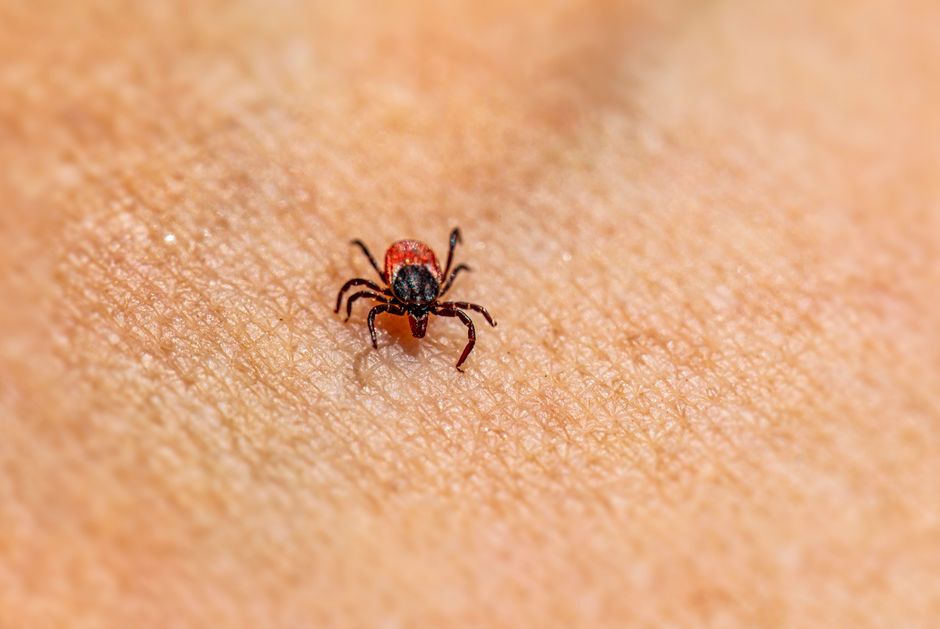
If a tick’s head breaks off and stays in your skin, the piece left behind cannot grow a new tick and does not keep feeding on you. The mouthparts are stuck like a splinter. Your body will usually push them out on their own over days to weeks, much like it handles any small foreign object. The main reason to act is to lower the risk of infection at the bite site — not because the leftover head is dangerous in itself.
This is one of the most common tick fears, and it is worth getting straight. The advice you may have heard — “never pull, or the head stays in” — is well meaning but incomplete. Pulling correctly is exactly what you should do. What matters is how you pull, and what you do if a piece stays behind.
What If A Tick Head Gets Stuck In Your Skin?
The head can get stuck when a tick is pulled too roughly, squeezed, or twisted, or when it is yanked before it has let go. The tick’s mouthparts are built to anchor it firmly in place. They are barbed and work somewhat like a tiny anchor, which is why a tick does not simply fall off when brushed.
When the body of the tick separates from the mouthparts, what remains is a small dark speck embedded in the skin. It is not alive in any meaningful sense. It cannot reproduce, and it is not continuing to draw blood. Some people describe it as a “head,” but what is actually left is usually part of the mouthparts, not the whole head.
The skin around it may stay slightly red or raised for a while. A small, firm bump can remain for weeks as the body slowly breaks the fragment down. In many cases the piece works its way to the surface and comes out on its own, or the skin heals over it.
There is one important nuance. The risk of tick-borne illness does not come from the leftover mouthparts. It comes from whether the tick was infected and how long it stayed attached before removal. A stuck head tells you nothing about that risk on its own.
How Do You Remove A Tick Head That’s Left Behind?
If a small piece is left after you remove a tick, the safest approach is usually to leave it alone and keep the area clean. Trying to dig it out with fingernails, tweezers, or a needle often does more harm than good. It can push the fragment deeper, tear the skin, and create a wound that is more likely to get infected.
Clean the area with soap and water or an alcohol wipe. Keep it dry and watch it over the next several days. That is the standard guidance for a small retained fragment.
There are situations where a clinician should look at it:
- The fragment is large, deep, or clearly visible and easy to grasp at the surface.
- The skin around it becomes increasingly red, swollen, warm, or painful.
- You see pus or streaks spreading from the site.
- You develop a fever or feel unwell.
- You cannot tell whether the whole tick is out and you are unsure.
A healthcare professional can remove a stubborn fragment under clean conditions if it needs to come out. Some clinicians will numb the area first. This is a minor procedure and not something to fear, but it is also not usually necessary for a tiny speck.
What Is The Correct Way To Remove A Tick?
The right method is simple: use fine-tipped tweezers, grasp the tick as close to the skin as you can, and pull straight up with steady, even pressure. Do not twist or jerk. Do not squeeze the tick’s body. Do not crush it.
Pulling straight up with steady pressure is what lets the mouthparts release rather than break. Grabbing the body and squeezing is one of the most common reasons the head stays behind. The squeeze pushes fluid back into the skin and can cause the mouthparts to grip harder.
After removal, clean the bite and your hands. If you can, save the tick in a small container or sealed bag. Some health departments and clinicians can identify the species, which can help assess risk. This is optional but can be useful.
Old folk remedies do not work and can make things worse. Do not smother the tick with petroleum jelly, nail polish, alcohol, or a lit match. These do not make a tick let go, and a match can burn your skin. Research and public health guidance have discouraged these methods for years.
Does A Stuck Tick Head Raise Your Risk Of Disease?
The leftover mouthparts do not carry or transmit infection by themselves once separated from the tick’s body. The disease risk from a tick bite depends on whether the tick was infected and how long it stayed attached. That risk is set before removal, not by whether a piece breaks off.
The more relevant concern after any tick bite is a skin infection at the site, which is a wound issue rather than a tick-borne disease issue. That is why keeping the area clean matters. A retained fragment can act like a small splinter and occasionally become a minor localized infection.
Different ticks carry different organisms, and risk varies by region and species. This is why a clinician may ask where you were and what the tick looked like. The stuck head itself is not the deciding factor.
Watch for signs in the days and weeks after a bite. These can include a spreading rash, fever, fatigue, muscle aches, or joint pain. A rash that expands over time deserves medical attention. Not every tick bite causes illness, and many do not. But symptoms after a bite are worth reporting to a clinician promptly.
What Happens To The Leftover Piece Over Time?
In most cases, the body treats the fragment like any small foreign object. It forms a tiny area of inflammation around it and slowly breaks it down or pushes it toward the surface. Over days to a few weeks, it may work its way out or simply become a small firm bump under the skin.
Sometimes a small hard lump remains for longer. This is generally harmless. If it becomes tender, red, or draining, that is a reason to have it checked.
There is a common misconception worth correcting here. People often assume a stuck head means the tick is still alive and feeding. It is not. Once the body separates, the remaining mouthparts are inert. The idea that the tick “grows back” or keeps drawing blood is not accurate.
The timeline for the skin to settle varies from person to person. Some people notice the spot for a few days; others notice a small bump for weeks. Neither is unusual on its own.
When Should You See A Doctor After A Tick Bite?
See a clinician if you develop a rash that grows, a fever, or flu-like symptoms after a tick bite. These can be signs of a tick-borne illness that warrants prompt evaluation. Early assessment matters for several tick-borne infections.
Also seek care if the bite site shows signs of infection — increasing redness, swelling, warmth, pain, or pus. And see a clinician if a fragment is large, deep, or you cannot remove it and it is bothering you.
If you are unsure whether a tick is fully removed, a quick check by a healthcare professional can settle it. There is no shame in asking. It is a common and reasonable question.
For people in areas where certain tick-borne diseases are common, local health departments often provide guidance on what to watch for. Following regional public health advice is sensible, because the relevant risks differ by location.
How Can You Prevent Ticks From Getting Attached?
Prevention is more reliable than removal. Ticks wait on grass and low vegetation and grab onto clothing or skin as you pass. Reducing exposed skin and checking yourself after time outdoors are the most dependable steps.
- Wear long sleeves and long pants in wooded or grassy areas, and tuck pants into socks where ticks are common.
- Use an EPA-registered tick repellent on skin and clothing according to the label.
- Check your whole body after being outdoors, including scalp, ears, armpits, waist, and behind the knees.
- Shower soon after coming inside and do a full check.
- Check pets too, since they can carry ticks indoors.
The sooner a tick is found and removed, the lower the chance it has been attached long enough to transmit certain infections. This is why a careful check after outdoor time is worth the effort. Removing a tick correctly the first time is also the best way to avoid a stuck head in the first place.
Frequently Asked Questions
Can a tick head grow back into a new tick?
No. A separated mouthpart cannot grow into a new tick or keep feeding. The leftover piece is inert and your body slowly breaks it down or pushes it out.
Should I dig out a tick head that’s stuck?
Usually no. Digging with needles or fingernails can push it deeper and cause infection, so cleaning the area and watching it is generally the safer choice. See a clinician if it is large, deep, or the site becomes red and painful.
How long can a tick head stay in your skin?
It can remain for days to a few weeks before working its way out, and sometimes a small firm bump lingers longer. This is generally harmless if the area stays clean and does not become infected.
Does a stuck tick head mean I have a tick-borne disease?
No. Disease risk depends on whether the tick was infected and how long it stayed attached, not on whether a piece broke off. Watch for a spreading rash, fever, or flu-like symptoms and see a clinician if they appear.
