
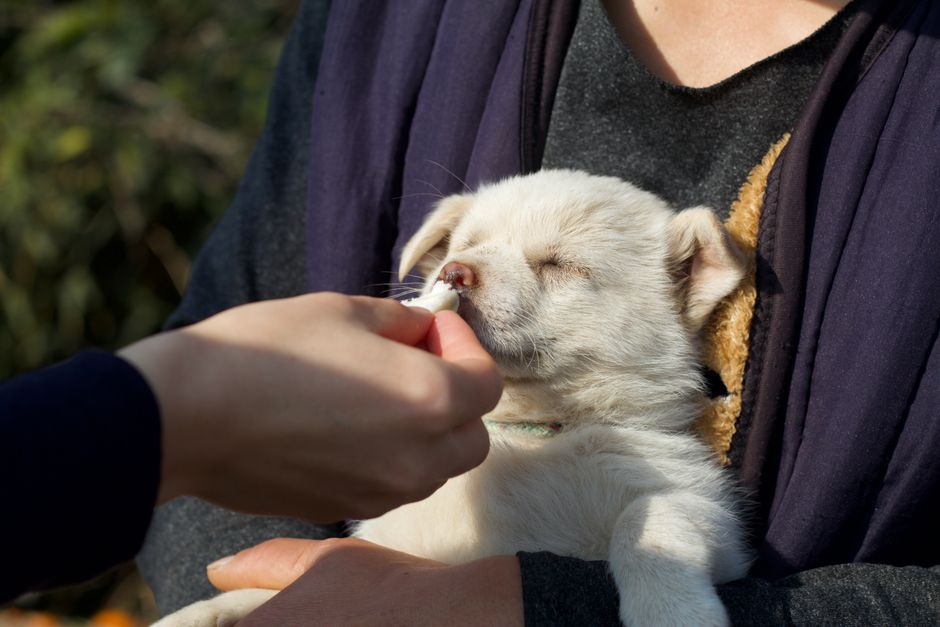
Puppies can eat several human foods safely, including cooked lean meats like chicken and turkey, plain vegetables such as carrots and green beans, and fruits like apple slices without seeds. Plain cooked rice and plain oatmeal are also safe in small amounts. These foods should always be unseasoned, plain, and offered in tiny portions as treats, not as meal replacements.
Why Puppies Have Different Nutritional Needs Than Adult Dogs
Puppies grow fast. Their bodies need more protein, fat, calcium, and certain vitamins per pound of body weight than adult dogs. Commercial puppy foods are formulated to meet these higher demands. Human food can upset that balance if given too often or in large amounts.
A puppy’s digestive system is also less mature. Sudden changes in diet can cause vomiting or diarrhea. Even a safe human food can trigger stomach upset if a puppy eats too much of it or eats it for the first time.
Treats — including human food — should make up no more than 10 percent of a puppy’s daily calorie intake. The other 90 percent should come from a complete and balanced puppy food. This guideline comes from veterinary nutritionists and is widely recommended.
Safe Human Foods for Puppies
What human food can puppies eat? Several common kitchen foods are safe when prepared correctly. The key is to keep them plain and cut into very small, soft pieces to prevent choking.
- Cooked lean meats: Chicken, turkey, and lean beef — boiled or baked without salt, oil, onions, or garlic. Remove skin and bones. Bones can splinter and cause internal injury.
- Plain vegetables: Carrots, green beans, peas, and sweet potatoes — steamed or boiled until soft. Raw carrots are hard and can be a choking hazard for small puppies.
- Fruits: Apple slices (no seeds or core), blueberries, banana slices, and seedless watermelon. Remove rinds and pits.
- Plain grains: Cooked white rice, plain oatmeal, or plain pasta — no butter, salt, or seasoning.
- Plain yogurt: Unsweetened, plain yogurt with live cultures can be a source of calcium and protein. Avoid yogurt with added sugar or artificial sweeteners, especially xylitol, which is toxic to dogs.
- Eggs: Fully cooked scrambled or hard-boiled eggs — no oil, salt, or seasoning. Raw eggs carry a risk of Salmonella and can interfere with biotin absorption if fed frequently.
Introduce one new food at a time. Wait two or three days before adding another. That way, if your puppy has a reaction, you will know which food caused it.
Human Foods That Are Toxic to Puppies
Some common human foods are dangerous for puppies in any amount. Call your veterinarian or a pet poison hotline immediately if your puppy eats any of these.
- Chocolate — contains theobromine, which can cause vomiting, seizures, and heart problems.
- Grapes and raisins — can cause sudden kidney failure. Even small amounts may be toxic.
- Onions and garlic — in any form (powdered, cooked, raw) can damage red blood cells and lead to anemia.
- Xylitol — an artificial sweetener found in sugar-free gum, candy, peanut butter, and baked goods. It causes a rapid drop in blood sugar and can lead to liver failure.
- Macadamia nuts — can cause weakness, vomiting, and tremors.
- Alcohol and raw dough — alcohol can cause coma and respiratory failure. Raw dough expands in the stomach and produces alcohol as it rises.
- Avocado — contains persin, which can cause vomiting and diarrhea in dogs, though the amount in the flesh is low. The pit is a choking hazard.
This list is not complete. The FDA and ASPCA publish detailed lists of toxic foods for dogs. Check with your vet if you are unsure about a specific food.


How to Safely Introduce New Foods to Your Puppy
Start with a tiny piece — about the size of your pinky fingernail for small puppies, slightly larger for medium or large breeds. Offer the food by hand or place it in a bowl. Watch for any signs of discomfort, itching, or stomach upset over the next 24 hours.
If your puppy has loose stool or vomits, stop giving that food and contact your veterinarian if symptoms continue. Some puppies have food sensitivities even to safe foods like chicken or beef.
Never force a puppy to eat something. A healthy puppy will show interest in new tastes and textures. If your puppy ignores a food, try again another time or skip it entirely.
Cut foods into small, safe shapes. Round or stick-shaped pieces can lodge in a puppy’s throat. Slice carrots lengthwise into thin strips, then cut into small bits. Remove all pits, seeds, and hard rinds.
When to Consult a Veterinarian About Your Puppy’s Diet
Your puppy’s first veterinary visit should include a discussion about diet. The vet can recommend a specific puppy food and tell you which human foods are safe based on your puppy’s breed, size, and health status.
If your puppy has digestive problems, allergies, or a medical condition like kidney disease or diabetes, do not offer human food without your vet’s approval. Some conditions require strict dietary control, and even safe foods can complicate treatment.
Puppies who eat a balanced commercial diet do not need human food to thrive. Human food is a treat, not a nutritional need. If you want to supplement your puppy’s diet, ask your vet about safe options first.
Frequently Asked Questions
Can puppies eat carrots?
Yes, puppies can eat cooked carrots that are soft and cut into small pieces.
Is peanut butter safe for puppies?
Only if it contains no xylitol and no added sugar or salt. Check the label carefully before feeding.
Can puppies eat eggs?
Yes, fully cooked eggs (scrambled or hard-boiled) are safe. Never feed raw eggs to puppies.
What human foods are toxic to puppies?
Chocolate, grapes, raisins, onions, garlic, xylitol, and macadamia nuts are among the most dangerous.
