
Sore muscles after a workout are a normal part of getting stronger. The discomfort usually peaks a day or two after exercise and fades on its own within a few days. Gentle movement, adequate sleep, hydration, and time are the most reliable ways to feel better. No cream, pill, or gadget has been shown to speed recovery dramatically.
What most people call sore muscles has a specific name: delayed onset muscle soreness, or DOMS. It is not the same as an injury. It is the predictable ache that shows up hours after unfamiliar or intense effort and then resolves. Understanding why it happens makes it easier to separate what actually helps from what only feels like it should.
What Actually Causes Sore Muscles After Exercise?
DOMS comes from microscopic damage to muscle fibers, mainly during movements that lengthen a muscle while it is working. Lowering a weight slowly, running downhill, or doing a new exercise all create this kind of load. The damage triggers a repair response, and that response is what you feel.
For years, people blamed lactic acid. That explanation is wrong. Lactate clears from muscle within roughly an hour of exercise, long before soreness peaks. The ache you feel the next day is inflammation and tissue repair, not leftover acid.
The soreness typically begins several hours after exercise, peaks around 24 to 72 hours later, and resolves within about three to five days. That timeline is well established. If pain starts during the workout, is sharp, or lasts beyond a week, that pattern points away from DOMS and toward something that may need medical attention.
Does Stretching or Foam Rolling Help Sore Muscles?
Stretching before or after exercise does not prevent soreness. This has been studied repeatedly, and the results are consistent: static stretching does not reduce DOMS. It may feel good, and it supports flexibility, but it is not a recovery tool in the way many people assume.
Foam rolling has a bit more support. Some studies suggest it can reduce the intensity of soreness and improve how muscles feel in the days after exercise. The effect is modest. It also appears to help perceived recovery more than it changes measurable muscle function. If it feels good and does not cause pain, there is little downside. Just do not expect it to erase soreness.
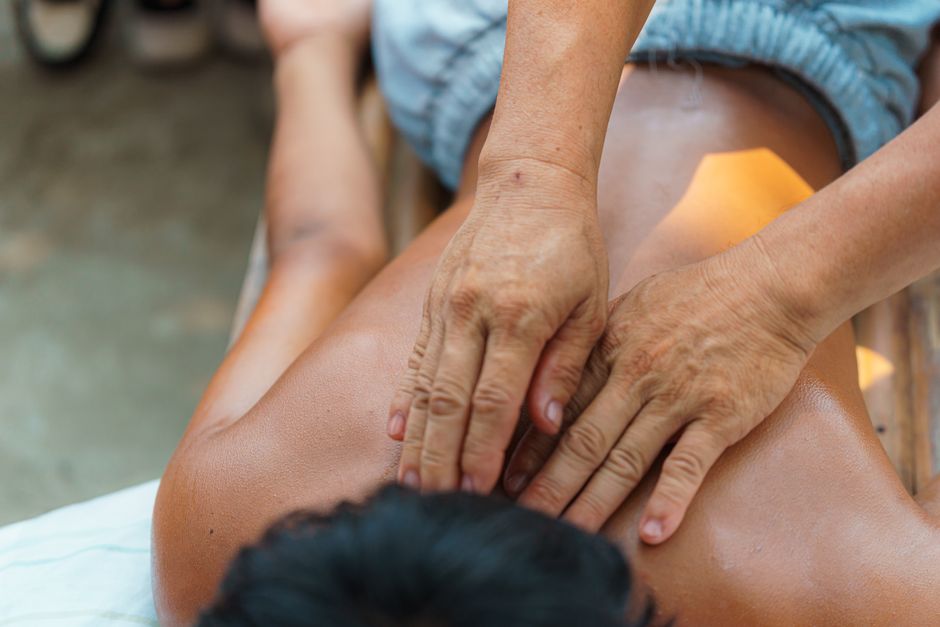
Massage falls in a similar category. Some evidence indicates it can slightly reduce soreness when done soon after exercise. The benefit is real but small, and it does not appear to speed up actual muscle repair.
Do Ice Baths and Cold Therapy Work?
Cold water immersion is popular among athletes, and the evidence is mixed. Some studies find it reduces perceived soreness. Others find little effect on muscle strength or function. The overall picture is that cold exposure may take the edge off how sore you feel without clearly helping muscles recover faster.
There is one important caveat. Regular cold water immersion immediately after strength training may blunt some of the muscle-building adaptations you are training for. If your goal is to build muscle, routine ice baths after every session are not clearly helpful and may work against you. For short-term comfort around a competition or a single hard event, the tradeoff may be different.
Heat, by contrast, tends to feel good on sore muscles and can help with stiffness. It does not appear to speed repair either, but it is generally comfortable and low risk for most people.



What About Pain Relievers and Supplements?
Over-the-counter pain relievers can reduce soreness, but they come with a tradeoff worth understanding. Medications like ibuprofen and other anti-inflammatory drugs blunt the inflammation that is part of the repair process. Some research suggests that routinely suppressing this response may slightly reduce long-term muscle adaptation. Using them occasionally for significant discomfort is a reasonable choice for many people. Using them after every workout is not clearly beneficial and may not be in your interest.
Acetaminophen reduces pain through a different pathway and does not have the same anti-inflammatory effect, though it also does not speed recovery.
Supplement claims deserve more skepticism than they usually get. A few have some supporting evidence:
- Tart cherry — some studies suggest it may reduce soreness and markers of muscle damage, though results vary and effects are modest.
- Omega-3 fatty acids — some evidence indicates they may slightly reduce soreness with regular intake, not as a one-time fix.
- Protein — supports muscle repair over time but does not acutely relieve soreness.
- Branched-chain amino acids — widely marketed, but evidence for reducing soreness is weak and inconsistent.
No supplement has been shown to eliminate soreness. Treat any product promising fast, dramatic relief with caution.
Does Light Movement or Rest Help More?
Complete rest is not required for DOMS, and it is often not the best choice. Light activity increases blood flow and can reduce stiffness. A gentle walk, easy cycling, or moving through a reduced range of motion tends to feel better than lying still.
That said, “active recovery” will not make soreness vanish. It manages discomfort. The muscle still needs time to repair, and that process runs on its own schedule regardless of what you do.
Sleep is the most underrated factor here. Muscle repair happens largely during sleep, and sleep deprivation is associated with slower recovery and more perceived soreness. If you are consistently sore and not recovering well, look at sleep before you look at supplements.
Hydration and adequate overall nutrition matter too. They support the repair process, though drinking extra water alone will not flush out soreness.
Can You Prevent Sore Muscles in the First Place?
You can reduce soreness, but you cannot reliably avoid it, especially when you are doing something new. The most effective approach is gradual progression. Increasing weight, volume, or intensity slowly gives muscles time to adapt.
The repeated bout effect is a genuinely useful thing to know. After you do a particular exercise once, subsequent sessions of the same movement cause much less soreness. Your muscles adapt to the specific demand. This is why the first leg day hurts most and later ones hurt less, even at the same effort.
Warming up before exercise may reduce injury risk and prepare the tissue, though its effect on soreness specifically is limited. Being consistent with training does more than any single recovery tactic.
When Should Soreness Concern You?
Normal DOMS is symmetrical, dull, and improves with light movement. It eases over a few days. Pain that is sharp, one-sided, or getting worse is a different situation.
Seek medical care if you notice any of the following:
- Severe pain that limits basic movement
- Dark or cola-colored urine after intense exercise
- Swelling, weakness, or numbness
- Soreness that lasts more than about a week
Dark urine after extreme exertion can signal a rare but serious condition called rhabdomyolysis, in which muscle breaks down rapidly. This is a medical emergency. It is uncommon, but it is the reason extreme exercise in untrained people deserves caution.
Frequently Asked Questions
How long do sore muscles usually last?
Typical soreness peaks 24 to 72 hours after exercise and resolves within about three to five days. If it lasts longer than a week, that is not normal DOMS and should be checked.
Does stretching prevent sore muscles?
No. Studies consistently show that static stretching does not prevent or reduce delayed onset muscle soreness. It supports flexibility but is not a recovery tool.
Is it better to rest or keep moving when sore?
Light movement usually feels better than complete rest and can reduce stiffness. It will not speed repair, but it manages discomfort well for most people.
Do ice baths help sore muscles?
Evidence is mixed. Cold water may reduce how sore you feel, but it does not clearly speed recovery and may blunt muscle-building adaptations if used routinely after strength training.
