
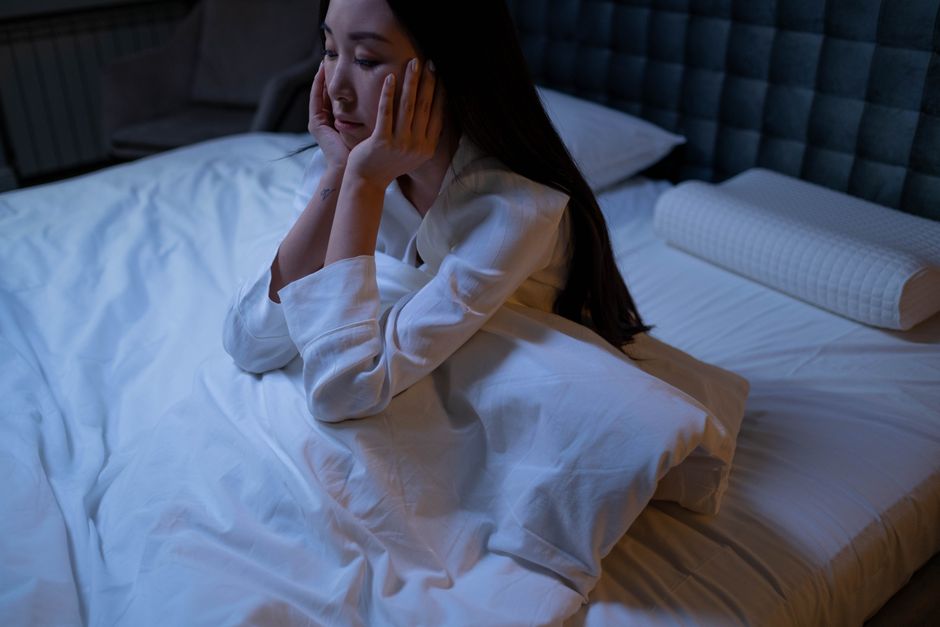
Anxiety often gets louder at night. The house is quiet, distractions are gone, and your mind turns to tomorrow’s problems or replays today’s. What helps is a mix of proven behavioral strategies and simple body-calming techniques, done consistently rather than once. The approaches with the strongest evidence are the same ones used for anxiety in general: structured worry time, breathing and relaxation methods, good sleep habits, and getting professional help when anxiety is persistent.
None of these are instant fixes. But each one has real support behind it, and together they can make nights calmer over time.
Why Does Anxiety Get Worse at Night?
Night removes the distractions that keep anxious thoughts at bay during the day. When the room is dark and quiet, there is nothing competing for your attention, so worry fills the space.
There is also a biological layer. Your body’s stress response follows a daily rhythm. Levels of cortisol, a key stress hormone, normally drop in the evening to prepare you for sleep. In people with ongoing anxiety, that pattern can be less predictable, and the nervous system stays more alert than it should at bedtime. This is well established in sleep and stress research.
Then there is the sleep-anxiety loop. Lying awake worrying about not sleeping makes sleep harder, which makes the next night’s anxiety worse. This cycle is real and well documented. Breaking it usually means working on both the worry and the sleep habits at the same time.
What Helps With Anxiety At Night Proven Tips?
The strategies below have the most consistent evidence behind them. They work best as a routine, not a one-off rescue attempt.
Schedule a “worry time” earlier in the evening
This sounds strange, but it has solid backing in cognitive behavioral therapy (CBT), one of the best-studied treatments for anxiety. The idea is to set aside 10 to 15 minutes earlier in the evening, well before bed, to write down worries and possible next steps. When worry shows up at night, you remind yourself it has already had its time.
This is sometimes called stimulus control for worry. It doesn’t erase anxiety, but it reduces the mental pile-up that happens when you try to suppress thoughts at bedtime.
Use slow breathing to calm the body
Slow, paced breathing activates the parasympathetic nervous system, the branch that slows heart rate and promotes calm. A common approach is to breathe in for a count of four and out for a count of six, keeping the out-breath longer than the in-breath. Even a few minutes can lower physical arousal.
Research on slow breathing and relaxation supports its use for stress and anxiety, though effects vary between people. It is low-risk and worth trying. It is a tool for calming the body, not a treatment for an anxiety disorder on its own.
Try progressive muscle relaxation
This technique involves tensing each muscle group for a few seconds, then releasing. You move through the body from feet to face. The contrast between tension and release helps your body recognize and let go of held tension.
Progressive muscle relaxation has been studied as a treatment for anxiety and insomnia, with generally positive but modest results. It is often used alongside CBT. It takes practice, so expect the first few tries to feel awkward.
Get out of bed if you are wide awake and anxious
If you have been lying awake for what feels like a long time and your mind is racing, get up. Go to another room with dim light and do something quiet and boring until you feel sleepy, then return to bed.
This is a core part of CBT for insomnia (CBT-I), which is considered the first-line treatment for chronic insomnia in clinical guidelines. The goal is to stop your brain from linking the bed with frustration and worry.
What Sleep Habits Reduce Nighttime Anxiety?
Good sleep habits, often called sleep hygiene, won’t cure anxiety. But poor sleep reliably worsens it, so protecting sleep is a practical lever.
- Keep a consistent sleep and wake time, even on weekends.
- Keep the bedroom cool, dark, and quiet.
- Avoid caffeine in the afternoon and evening. Caffeine can stay in your system for hours and increases alertness.
- Limit alcohol. It may make you drowsy at first, but it fragments sleep later in the night and can worsen anxiety.
- Put screens away before bed. Bright light and stimulating content can delay sleepiness.
- Get daylight exposure during the day, which helps set your body clock.
One clarification worth knowing: sleep hygiene alone is often not enough for persistent insomnia. The stronger evidence is for structured CBT-I, which a clinician or trained provider can deliver.
Does Caffeine or Alcohol Make Night Anxiety Worse?
Both can, and the effect is well established. Caffeine is a stimulant that blocks adenosine, a molecule that builds up during the day to make you sleepy. Having caffeine later in the day can keep your nervous system alert into the evening.
Alcohol is trickier. It can shorten the time it takes to fall asleep, but as the body processes it, sleep becomes lighter and more disrupted. Many people notice more early-morning waking after drinking. For someone prone to anxiety, that 3 a.m. wake-up can come with a racing mind.
If nighttime anxiety is a regular problem, cutting back on both is a reasonable experiment. Track how you feel over a couple of weeks rather than judging from one night.
When Should You Get Help for Nighttime Anxiety?
Anxiety that regularly disrupts sleep, affects your daytime functioning, or causes distress is worth discussing with a doctor or mental health professional. This is not a sign of weakness. It is a sign the problem deserves proper assessment.
CBT is one of the most strongly supported treatments for anxiety disorders, with decades of research behind it. Some people also benefit from medication, which a clinician can discuss based on the specific situation. Sleep problems may also need their own assessment, especially if they are long-standing.
Seek help promptly if anxiety comes with thoughts of harming yourself. In the US, you can call or text 988 to reach the Suicide and Crisis Lifeline at any time.
There is no single tip that works for everyone. The strategies here are the ones with the best evidence, and they tend to work best combined and practiced over weeks, not days. If one doesn’t fit, try another. And if nights stay hard, professional support is the most reliable next step.
Frequently Asked Questions
What is the fastest way to calm nighttime anxiety?
Slow breathing with a longer out-breath than in-breath can calm the body within a few minutes. It reduces physical arousal, though it does not treat an anxiety disorder by itself.
Why does my anxiety get worse right before bed?
Distractions fade at night, so worries surface, and the body’s stress rhythm can keep the nervous system more alert than it should be. Lying awake then worsens the cycle.
Does melatonin help with anxiety at night?
Melatonin is studied mainly for sleep timing, not anxiety, and the evidence for anxiety is limited. Talk with a clinician before using it, especially if you take other medications.
Should I stay in bed when I can’t sleep because of anxiety?
If you are wide awake and anxious for a long stretch, get up and do something quiet in dim light until sleepy. This is part of CBT for insomnia, a first-line treatment for chronic sleep problems.
