
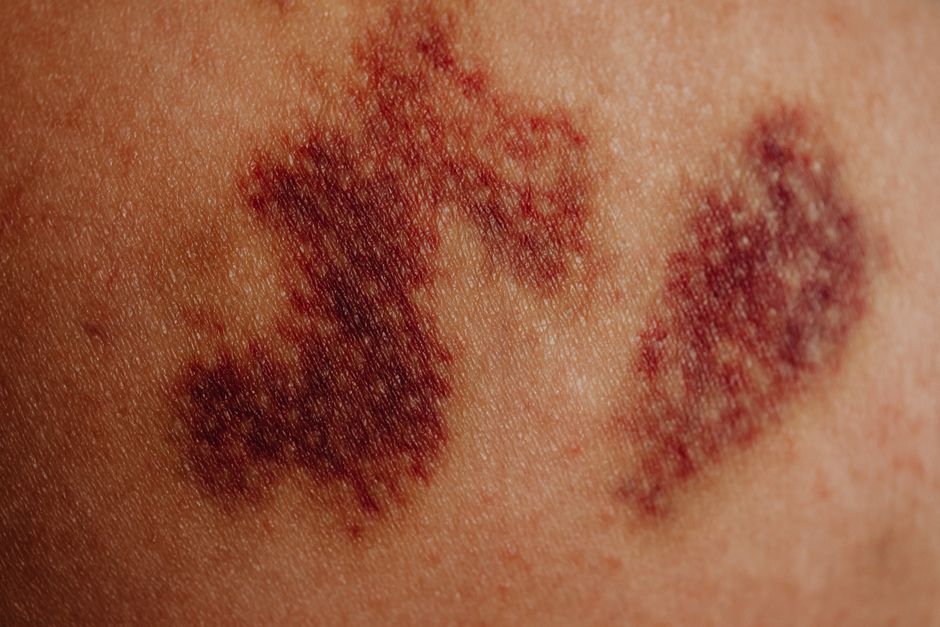
Most bruises heal on their own in one to two weeks, and no cream, pill, or home remedy has been shown to speed up that process in any meaningful way. What actually helps is time, plus a few steps that may limit how bad a bruise gets in the first place.
A bruise forms when small blood vessels under the skin break and leak blood into surrounding tissue. The body then clears that pooled blood through a natural process you cannot rush. The color changes you see — red, purple, blue, green, yellow — are the blood breaking down and being reabsorbed. That sequence is normal and expected.
So the honest answer to what helps bruises go away is this: protect the area, avoid things that make bleeding worse, and let your body do its job. If a bruise is unusually large, painful, or slow to fade, that is a reason to see a doctor, not a reason to try harder at home.
How Long Does a Bruise Normally Take to Heal?
Most uncomplicated bruises fade within about two weeks. Some linger a little longer depending on size, location, and how much blood leaked into the tissue.
The timeline follows a fairly predictable pattern. In the first day or two, the bruise is typically red or purple because the blood is fresh and oxygen-rich. Over the next few days it often turns blue or black as the blood loses oxygen. Then it shifts to green or yellow as the body breaks down hemoglobin into other compounds. Finally it fades to a brownish or yellowish tint before disappearing.
This color progression is a rough guide, not a precise clock. A bruise on a bony area like a shin may look different from one on a soft area like a thigh. Larger bruises take longer simply because there is more blood to clear.
One thing worth knowing: the color of a bruise does not reliably tell you exactly how old it is. This is a common belief, and it shows up in everything from casual conversation to legal settings. Research has found that estimating a bruise’s age from its color is far less accurate than people assume. Different people break down blood at different rates, and lighting, skin tone, and camera settings all change how a bruise looks.
Does Ice Actually Help a Bruise?
Cold applied early may reduce swelling and limit how much the bruise spreads. It does not erase a bruise or make it heal faster once it has formed.
The reasoning is straightforward. Cold narrows blood vessels, which can slow the ongoing leak of blood into tissue right after an injury. That is why ice is commonly recommended in the first day or two after a bump or sprain. It is most useful for the swelling and discomfort around the injury, not for the discoloration itself.
If you use ice, do not put it directly on bare skin. Wrap it in a thin cloth or towel first. Leaving ice on too long can damage skin, so short applications with breaks in between are the usual approach. People with reduced sensation, poor circulation, or certain medical conditions should be especially careful with cold, because they may not feel skin damage as it happens.
Heat is a different story. Applying heat early on can increase blood flow to the area, which may make a fresh bruise worse. Heat is sometimes used later for muscle soreness, but it is not a bruise treatment.
Do Bruise Creams and Arnica Really Work?
There is no strong evidence that over-the-counter bruise creams, gels, or arnica shorten healing time. Some may slightly reduce swelling or discomfort, but the effect on the bruise itself is not well established.
Arnica is one of the most popular ingredients in bruise products. Some small studies suggest it may help with swelling or pain after certain injuries, but the results are mixed and the studies are generally small. That is not the same as proof that it clears a bruise faster. Vitamin K creams are also marketed for bruises, and the evidence for them is similarly limited.
This is a good place to be blunt about marketing. Phrases like “speeds healing” or “fades bruises fast” on a product label are not backed by large human trials. No cream has been shown to make your body reabsorb leaked blood any faster than it already does.
None of this means these products are dangerous. It means they are unlikely to do what the label implies. If you find one soothing, that is a reasonable personal choice. Just do not expect it to change the timeline.





What Makes a Bruise Worse or Last Longer?
Several things can make bruises bigger, darker, or slower to fade. Some are within your control and some are not.
- Medications that thin the blood. Anticoagulants and antiplatelet drugs, including aspirin and some prescription medicines, make bleeding easier and can make bruises larger. Never stop or change a prescribed medication on your own — talk to your doctor.
- Alcohol. Heavy drinking can affect clotting and make bruising more likely.
- Age. Skin and blood vessels get thinner and less resilient over time, so older adults bruise more easily.
- Sun exposure. Long-term sun damage weakens skin and the small vessels beneath it.
- Certain supplements. Some, like high-dose fish oil or ginkgo, may affect bleeding. If you bruise easily and take supplements, mention it to your doctor.
If you notice you are bruising much more easily than before, or bruises are appearing without any clear cause, that is worth a medical conversation. Easy bruising can sometimes reflect a problem with blood clotting, low platelets, or another underlying condition. It is not something to self-diagnose.
When Should You See a Doctor About a Bruise?
Most bruises are harmless. Some are a signal to get checked.
Seek medical attention if a bruise is very large or keeps growing, if it is extremely painful or the area feels tight and swollen, or if it appears without any injury you can recall. A bruise near a joint that limits movement, or one accompanied by numbness, also deserves a look.
Certain situations need urgent care. A bruise that forms after a serious fall or blow to the head, or one that appears alongside symptoms like unusual fatigue, fever, or bleeding from the gums or nose, should be evaluated promptly. In rare cases, a collection of blood under the skin called a hematoma can become infected or press on surrounding tissue, which needs treatment.
Bruises that do not fade after a few weeks, or that keep reappearing in the same spot, are also worth mentioning to a doctor. This is especially true for people taking blood-thinning medication.
What Can You Do to Prevent Bruises?
You cannot prevent every bruise, but you can lower your odds of getting them and reduce how severe they are.
Protective gear matters for sports and activities with a risk of impact. Padding, helmets, and the right footwear reduce the force that reaches your skin and vessels. Making your home safer helps too, especially for older adults — good lighting, clear walkways, and grab bars reduce falls, which are a leading cause of serious bruising and injury.
If you bruise easily, it is worth reviewing your medications and supplements with a doctor or pharmacist rather than adjusting them yourself. Some interactions and side effects are manageable with guidance.
Finally, keep an eye on patterns. Occasional bruises from bumps and knocks are normal. A sudden change in how easily you bruise is information your body is giving you, and it is worth acting on.
Frequently Asked Questions
How long does it take for a bruise to go away?
Most bruises fade within about two weeks. Larger or deeper bruises can take a bit longer, and the timeline varies from person to person.
Does ice help a bruise heal faster?
Ice may reduce swelling and limit how much a bruise spreads if used early, but it does not make a bruise heal faster once it has formed. Wrap it in a cloth and avoid putting it directly on bare skin.
Is arnica cream effective for bruises?
The evidence is limited and mixed, and no large human trials confirm it clears bruises faster. Some small studies suggest it may help with swelling or pain, but results vary.
When should I worry about a bruise?
See a doctor if a bruise is very large, keeps growing, is extremely painful, or appears without a known cause. Bruises after a head injury or with other bleeding symptoms need prompt care.
