
An oxygen saturation of 70% is a medical emergency. At that level, your blood is carrying far less oxygen than your organs need to function, and cells begin to fail within minutes. Without immediate oxygen and emergency treatment, severe brain injury, organ damage, or death can follow.
That number — 70% — is not a warning sign. It is a crisis threshold. Understanding what happens in the body at that point helps explain why oxygen monitoring matters and why the symptoms of low oxygen are so easy to miss until things are serious.
What Does an Oxygen Level of 70 Actually Mean?
Oxygen saturation, usually written as SpO2, measures how much of your hemoglobin is carrying oxygen. Hemoglobin is the protein in red blood cells that picks up oxygen in the lungs and delivers it to tissues.
A normal resting oxygen saturation for most healthy adults is generally considered to be about 95% or higher. Many clinical guidelines use 90% as the lower edge of the acceptable range for healthy adults at sea level. Below that, you enter territory clinicians call hypoxemia — low oxygen in the blood.
At 70%, you are not just below normal. You are in a range where the body’s oxygen delivery system is severely compromised. The gap between 90% and 70% matters more than it looks on paper, because of how hemoglobin releases oxygen.
Here is the non-obvious part. Hemoglobin does not release oxygen in a straight line as saturation drops. It holds on tightly through the upper range, then lets go quickly once saturation falls. That means small drops near 90% can translate into much larger drops in oxygen actually delivered to tissues once you get into the 70s. This is why 70% is not “a little worse than 90%.” It is a different category of problem.
What Happens to Your Body at 70% Oxygen Saturation?
At 70%, oxygen delivery to tissues falls far below what cells need to produce energy efficiently. The brain and heart are the most oxygen-hungry organs, so they show effects first.
The brain depends on a steady oxygen supply. When it drops, confusion, disorientation, and difficulty staying awake can appear. Some people become agitated rather than drowsy. Judgment and coordination decline. If oxygen stays low, brain cells can begin to suffer irreversible injury.
The heart works harder to compensate, which raises heart rate and can strain the heart muscle. In people with existing heart disease, this added demand can trigger chest pain or abnormal heart rhythms.
Other organs follow. The kidneys, liver, and muscles all depend on oxygen for normal function. Prolonged severe hypoxemia can lead to organ damage across multiple systems.
How fast this unfolds varies. A healthy person who suddenly drops to 70% — say, from choking or a severe asthma attack — may deteriorate within minutes. Someone whose oxygen falls gradually over days, as can happen with certain lung diseases, may function at surprisingly low levels for a while because the body adapts. That adaptation is real but fragile, and it does not make 70% safe.
What Are the Symptoms of Oxygen Dropping to 70%?
At 70%, most people show clear signs of distress, though the specific symptoms vary.
- Severe shortness of breath, even at rest
- Confusion, agitation, or unusual drowsiness
- Bluish tint to lips, fingertips, or face (cyanosis)
- Rapid heart rate
- Chest pain or tightness
- Headache
- Inability to speak in full sentences
- Loss of consciousness in severe cases
Cyanosis — the bluish coloring — happens because poorly oxygenated blood looks darker. It is a late sign, meaning it often appears after oxygen has already been low for a while.
One caution about symptoms: they are not a reliable gauge on their own. Some people with chronically low oxygen adapt and feel fewer symptoms than you would expect. Others feel severe distress at higher saturations. This is one reason pulse oximeters became common — they give a number instead of relying on how someone looks or feels.





What Causes Oxygen to Fall to 70%?
Oxygen saturation can drop this low for several broad reasons. The cause shapes how quickly it happens and how it is treated.
Problems with the lungs. Pneumonia, severe asthma attacks, chronic obstructive pulmonary disease flare-ups, pulmonary embolism (a blood clot in the lungs), and fluid in the lungs can all prevent oxygen from getting into the blood.
Problems with breathing mechanics. Choking, a blocked airway, drug overdose that slows breathing, or chest injuries can reduce how much air reaches the lungs.
Problems with circulation or blood. Severe heart failure, shock, or certain blood conditions can interfere with oxygen delivery even when the lungs work.
High altitude. At very high elevations, lower air pressure means less oxygen is available to breathe. This is why altitude sickness can progress to dangerously low saturation.
In a hospital, 70% saturation often points to a serious underlying condition that needs rapid diagnosis, not just oxygen. Giving oxygen without finding the cause can mask a problem that keeps getting worse.
How Is an Oxygen Level of 70% Treated?
Treatment starts with oxygen — usually delivered at high flow through a mask or nasal tubing. In serious cases, clinicians may use a ventilator or a machine that pushes oxygen into the lungs under pressure.
But oxygen alone is not the answer. The underlying cause has to be treated at the same time. That might mean antibiotics for pneumonia, clot-dissolving medication for a pulmonary embolism, bronchodilators for an asthma attack, or reversing an overdose with a specific antidote.
Some patients need more advanced support. Extracorporeal membrane oxygenation, or ECMO, is a machine that oxygenates blood outside the body. It is used in the most severe cases when the lungs cannot do the job. This is a specialized intervention available at major medical centers, not a routine treatment.
What treatment looks like depends heavily on the cause, the setting, and how quickly the person got help. There is no single standard protocol for “70%” — the number triggers urgent action, but the plan is built around what is causing it.
Can You Recover From an Oxygen Level of 70%?
Recovery depends on how long the brain and organs went without enough oxygen, and on the underlying cause.
If oxygen is restored quickly and the cause is treatable, many people recover fully. If the brain went without oxygen for an extended period, lasting effects are possible, including memory problems, difficulty with movement, or cognitive changes. In the most severe cases, prolonged oxygen deprivation can be fatal.
There is no single timeline that applies to everyone. Some people bounce back within days. Others need weeks of rehabilitation. Some never fully return to their previous baseline. This range is real, and it is why the speed of treatment matters so much.
One thing worth being clear about: surviving a severe drop in oxygen does not guarantee there was no harm. Some effects show up later, which is why follow-up care after a serious hypoxemic event matters.
How Can You Monitor Your Oxygen Level?
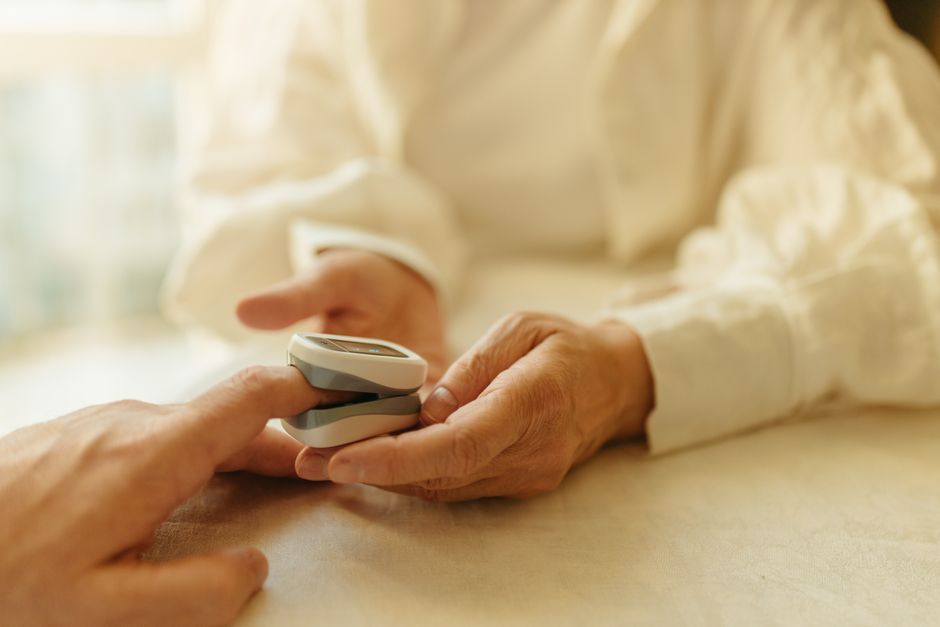
Pulse oximeters are small devices that clip onto a finger and estimate oxygen saturation using light. They are widely available and easy to use at home.
They are useful but not perfect. Nail polish, cold hands, poor circulation, and motion can all throw off a reading. A pulse oximeter is a screening tool, not a diagnosis. If a reading seems wrong, or if you feel unwell, the number alone should not decide what you do.
For people with conditions like COPD or heart failure, doctors sometimes recommend home monitoring. For everyone else, a pulse oximeter is most useful when you have symptoms that suggest your oxygen might be low — and when you use it alongside how you feel, not instead of it.
If a home reading shows a saturation below 90%, that is generally considered a reason to seek medical attention. If it shows 70%, that is an emergency. Call 911 or go to the nearest emergency room immediately.
When Should You Seek Emergency Help?
Call emergency services right away if you or someone near you has severe shortness of breath, bluish lips or fingertips, confusion, chest pain, or a pulse oximeter reading below 90%.
Do not wait to see if it improves on its own. Severe hypoxemia can worsen quickly, and the difference between a full recovery and lasting damage can come down to how fast help arrives.
If you have a chronic lung or heart condition, talk with your doctor in advance about what readings should prompt a call, since your baseline and your thresholds may differ from someone without those conditions.
Frequently Asked Questions
Is an oxygen level of 70 dangerous?
Yes. An oxygen saturation of 70% is a medical emergency that can cause brain injury, organ damage, or death without immediate treatment. It requires emergency care right away.
What are the symptoms of oxygen dropping to 70%?
Common signs include severe shortness of breath, confusion, bluish lips or fingertips, rapid heart rate, and chest pain. Some people lose consciousness.
Can you survive an oxygen level of 70?
Some people survive with full recovery if oxygen is restored quickly and the cause is treatable. Others experience lasting effects or die, depending on how long the brain and organs went without enough oxygen.
What should you do if your oxygen level reads 70%?
Call 911 or go to the nearest emergency room immediately. Do not wait to see if it improves on its own, because severe hypoxemia can worsen within minutes.
