
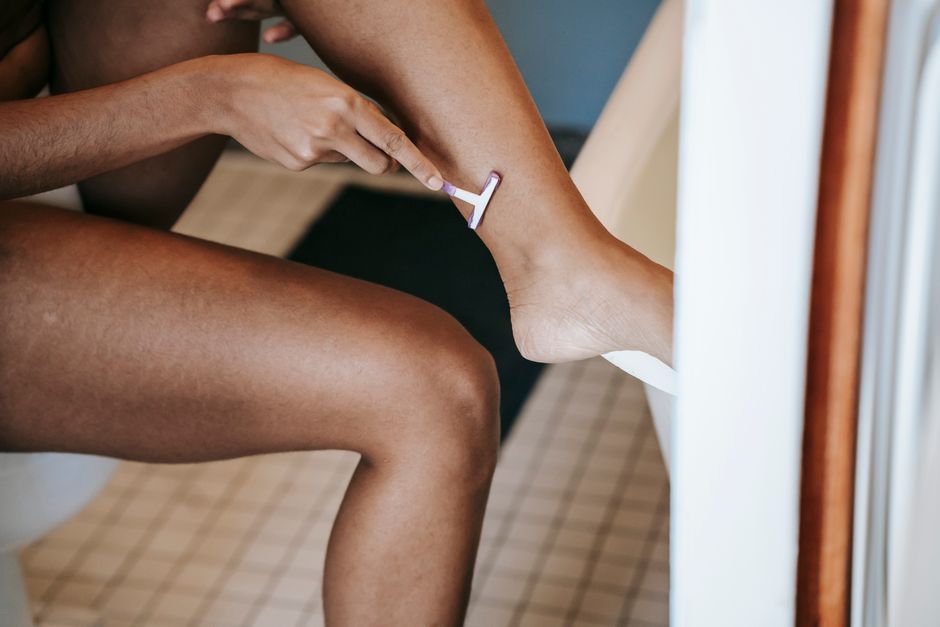
Shaving cuts hair at the surface of your skin and removes the top layer of dead skin cells along with it. The hair itself is not damaged or changed in any lasting way, and it does not grow back thicker, darker, or faster. What you see afterward is a blunt, flat-topped hair emerging from the follicle, and that flat edge is why stubble feels rougher than the uncut hair did.
The skin, meanwhile, goes through a short cycle of mild stress and repair. Most people notice nothing beyond smoothness. Some notice redness, dryness, or small bumps in the hours that follow. Understanding what is actually happening at the surface and below it explains both the smooth result and the occasional irritation.
What Happens When You Shave Your Skin And Hair?
A razor blade shears hair off level with the skin surface and scrapes away a thin layer of the outermost skin cells, the stratum corneum. That layer is made of flattened, dead keratin-filled cells, and removing some of it is part of why skin feels smoother right after shaving.
Underneath, the living layers of the epidermis are exposed to mild mechanical stress. The skin responds the way it responds to any minor surface injury. Blood flow increases slightly, which is why some people see redness for a few minutes to a few hours. The barrier is temporarily a little more permeable, which is why moisturizer stings sometimes and why freshly shaved skin can feel more sensitive to alcohol-based products.
Each hair sits in a follicle that extends below the skin. Shaving does nothing to the follicle itself. The hair shaft continues growing from the same root, at the same rate, with the same color and thickness as before. The follicle does not receive a signal to produce a coarser hair. That is a persistent myth, and the anatomy simply does not support it.
Why stubble feels coarser than the hair it replaced
Uncut hair tapers to a fine point. A razor slices it into a cylinder with a flat, blunt end. When that blunt end pushes through the skin, it feels rougher against your hand than the tapered tip did against your palm before. The hair has not changed. The shape of its tip has.
The same thing happens with color. Hair looks darker after shaving because you are now seeing the full cross-section of the shaft rather than the tapered, slightly translucent tip. On skin that is lighter than the hair, the contrast is more noticeable. On skin that is darker than the hair, it is less so.
Does Shaving Make Hair Grow Back Thicker or Faster?
No. Shaving does not change hair thickness, growth rate, or color, and this has been looked at directly. A study published in the Journal of Investigative Dermatology compared shaved and unshaved legs and found no difference in hair width, growth rate, or density after regrowth.
The perception is strong because of timing. You notice regrowth precisely when the blunt ends first break the surface, which is within a day or so. Before you shaved, the hair had been growing for weeks and you had stopped noticing it. The contrast in your attention, not a change in the hair, drives the impression.
Hair growth rate is set by genetics, hormones, age, and body site. Leg hair, facial hair, and scalp hair all grow at different rates in the same person. Shaving does not alter any of this, and no clinical evidence supports the idea that repeated shaving speeds growth or darkens hair.
What Happens to the Skin Right After Shaving?
The skin barrier takes a temporary hit. The stratum corneum loses some of its cells and some of its lipids, and water loss through the skin rises briefly. This is usually invisible and resolves on its own within hours.
For many people, the visible effects are mild:
- Redness or warmth for a few minutes to a few hours, from increased blood flow
- Tightness or dryness, from the removed surface cells and lipids
- A slight sting when applying products that contain alcohol or fragrance
- Small nicks that bleed briefly and clot quickly
These are normal responses to a controlled scrape, not signs that something has gone wrong. They are also why aftercare matters more than most people think. Moisturizer after shaving is not cosmetic pampering. It replaces some of what the blade removed and helps the barrier recover faster.
One non-obvious point: shaving does not “exfoliate” skin in the way a scrub does. It removes surface cells unevenly and can leave small micro-abrasions, especially with a dull blade or too much pressure. That is part of why shaving the same area repeatedly or shaving dry tends to irritate rather than smooth.
Why Does Shaving Cause Razor Burn and Bumps?
Razor burn is irritation from friction and from cutting too close. Razor bumps, medically called pseudofolliculitis barbae, happen when a hair is cut short enough that its sharp new edge curls back and re-enters the skin nearby, or when it grows out and pierces the skin before clearing the surface. The body reacts to the embedded hair with inflammation, producing a small red or dark bump.
This is more common in people with tightly curled hair, because the curl makes re-entry more likely. It is also more common with close shaves, multiple passes over the same spot, and shaving against the direction of hair growth.
Ingrown hairs are a related problem. The hair grows sideways or curls under the skin instead of emerging, and a bump forms around it. Both razor bumps and ingrown hairs are mechanical problems, not infections, though they can become infected if picked or squeezed.
Reducing friction and cutting less aggressively is the main lever. A sharp blade, shaving cream or gel rather than dry shaving, and shaving in the direction of hair growth all reduce the chance of irritation. Some clinicians recommend a single pass with the grain for people prone to bumps, accepting a slightly less close shave.
Does Shaving Cause Infections or Other Skin Problems?
Shaving can open small breaks in the skin, and breaks in the skin are how bacteria get in. This is why shaving with a contaminated blade or sharing a razor is a genuine risk, not a theoretical one. Folliculitis, an inflammation of the hair follicle often caused by bacteria, is the most common infection linked to shaving.
There are a few situations where the risk is meaningfully higher:
- Shaving over an area with an active rash, cut, or infection
- Using a dull or dirty blade, or one stored in a damp place
- Shaving body areas with lots of friction, like the groin or underarms, without care
- Shaving shortly before swimming in untreated water or engaging in activities where skin contact is likely
For people with certain skin conditions, shaving can trigger flare-ups. Psoriasis and eczema can be irritated by the mechanical trauma of shaving. If you have a chronic skin condition and shaving consistently makes it worse, that is worth raising with a clinician rather than pushing through.
How Should You Shave to Reduce Skin Irritation?
Most shaving irritation comes down to friction, pressure, and blade condition. Addressing those three things reduces most of the problem for most people.
Practical steps that align with general dermatologic guidance:
- Shave after a warm shower, when hair is softened and skin is hydrated
- Use shaving cream, gel, or soap rather than shaving dry
- Use a sharp blade and replace it when it starts to drag
- Use light pressure and let the blade do the work
- Shave in the direction of hair growth where possible
- Rinse with cool water and apply a fragrance-free moisturizer afterward
- Rinse and dry the razor after use and store it where it can dry
These are widely recommended steps rather than the result of large controlled trials. Shaving is a common practice and the evidence base for specific techniques is thinner than the confidence with which advice is often given. The general direction, though, is well supported: less friction, less pressure, and a clean sharp blade produce less irritation.
Does Shaving Remove a Tan or Affect Skin Color?
Shaving removes dead surface cells, some of which are slightly darkened by sun exposure. That can make skin look marginally brighter for a day or so. It does not remove a tan in any meaningful way, and it does not lighten skin.
A related and more consequential point: shaving does not make skin more vulnerable to sun damage in a way that requires a different approach. Freshly shaved skin can be slightly more sensitive to products, but the standard advice about sun protection does not change. If anything, smoother skin makes sunscreen easier to apply evenly.
When Should You Stop Shaving and See a Clinician?
Most shaving-related irritation settles within a day or two. Some signs warrant a professional look rather than continued home treatment.
Seek medical advice if you notice spreading redness, warmth, swelling, pus, or fever, which can indicate infection. Persistent bumps that do not resolve, dark patches that change, or irritation that keeps returning in the same spot are also worth evaluating. A clinician can distinguish between simple razor bumps, folliculitis, and other skin conditions that can look similar.
This matters because several conditions produce bumps that look alike. Pseudofolliculitis, bacterial folliculitis, and fungal folliculitis can all present as small inflamed bumps around hair follicles, and they are treated differently. Self-diagnosing from appearance alone is unreliable.
Frequently Asked Questions
Does shaving make hair grow back thicker?
No. Shaving cuts hair at the surface and does not change the follicle, so regrowth has the same thickness, color, and growth rate as before. The blunt cut end simply feels coarser than the tapered tip did.
How long does it take for shaved skin to return to normal?
Most mild redness and tightness settle within a few hours to a day. Small nicks typically clot within minutes, and any surface irritation usually resolves within one to two days.
Can shaving cause ingrown hairs?
Yes. Cutting hair very short can let the new edge curl back into the skin or grow sideways under it, producing a bump. This is more common with close shaves and in people with tightly curled hair.
Is it bad to shave every day?
Daily shaving is fine for most people if the blade is sharp and the skin is protected with lubricant. If you notice persistent irritation, reducing frequency or switching to a single pass with the grain often helps.
