
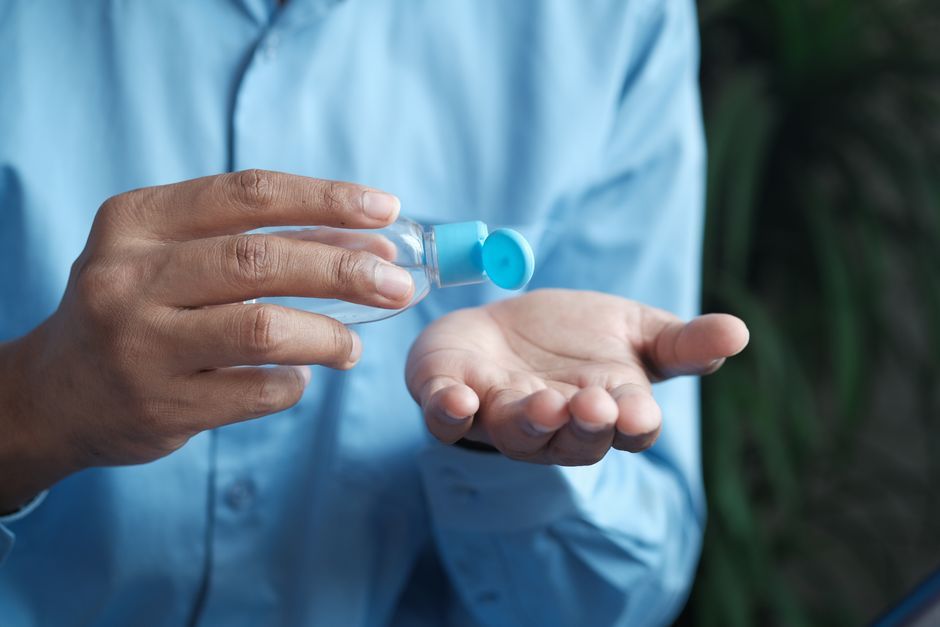
Putting hand sanitizer in your hair does nothing good for it. The product is designed for skin on your hands, not the hair shaft or scalp, and using it as a hair product can leave hair dry, brittle, and coated in residue while irritating the scalp. It is not a hair treatment, and no evidence supports using it as one.
People end up doing this for a few reasons. Maybe they ran out of dry shampoo. Maybe they read that alcohol kills germs and assumed it would clean a greasy scalp. Maybe a travel bottle was the only thing within reach. Whatever the reason, the outcome is predictable and mostly unhelpful.
What Happens When You Put Hand Sanitizer In Your Hair?
The main ingredient in most hand sanitizers is ethyl alcohol or isopropyl alcohol, usually at concentrations between 60% and 95%. That is a powerful solvent. On your hands, it evaporates quickly and takes some surface oils with it. On your hair, it does the same thing but with worse consequences.
Hair gets its flexibility and shine from a natural layer of oil called sebum, produced by glands in the scalp. Alcohol strips that oil away. A single application might make greasy hair look less greasy for a short time. What you are actually seeing is the oil being dissolved and removed, not cleaned. The result is hair that feels dry, rough, and straw-like once the alcohol evaporates.
There is a second problem. Many hand sanitizers contain thickeners, moisturizers like glycerin, and fragrance. These ingredients are formulated to sit on hand skin, not on hair. On hair, they can leave a sticky or filmy residue that attracts dust and makes hair look dull. Glycerin in particular can draw moisture from the air, which sounds helpful but often makes hair feel tacky rather than soft.
The scalp does not escape either. Alcohol on the scalp can cause dryness, tightness, and itching. For people with sensitive skin or conditions like eczema or seborrheic dermatitis, it can trigger a flare. The scalp is skin, and alcohol-based products are known irritants when applied repeatedly to skin.
Does Hand Sanitizer Actually Clean Your Hair?
No. Hand sanitizer does not clean hair in any meaningful sense.
Cleaning hair means removing excess oil, dirt, dead skin cells, and product buildup. Shampoo does this with surfactants, molecules that lift oils and debris so they can be rinsed away with water. Hand sanitizer has no surfactants and no rinsing step. It dissolves some surface oil and then evaporates, leaving everything else behind.
Alcohol does kill many germs on hands. That is well established. But your hair is not a germ-covered surface in the way your hands are, and the goal of washing hair is not disinfection. Even if it were, hand sanitizer would not be the right tool, because it does not rinse away the debris that makes hair look and feel dirty.
Some people use hand sanitizer on their hair to break down hairspray or product buildup. Alcohol can loosen some styling products, and this is a known trick in some styling circles. But it is harsh, and it is not a substitute for washing. If you use it this way occasionally on the ends of your hair, you may get some loosening of product. You are also stripping the hair and risking dryness. A clarifying shampoo is designed for exactly this job and does it without the scalp irritation risk.
Can Hand Sanitizer Damage Your Hair?
Occasional contact is unlikely to cause lasting harm. Repeated use is a different story.
Alcohol removes the lipid layer that protects the hair shaft. Without that layer, the cuticle, which is the outer covering of each hair strand, can lift and roughen. Roughened cuticles make hair feel coarse and look dull. Over time, this can contribute to split ends and breakage, especially in hair that is already dry, color-treated, or chemically straightened.
Hair is not living tissue once it leaves the follicle. That means damage to the shaft is permanent until that hair grows out or is cut. You cannot repair a stripped cuticle with more product. You can only manage the appearance and prevent further damage.
Scalp irritation is the more immediate concern. Symptoms can include:
- Itching or burning right after application
- Redness or flaking
- Tightness or dryness
- Worsening of existing scalp conditions
If you have a scalp condition, are prone to irritation, or have recently had a chemical treatment, alcohol-based sanitizer is a poor choice for anything beyond your hands.



Is It Dangerous to Use Hand Sanitizer on Your Hair?
For most people, applying hand sanitizer to hair is not a medical emergency. The amount of alcohol absorbed through intact scalp skin is small, and the product is not swallowed.
There are real safety concerns worth knowing, though. Hand sanitizer is flammable while wet because of the alcohol content. If you apply it to your hair and then lean near a candle, a gas stove, or a lit cigarette before it dries, that is a genuine fire risk. This is why alcohol-based sanitizers carry flammability warnings.
Accidental eye contact is another concern. If sanitizer drips from your hair into your eyes, it can cause significant burning and irritation. Flush with water and seek medical attention if irritation is severe or does not resolve.
Children should never be given hand sanitizer to play with or apply to hair. Ingestion of hand sanitizer is a poisoning risk, and young children are especially vulnerable. If you suspect a child has swallowed hand sanitizer, contact Poison Control right away.
If you have a known allergy to fragrance or other ingredients in a specific sanitizer, applying it to a larger area like the scalp increases the chance of a reaction.
What Should You Use Instead?
If your goal is to reduce greasiness between washes, a few options work better than hand sanitizer and carry far less risk.
- Dry shampoo absorbs oil with powders like rice starch or cornstarch. It does not strip the hair the way alcohol does.
- Baby powder or cornstarch is a low-cost alternative in a pinch. Apply lightly at the roots and brush through.
- A gentle shampoo is the actual solution if hair is dirty. Washing more often is not harmful for most people, despite what you may have heard.
- A clarifying shampoo used occasionally removes product buildup without the harshness of straight alcohol.
The idea that frequent washing damages hair is overstated for most people. What matters more is the formulation of the shampoo and how you treat your hair afterward. Harsh sulfates and hot water can be drying, but a normal wash routine is not the enemy.
What About Using It on a Greasy Scalp Specifically?
A greasy scalp is caused by sebaceous glands producing oil, and that production is influenced by hormones, genetics, and how often you wash. Hand sanitizer does not change oil production. It only removes oil that is already there, and it does so harshly.
When you strip oil from the scalp, the skin can respond by producing more oil to compensate. This is a commonly described pattern, though the research on how strongly this rebound effect occurs in humans is not entirely settled. What is clear is that harsh degreasing is not a good long-term strategy for managing an oily scalp.
If your scalp is persistently oily, flaky, or itchy, that can point to a condition like seborrheic dermatitis rather than simple oiliness. A dermatologist can tell the difference and recommend appropriate treatment. Hand sanitizer is not part of that treatment.
Does Alcohol in Hair Products Mean They Are Bad?
Not necessarily. This is where a common misunderstanding comes in.
Not all alcohols are the same. Drying alcohols like ethanol and isopropyl alcohol evaporate quickly and strip oil. Fatty alcohols like cetyl alcohol, stearyl alcohol, and cetearyl alcohol are different molecules entirely. They are used in conditioners and creams as emollients and thickeners. They do not dry out hair. Seeing “alcohol” on a label does not automatically mean the product is drying.
The problem with hand sanitizer is not just that it contains alcohol. It is that the entire product is formulated for a different purpose, at a high alcohol concentration, with no ingredients designed to condition or protect hair.
Frequently Asked Questions
Can I use hand sanitizer as dry shampoo?
You can, but you should not expect it to work well. It may briefly reduce visible oil, but it strips the hair and leaves residue, and dry shampoo is a better-designed option for the same job.
Will hand sanitizer make my hair fall out?
There is no evidence that hand sanitizer causes hair loss from the follicle. It can cause breakage by weakening the hair shaft, which looks like thinning but is different from losing hair at the root.
What do I do if I already put hand sanitizer in my hair?
Rinse it out with water and wash with a gentle shampoo. If your scalp burns, itches, or turns red, stop using it and see a doctor if symptoms do not improve.
Is hand sanitizer safe for colored or treated hair?
It is especially risky for color-treated or chemically straightened hair. Alcohol can strip color and further weaken hair that is already damaged from processing.
