
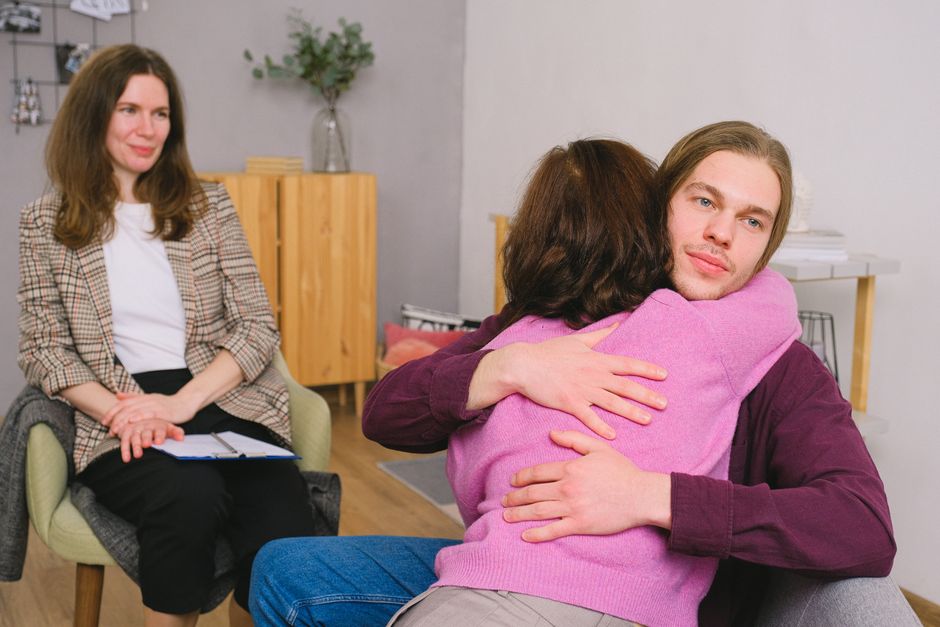
Couples counseling is a structured process where partners meet with a trained therapist to talk about their relationship in a safe, guided setting. Sessions usually last about 50 minutes and follow a clear structure: checking in, exploring a specific concern, learning a communication skill, and agreeing on a small step to try before the next meeting. The therapist does not pick sides or tell you whether to stay together. Their job is to help both people hear each other and change patterns that keep repeating.
Most couples attend weekly at first, then less often as things improve. Some come to fix a crisis. Others come to strengthen a relationship that is already working. Both are valid reasons to walk through the door.
What Actually Happens In Couples Counseling Sessions Explained
The first session looks different from the ones that follow. The therapist usually starts by explaining confidentiality and its limits, then asks each partner to describe what brought them in. You will often hear a question like “What would you like to see change?” rather than “What is wrong with your partner?”
A skilled therapist watches how the two of you interact, not just what you say. Who interrupts? Who goes quiet? Who softens and who hardens? These patterns carry more information than any single complaint.
Later sessions tend to follow a rhythm:
- A brief check-in on how the past week went
- Focused work on one issue or pattern at a time
- A skill or exercise practiced in the room
- A clear takeaway to try at home
The therapist may slow a heated exchange down and ask each person to say what they felt before they said what they said. That sounds simple. In practice, it is the hardest part for most couples.
What Is the Difference Between Couples Counseling and Individual Therapy?
Individual therapy focuses on one person’s inner world. Couples counseling treats the relationship itself as the client. The therapist is not there to diagnose one partner as the problem. They are looking at the space between two people — how each person’s behavior triggers and feeds the other’s.
This distinction matters. If you go into couples work expecting the therapist to confirm your partner is at fault, you will likely be disappointed. Good couples therapists are trained to stay neutral and to hold both people accountable for their part of the pattern.
Some couples do both. One partner may see an individual therapist for depression or trauma while the couple works on communication. That combination is common and often useful, provided the therapists are aware of each other’s work.
What Techniques Do Therapists Use in Couples Sessions?
The most studied approach is emotionally focused therapy, or EFT. Research consistently shows it helps a meaningful share of couples improve, though not every couple responds. EFT focuses on the emotional bond underneath the fighting. The idea is that most arguments are really about closeness and safety.
Gottman method therapy takes a more skill-based route. It teaches couples to manage conflict, repair after arguments, and build shared meaning. The Gottman Institute’s research on thousands of couples identified patterns — like criticism, contempt, defensiveness, and stonewalling — that predict trouble. Whether those patterns are as predictive as the original research suggested is debated by some researchers, but the communication skills themselves are widely taught and generally helpful.
Behavioral approaches focus on changing specific actions. A therapist might help you agree on how chores get divided or how you handle a recurring argument about money. The focus is practical, not emotional.
Many therapists blend methods. What matters more than the label is whether you feel the therapist understands your relationship and whether you can be honest in the room.
Will the Therapist Take Sides?
No. A trained couples therapist works hard to stay neutral, and if they cannot, they should tell you. Neutrality does not mean pretending both people are equally responsible for every problem. It means the therapist avoids declaring one partner the villain.
You may feel like the therapist is siding with your partner. That reaction is common and worth raising in session. It often reveals something about how you experience being heard — or not heard — in the relationship itself.
There is one important exception. If a therapist detects abuse — physical violence, threats, or coercive control — the approach changes. Couples counseling is generally not recommended when there is active abuse, because joint sessions can put the victim at greater risk. A responsible therapist will address this directly, often by meeting with each partner separately and connecting the person being harmed to individual support.
How Long Does Couples Counseling Take to Work?
There is no standard timeline. Some couples notice a shift in communication within a few sessions. Others need months. Much depends on how long the problems have existed, how motivated both people are, and whether there is untreated individual issues like depression, addiction, or trauma underneath the relationship strain.
Many therapists suggest committing to a set number of sessions — often somewhere in the range of 8 to 12 — before deciding whether it is helping. That gives you enough time to judge the process fairly rather than quitting after one uncomfortable session.
It is also honest to say that couples counseling does not work for every couple. Research on couples therapy shows meaningful improvement for many, but not all. Some couples use counseling to separate more thoughtfully. That is a legitimate outcome, not a failure.
What If Only One Partner Wants to Go?
One motivated partner can still start. Many therapists will see a couple where one person is reluctant, and sometimes the reluctant partner comes around after the first partner reports the sessions are not just a blame session.
That said, couples counseling works best when both people participate. A therapist cannot fix a relationship alone with one person in the room. If your partner refuses to attend, individual therapy can still help you understand your own patterns and decide what you need.
What Should You Expect to Feel During Sessions?
Uncomfortable, at least sometimes. Sessions surface things you may have avoided for years. Crying, anger, and silence all happen in the room. A good therapist makes space for those feelings without letting the session turn into a free-for-all.
You may also feel relief. Many couples describe the first session as the first time in months they felt heard by their partner, even if nothing was resolved yet.
Expect homework. Most therapists assign something to practice between sessions — a daily check-in, a pause before reacting, a specific conversation to have. The work between sessions is where most change actually happens.
How Do You Know If Couples Counseling Is Working?
Look for small shifts rather than dramatic ones. Arguments that used to escalate may end sooner. You may catch yourself using a skill the therapist taught. You may notice more curiosity about your partner’s perspective, even when you disagree.
If after a fair trial — several sessions with an honest effort from both people — nothing has changed, that is worth discussing openly with the therapist. Sometimes a different therapist or a different approach fits better. Sometimes the relationship itself is the issue, and counseling helps you see that clearly.
One non-obvious point: couples often delay seeking help for years, waiting until problems are severe. Research on relationship distress suggests that couples who seek help earlier tend to have better outcomes than those who wait until the relationship is deeply damaged. Getting help sooner is not a sign of weakness. It is usually a sign of good judgment.
Frequently Asked Questions
How long is a typical couples counseling session?
Most sessions last about 50 minutes, though some therapists offer longer sessions of 75 to 90 minutes. The length is usually set by the therapist’s training and your insurance coverage.
Is couples counseling confidential?
Yes, with important limits. Therapists must break confidentiality if there is a risk of serious harm to you or someone else, or in cases of suspected child or elder abuse. Ask your therapist to explain these limits in the first session.
Can couples counseling save a relationship that feels hopeless?
It can help many couples improve their relationship, but no therapy can guarantee a relationship survives. Some couples find clarity and decide to separate, which is also a valid outcome.
Do we have to be married to go to couples counseling?
No. Couples counseling is available to any two people in a relationship, married or not. Some therapists also work with couples who are considering marriage or deciding whether to stay together.
