
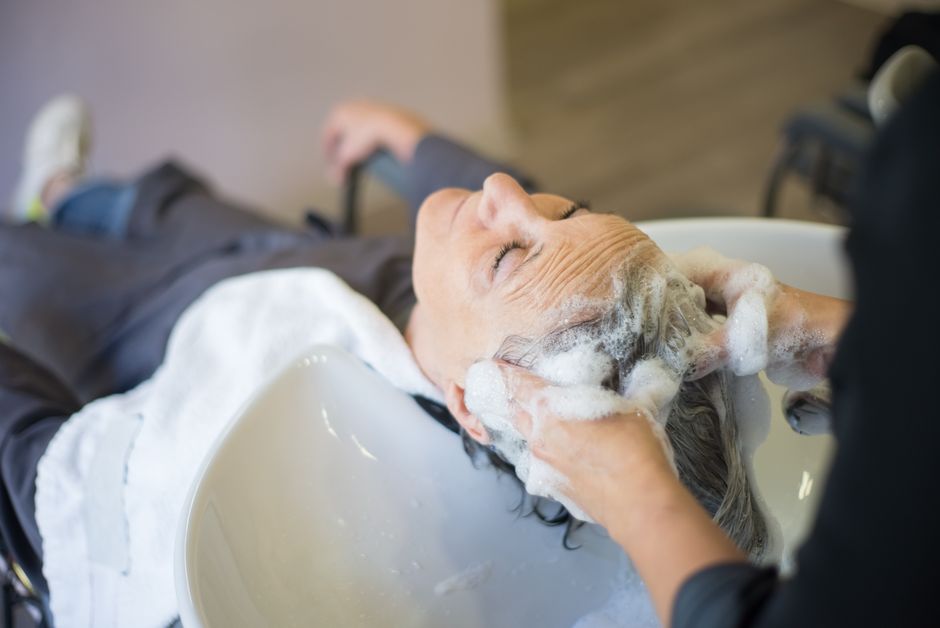
If you stop using shampoo for 30 days, your scalp will likely go through a period of excess oiliness, then gradually adjust as your sebum production regulates. The end result varies widely from person to person—some find their hair becomes healthier and more balanced, while others experience persistent buildup and discomfort. The science behind this transition is real, but the “perfect” outcome promoted by the “no-poo” movement is not guaranteed for everyone.
What Actually Happens During the First Week Without Shampoo?
During the first week, most people notice their hair becomes visibly oily and greasy. This is not a sign that your scalp is “detoxing”—that concept is a myth. Your scalp does not store toxins and release them through oil.
What is actually happening is simpler. Shampoo removes sebum, which is the natural oil your scalp produces to protect and moisturize your skin and hair. When you stop washing it away, the oil accumulates on the surface of your scalp and along the hair shaft. Your scalp continues producing sebum at its usual rate, but because nothing is removing it, the buildup becomes noticeable within 24 to 48 hours.
For some people, the oiliness is mild. For others, especially those with naturally oily skin or fine hair, the first week can feel uncomfortable. Your hair may look flat, feel heavy, and develop a noticeable sheen. This is the period when most people give up and return to shampoo.
Does Your Scalp Really “Adjust” After Stopping Shampoo?
Yes, but the adjustment is more modest than many online sources claim. After roughly 2 to 4 weeks, some people report their scalp feels less oily than it did in the first week. The reason is that sebum production can decrease slightly in response to the constant layer of oil sitting on the skin.
This is a genuine physiological response. The sebaceous glands in your scalp do not have a precise “feedback loop” like a thermostat, but research indicates that removing oil constantly can stimulate more production. The reverse also appears true—leaving oil in place may signal the glands to slow down.
However, the degree of adjustment is not predictable. Some people see a meaningful reduction in oiliness by day 30. Others do not. Your baseline sebum production, hormone levels, age, and genetics all play a role. A person with naturally dry scalp may see little change. A person with hormonal acne or seborrheic dermatitis may see symptoms worsen.
What Are the Risks of Not Using Shampoo for 30 Days?
Stopping shampoo is not dangerous for most healthy adults, but it carries genuine drawbacks that are often minimized in popular discussions.
The most common issue is sebum buildup. When oil, dead skin cells, and product residue accumulate on the scalp, they can trap bacteria and fungi. This can lead to itching, flaking, and an unpleasant odor. For people prone to dandruff, going without shampoo frequently makes the condition worse, not better.
A second concern is clogged hair follicles. Excess oil mixed with dead skin cells can block follicles, potentially contributing to folliculitis—an inflammation of the hair follicles that appears as small red bumps. Folliculitis can be uncomfortable and, in rare cases, may lead to temporary hair shedding.
There is also the matter of how your hair looks and feels. Without shampoo, many people find their hair becomes stiff, tangled, or coated in a waxy residue. This is not a sign of health—it is simply the accumulation of oils and skin cells that would normally be washed away.





Is the “No-Poo” Method Supported by Evidence?
The “no-poo” movement—which involves replacing shampoo with water-only washing, conditioner-only washing, or natural alternatives like baking soda and apple cider vinegar—has grown significantly in popularity. The claims include shinier hair, a healthier scalp, and better hair growth.
Clinical evidence for these claims is limited. No large, controlled human trials have compared traditional shampooing to the no-poo method over 30 days. Most of what is known comes from anecdotal reports and small observational studies. Some dermatologists acknowledge that shampoo can strip natural oils and irritate sensitive scalps, but they also point out that modern shampoos are formulated to clean gently and are not inherently harmful.
One specific concern deserves attention: baking soda. Some no-poo advocates recommend washing hair with baking soda dissolved in water. Baking soda has a high pH, typically around 8 to 9, while your scalp’s natural pH is closer to 4.5 to 5.5. Using alkaline substances on the scalp can disrupt the skin barrier, increase dryness, and damage the hair cuticle. Dermatologists have reported cases of hair breakage and scalp irritation linked to this practice. If you are considering a no-poo approach, water-only or conditioner-only methods are safer than alkaline alternatives.
What Happens After 30 Days of No Shampoo?
By day 30, your scalp has had time to adjust to its new normal. For some people, this means less oiliness and a more balanced scalp. For others, it means persistent buildup, itching, or flaking that does not improve.
There is no universal “day 30 result.” Your experience depends heavily on your starting point. If you had a healthy, balanced scalp before stopping shampoo, you are more likely to adapt successfully. If you had dandruff, oily scalp, or sensitive skin, you are more likely to see your symptoms persist or worsen.
Hair growth is not affected by stopping shampoo. Washing your hair does not make it grow faster or slower. Hair growth occurs at the follicle level beneath the scalp, and surface cleansing does not influence that process. If you see claims that no-poo methods “stimulate” hair growth, you are reading marketing language, not science.
How to Transition Safely If You Want to Try It
If you want to reduce or eliminate shampoo, you can do so in a way that minimizes discomfort and risk.
Start by extending the time between washes gradually. If you wash daily, try every other day for two weeks. Then move to every three days. This gives your scalp time to adjust without the shock of sudden oil buildup.
Use a gentle sulfate-free shampoo when you do wash. Sulfates are detergents that create foam and remove oil effectively, but they can be drying for some people. Sulfate-free options clean more gently and may help you maintain a middle ground between traditional washing and no-poo.
Consider brushing your hair regularly to distribute oils from the scalp down the hair shaft. This is a common practice in the no-poo community and can help reduce the appearance of greasiness at the roots. Use a clean brush or comb, as dirty tools can transfer bacteria back to your scalp.
If you develop significant itching, redness, flaking, or bumps, wash your hair with a standard shampoo. These symptoms indicate that the no-shampoo approach is not working for your scalp, and there is no benefit to pushing through discomfort.
Who Should Not Stop Using Shampoo?
Certain people should not attempt a 30-day no-shampoo experiment without speaking to a dermatologist first.
People with seborrheic dermatitis—a common condition causing scaly, itchy patches on the scalp—often need medicated shampoos containing ingredients like ketoconazole or zinc pyrithione to manage symptoms. Stopping these treatments can cause a flare-up.
People with psoriasis on the scalp similarly rely on regular cleansing and sometimes medicated products to control scaling. Going without shampoo can make plaques thicker and harder to treat.
People undergoing hair loss treatment should also maintain their regular washing routine. Some topical treatments, like minoxidil, are applied directly to the scalp and work best when the scalp is clean. Skipping washes can interfere with how well these products absorb.
If you are uncertain whether stopping shampoo is right for you, ask a dermatologist. They can assess your scalp type and give you personalized guidance based on your skin’s needs rather than trend-based advice.
Frequently Asked Questions
Will my hair smell bad if I stop using shampoo?
Yes, for many people, hair develops an odor within the first week as sebum and dead skin cells accumulate. The smell typically fades if your scalp adjusts, but it may persist if buildup continues.
Can stopping shampoo cause hair loss?
No direct evidence links stopping shampoo to hair loss. However, severe folliculitis or scalp inflammation from buildup could potentially contribute to temporary shedding in rare cases.
Is it better to wash hair with just water instead of shampoo?
Water alone removes some dirt and sweat but does not effectively break down sebum or product residue. For people with very dry scalps, water-only washing may work; for others, it leads to buildup.
How long does it take for your scalp to stop producing excess oil after stopping shampoo?
Most people see some reduction in oiliness within 2 to 4 weeks, but this varies significantly. Some people never experience a full adjustment and continue to feel greasy beyond 30 days.
