
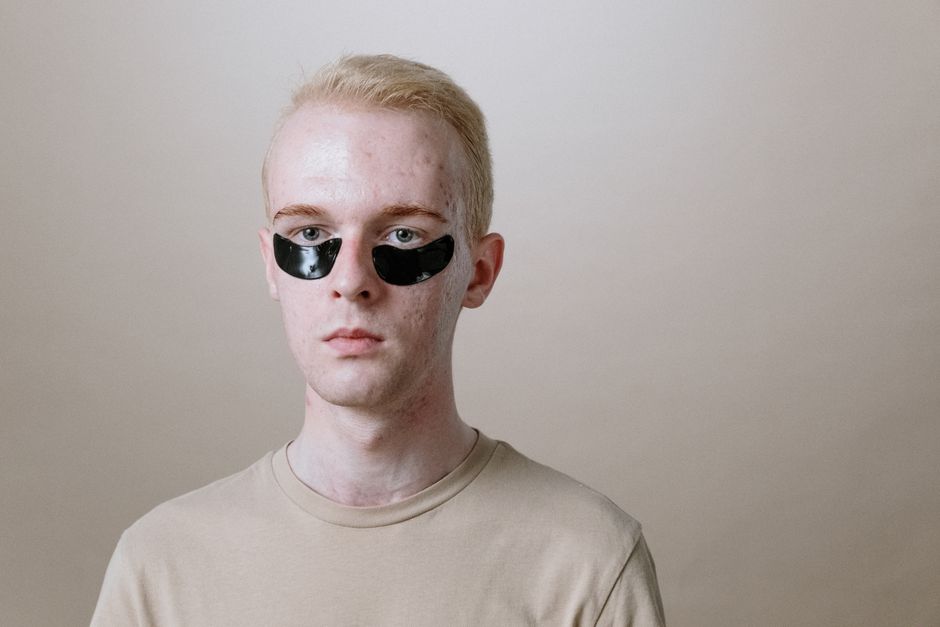
Popping a pimple can push bacteria and inflammation deeper into the skin. That raises the odds of a bigger infection, a longer healing time, and a permanent scar. It can also spread the problem to nearby pores.
The reason comes down to anatomy. A pimple is a blocked hair follicle. When you squeeze it, you are not just emptying it. You are applying pressure to a structure that sits close to deeper tissue and small blood vessels. That pressure can rupture the follicle wall and send its contents where they do not belong.
Most of the time the result is a slightly worse pimple that heals on its own. Sometimes it is a scar that lasts for years. The difference depends on how deep the damage goes and how your skin responds.
What Happens If You Pop A Pimple Scarring And Infection?
Two things happen, and they are connected. The first is mechanical damage. The second is what your immune system does in response.
A pimple forms when a hair follicle gets plugged with oil and dead skin cells. Bacteria that normally live on the skin, most often Cutibacterium acnes, can multiply inside that blocked follicle. Your immune system responds by sending inflammatory cells to the area. That inflammation is what makes a pimple red, swollen, and tender.
When you squeeze, you increase pressure inside the follicle. If the pressure is high enough, the follicle wall tears. The contents — oil, dead cells, bacteria, and inflammatory material — spill into the surrounding dermis, the layer of skin beneath the surface.
That spill triggers a stronger immune response. More inflammation, more redness, more swelling. In a mild pimple, this may just mean the spot looks angrier for a few days. In a deep pimple, it can mean the lesion grows larger and takes much longer to settle.
The infection risk is real but often overstated in casual conversation. Most popped pimples do not become serious infections. What they more commonly cause is post-inflammatory hyperpigmentation — a dark mark left behind — and in some cases a true scar.
Why Does Popping a Pimple Make It Worse?
Squeezing does not remove the problem. It relocates it.
A pimple has a pore opening at the surface and a follicle sac below. When you press on the surface, you are pushing downward, not just outward. Some contents come out through the pore. Some get forced sideways and downward into the dermis.
Your immune system cannot easily clear material that has been pushed into deeper tissue. So it keeps responding. That means prolonged inflammation at the site.
There is a second issue. Fingers and nails carry bacteria. Pressing them into broken skin adds organisms that were not part of the original pimple. This does not always cause a clinical infection. But it does increase the chance that the area becomes more irritated and slower to heal.
There is also a mechanical problem with technique. Most people squeeze with uneven pressure and cannot see what they are doing. They often press on skin around the pimple rather than the pimple itself, which damages healthy tissue nearby.
How Does Popping a Pimple Cause Scarring?
Scarring happens when the damage extends deep enough that the skin cannot rebuild itself perfectly.
The dermis contains collagen and elastin, the proteins that give skin its structure and bounce. When inflammation in the dermis is intense or lasts a long time, it can break down that collagen. Your body then produces new collagen to repair the area — but the new collagen is not laid down in the same organized pattern.
That difference in pattern is what you see as a scar. Acne scarring takes a few common forms:
- Atrophic scars — depressions or indentations in the skin. These are the most common type from acne. They include ice-pick scars, boxcar scars, and rolling scars.
- Hypertrophic scars — raised, firm scars that stay within the original wound area.
- Keloids — raised scars that grow beyond the original spot. These are more common in people with darker skin tones.
Not everyone who pops a pimple gets a scar. Genetics, skin tone, the depth of the original pimple, and how much inflammation occurred all play a role. Deep, inflamed nodules and cysts are far more likely to scar than small surface whiteheads. Popping a deep cyst is more likely to leave a mark than popping a tiny whitehead.
Dark marks are different from scars. Post-inflammatory hyperpigmentation is a color change, not a structural change. It can fade over months. A true scar does not fade on its own because the skin structure has changed.





Can Popping a Pimple Cause a Serious Infection?
Serious infection from a popped pimple is uncommon, but it is possible, and the location matters.
The area around the nose and mouth is sometimes called the “danger triangle.” Veins in this region drain toward the cavernous sinus, a network of veins at the base of the brain. An infection introduced here has a pathway that infections elsewhere on the face do not.
This is not a reason to panic about every pimple near your nose. It is a reason not to dig at one. Cavernous sinus thrombosis is rare, but it is a genuine medical emergency when it occurs. Signs that warrant urgent care include:
- Rapidly increasing swelling around the eye
- Severe headache with fever
- Double vision or drooping eyelid
- Confusion or neck stiffness
Away from the danger triangle, a popped pimple can still become a skin infection. Signs include spreading redness, warmth, increasing pain, or pus that keeps coming back. These are worth a medical visit, especially if you have diabetes or a weakened immune system.
What Should You Do Instead of Popping?
Leave inflamed pimples alone. That is the honest answer, and it is also the one most people find hardest to follow.
For a pimple that is clearly ready to drain — a whitehead with a visible center — some dermatologists use a sterile technique at home. That means clean hands, a sterile lancet, gentle pressure, and stopping immediately if nothing comes out. This is not the same as squeezing with fingernails. It is also not something most people do correctly.
For most pimples, the better approach is to reduce inflammation and let the lesion resolve:
- Apply a warm compress to encourage drainage naturally.
- Use over-the-counter treatments containing benzoyl peroxide or salicylic acid. These are well established for mild acne.
- Keep the area clean without scrubbing.
- Do not pick at scabs. Scabs are part of healing, and removing them reopens the wound.
For deep, painful nodules or cysts, see a dermatologist. These are the lesions most likely to scar, and they often need prescription treatment. Topical products alone usually do not reach them.
Sun protection matters more than people expect during healing. Ultraviolet exposure can darken post-inflammatory hyperpigmentation and make marks last longer.
Can You Treat a Scar After It Forms?
Yes, but results vary and no treatment erases a scar completely.
Treatment depends on scar type. Atrophic scars may respond to procedures that remodel collagen, such as microneedling, laser therapy, chemical peels, or subcision. Hypertrophic scars and keloids are often treated with injections, silicone products, or other approaches. Some clinicians recommend these based on established practice, though individual results differ widely.
Post-inflammatory hyperpigmentation is different. It often fades with time, and topical agents like retinoids or certain acids may help speed that process. The evidence for any single product is mixed.
The most reliable way to reduce scarring is to prevent the deep inflammation that causes it. That means treating acne early and not manipulating lesions. Once a scar has formed, treatment can improve appearance but usually cannot restore the skin to its original state.
Does Popping a Pimple Always Cause a Scar?
No. Many popped pimples heal without a permanent mark.
Surface whiteheads that are squeezed gently often leave only temporary redness or a dark spot that fades. The risk climbs with depth. Deep nodules and cysts, the kind you can feel under the skin, are far more likely to scar whether or not you touch them.
That last point matters. Some deep acne scars form even when nothing is popped. The inflammation itself does the damage. Popping makes it worse, but it is not the only cause.
If you scar easily or have a family history of acne scarring, treat your acne earlier and more aggressively. That is the most reliable step you can take.
Frequently Asked Questions
What happens if you pop a pimple and it bleeds?
Bleeding means the follicle wall or nearby tissue has been damaged. It raises the risk of a longer healing time and a dark mark or scar, so stop squeezing and keep the area clean.
How long does a popped pimple take to heal?
A mild popped pimple often settles within a few days, while deeper ones can take a week or more. Dark marks left behind may take months to fade, and true scars do not fade on their own.
Can popping a pimple cause an infection in your brain?
It is rare but possible for pimples in the area around the nose and mouth, because veins there drain toward a vein network at the base of the brain. Seek urgent care for rapid eye swelling, severe headache with fever, or vision changes.
Should you pop a pimple if it has a white head?
Most dermatologists advise against it, even with a visible white head. If you do, use clean hands and a sterile tool, apply gentle pressure only, and stop if nothing comes out.
