
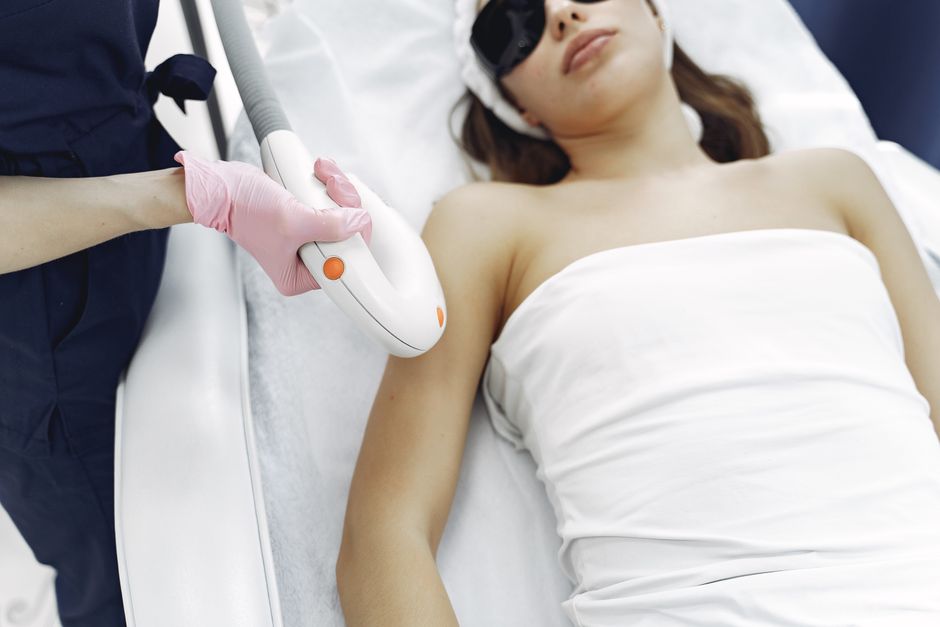
Laser hair removal over a tattoo is not a minor mistake you can shrug off. The laser does not distinguish between hair pigment and tattoo pigment. It will target both. That can mean a burn, blistering, scarring, or permanent damage to the tattoo itself. Most clinics will refuse to treat directly over tattooed skin for exactly this reason.
What happens next depends on the laser wavelength, the tattoo ink color, your skin tone, and how much energy was delivered. In some cases the tattoo is left with a small burn that heals with a scar. In others, the ink is partially destroyed and the tattoo fades or changes shape permanently.
Why Does a Laser Hair Removal Device Target Tattoo Ink?
Both laser hair removal and laser tattoo removal work on the same basic principle: selective photothermolysis. A laser emits light at a specific wavelength. That light is absorbed by a target pigment. The absorbed energy converts to heat. The heat damages whatever structure holds the pigment.
For hair removal, the target is melanin in the hair follicle. For tattoo removal, the target is pigment particles sitting in the dermis, the deeper layer of skin. The problem is that tattoo ink is far more concentrated and far more light-absorbing than hair melanin. When a hair removal laser fires over a tattoo, the ink absorbs the energy instead of the follicle.
That energy converts to heat almost instantly. The ink particles heat up faster than the surrounding skin can disperse it. The result is a thermal injury to the tattooed area.
Tattoo ink sits in the dermis, which is also where hair follicles are rooted. So the two targets are physically close. There is no way for a technician to aim at the follicle while avoiding the ink sitting right beside it.
What Actually Happens to the Skin and the Tattoo?
The immediate reaction is usually pain that feels sharper than normal hair removal. Within minutes to hours, the treated area can turn white, then red. Blistering may follow. In more severe cases, the skin can break open or form a burn that takes weeks to heal.
The tattoo itself can change in several ways:
- Fading — the ink absorbs the laser energy and breaks apart, similar to what happens during intentional tattoo removal. This can leave a patchy or uneven appearance.
- Color shift — some ink colors change or darken. This is more likely with certain pigments.
- Blistering and scarring — a burn over a tattoo can leave a scar that distorts the original design.
- Permanent ink damage — in severe cases the tattoo is permanently altered in ways that cannot be fixed.
The severity depends heavily on the laser wavelength used. Different wavelengths are absorbed differently by different ink colors. A laser that is safe on one tattoo color may cause a strong reaction on another.
Does Tattoo Ink Color Affect the Risk?
Yes, and this is one of the most important factors. Laser light is absorbed differently depending on color. Darker inks — black, dark blue, dark green — absorb a broad range of laser wavelengths. That makes them more likely to heat up and cause a reaction during hair removal.
Lighter inks like yellow, white, and some pastels absorb different wavelengths. Some of these are less reactive to common hair removal lasers, but that does not make them safe. A laser that does not target the ink may still deliver enough heat to surrounding tissue to cause a burn.
There is another concern with certain light-colored inks. Some tattoo pigments, particularly those containing titanium dioxide or certain metal salts, can darken permanently when exposed to laser energy. This is sometimes called paradoxical darkening. It is a known complication in laser tattoo removal, and the same reaction can occur when a hair removal laser hits those pigments.
This is why a patch test before any treatment is standard practice at reputable clinics. A small area is treated first to see how the skin and ink respond.





Can You Get Laser Hair Removal Near a Tattoo?
Often yes, but the technician needs to work around the tattoo, not over it. Most experienced providers will treat the skin surrounding a tattoo while leaving a margin of untreated skin over the ink itself. The size of that margin depends on the laser’s spot size and how precisely the technician can aim.
Some clinics use a technique where they treat very close to the edge of the tattoo but stop short of the ink. Others may decline to treat the area at all if the tattoo covers a large portion of the treatment zone.
If you have a tattoo in an area you want treated, be upfront about it during your consultation. Do not assume the technician will notice it. Show them exactly where it is. Ask what their protocol is for working around tattoos.
If a provider says they can treat directly over a tattoo without risk, that is a reason to be cautious. The physics of how laser energy interacts with ink does not support that claim.
What Should You Do If It Already Happened?
If a laser was fired over your tattoo, treat it like a burn. Cool the area gently with cool — not ice-cold — water or a cool compress. Do not apply ice directly to the skin. Do not pop any blisters. Keep the area clean and covered with a sterile, non-stick dressing.
Watch for signs of infection: increasing redness, swelling, warmth, pus, or fever. If any of these appear, see a doctor. Burns over tattooed skin can become infected, and infection can worsen scarring.
If the tattoo has changed color, faded, or developed blisters, document it with photos. Note the date and what was done. This matters if you need to seek medical care or discuss the incident with the clinic.
For the tattoo itself, there is no reliable way to restore ink that has been damaged by laser energy. If the tattoo is significantly altered, your options may include tattoo removal and re-inking, or a cover-up design. A dermatologist or experienced tattoo artist can advise on what is realistic.
Is There a Safe Way to Remove Hair Over a Tattoo?
Laser hair removal is not the only option, and for tattooed skin it may not be the right one. Other hair removal methods do not use light energy, so they do not carry the same risk of heating tattoo ink.
Waxing, shaving, threading, and depilatory creams do not interact with tattoo pigment the way lasers do. They have their own risks — irritation, ingrown hairs, and in the case of depilatory creams, chemical burns — but they do not selectively heat ink particles.
Electrolysis is another option. It uses a fine probe inserted into each hair follicle, delivering a small electrical current. It does not rely on light absorption, so it does not target tattoo ink the same way. However, electrolysis over a tattoo can still cause scarring or pigment changes, and it is slow and often uncomfortable. Some electrologists may be hesitant to work directly over tattoos.
No method is entirely risk-free over tattooed skin. The safest approach is to discuss your specific situation with a dermatologist who understands both laser physics and tattoo complications.
Why Do Some Clinics Still Treat Over Tattoos?
Not all clinics follow the same standards. Some may treat over tattoos because the technician is inexperienced, because the clinic prioritizes bookings over safety, or because the tattoo is light enough that they believe the risk is low.
In some cases, a provider may use a laser with a wavelength that is poorly absorbed by the specific ink color in your tattoo. That reduces the risk of a strong reaction, but it does not eliminate it. The energy still has to go somewhere.
Regulations for laser hair removal vary by state. In many places, operators are not required to have medical training. That means the person holding the laser may not fully understand how different wavelengths interact with tattoo ink. This is not a reason to panic, but it is a reason to ask questions before treatment.
Ask what laser is being used. Ask what wavelength. Ask what their protocol is for tattoos. A provider who can answer these questions clearly is more likely to handle your skin safely.
Frequently Asked Questions
Can laser hair removal erase a tattoo?
It can damage or partially fade a tattoo, but it is not designed for tattoo removal and will not remove it cleanly. The result is often patchy, uneven, or scarred rather than fully erased.
Will a laser hair removal burn over a tattoo heal on its own?
Minor burns may heal on their own within a week or two with proper wound care. Deeper burns or ones that blister significantly should be seen by a doctor, because they can scar and become infected.
Can I get laser hair removal if I have a tattoo in the treatment area?
Many clinics will treat around the tattoo but not directly over it. Some may decline treatment entirely if the tattoo covers a large part of the area. Always tell your provider about any tattoos before treatment starts.
Does tattoo color matter for laser hair removal risk?
Yes. Darker inks absorb more laser energy and are more likely to heat up and cause burns or fading. Some light-colored inks can darken permanently when exposed to certain laser wavelengths.
