
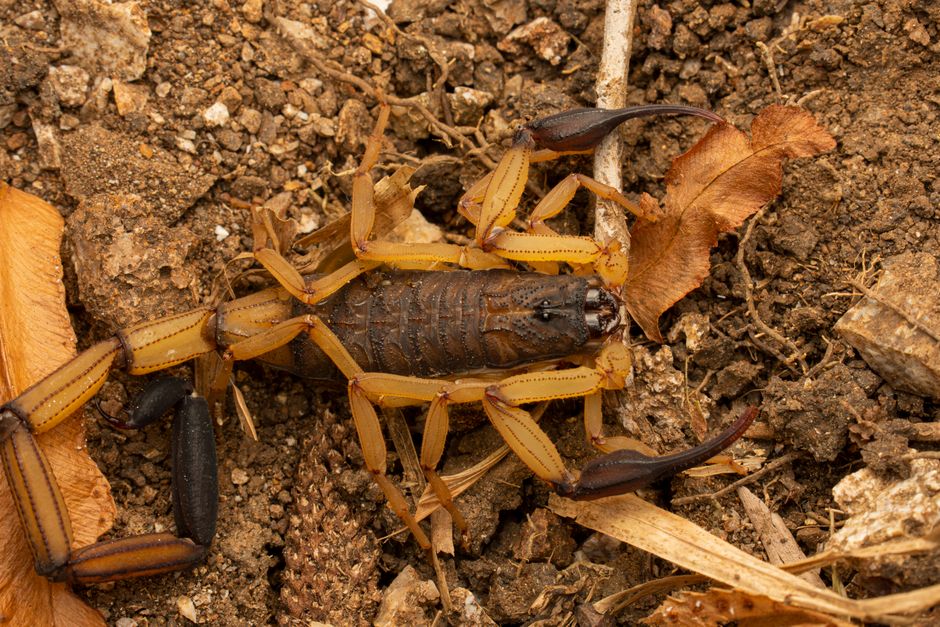
A scorpion sting usually causes immediate pain, and in most cases in the United States that is the worst of it. The vast majority of scorpion stings cause local pain, redness, and swelling that resolve on their own. A small number of species — most notably the bark scorpion in the American Southwest — can cause severe neurological symptoms, especially in children.
What Happens If You Get Stung By A Scorpion?
The sting happens fast. A scorpion grips with its pincers and drives the stinger at the tip of its tail into the skin. The stinger is a sharp, curved barb connected to a venom gland.
Venom enters the tissue within seconds. Most people feel a sharp, burning pain right away. The skin around the puncture may turn red and swell. Some people describe tingling or numbness spreading from the site.
What happens next depends on two things: which species stung you and how much venom was injected. A scorpion can control how much venom it releases. A defensive sting — one where the scorpion feels threatened and wants you to back off — may deliver little or no venom. That is why some stings hurt briefly and fade, while others progress.
In the United States, the species that matters most is the Arizona bark scorpion (Centruroides sculpturatus), found in Arizona, New Mexico, southern Nevada, and parts of California and Texas. Its venom affects nerve signaling and can produce symptoms beyond the sting site.
What Are the Symptoms of a Scorpion Sting?
Most stings stay local. Pain, redness, warmth, and mild swelling at the puncture are typical. The pain usually peaks within minutes and then gradually settles.
Severe stings — mainly from the bark scorpion — can cause a distinct set of nerve-related symptoms. These include:
- Numbness or tingling spreading from the sting site
- Muscle twitching, jerking, or restlessness
- Uncontrolled jerking movements of the arms and legs, especially in children
- Increased saliva and tearing
- Blurred vision or roving eye movements
- Rapid heart rate and rising blood pressure
- Difficulty swallowing or a feeling of throat tightness
- Agitation, irritability, or unusual drowsiness
These symptoms typically develop within minutes to a few hours of the sting. In children, the neurological effects can be more pronounced and progress faster. Infants and young children are at higher risk of serious reactions because their body weight is smaller relative to the amount of venom.
Adults can develop severe symptoms too, but it is less common. Most adult stings from even the bark scorpion stay mild to moderate.
When Is a Scorpion Sting a Medical Emergency?
Call emergency services or get to an emergency department if any of the following occur after a sting:
- Trouble breathing, swallowing, or speaking
- Muscle jerking that will not stop, or movements the person cannot control
- Severe agitation or confusion
- Signs of anaphylaxis — hives spreading beyond the sting, facial or throat swelling, difficulty breathing, dizziness, or a feeling of doom
- Any sting in an infant or young child
- Increasing numbness or weakness spreading up a limb or across the body
Anaphylaxis from scorpion stings is rare but possible, as it is with any venom. It is a separate reaction from the venom’s direct effects and requires immediate treatment.
For most adults with a mild sting — pain and redness only, no spreading symptoms — home care is reasonable. Wash the area with soap and water. Apply a cool compress. Over-the-counter pain relievers can help. Watch for any symptoms that spread beyond the sting site over the next few hours.
How Is a Scorpion Sting Treated?
There is no antivenom available for scorpion stings in the United States. An antivenom called Anascorp was approved by the FDA in 2011 for bark scorpion stings, but its manufacturer stopped producing it, and it is no longer commercially available in the U.S. This is a genuine gap in care and worth knowing if you live in or travel to the Southwest.
Without antivenom, treatment in a hospital is supportive. That means managing symptoms as they arise: pain control, medications to calm muscle jerking, and monitoring of breathing and heart function. Most people, including those with significant symptoms, recover fully with supportive care.
Some clinicians use medications such as benzodiazepines to reduce muscle hyperactivity in severe cases. This is common practice, though the evidence base for specific drug regimens is limited because severe cases are uncommon and hard to study in trials.
For mild stings, home care is straightforward:
- Wash the sting site with soap and water
- Apply a cool compress for comfort
- Take an over-the-counter pain reliever if needed
- Keep the area clean and watch for signs of infection
Do not cut the wound or try to suck out venom. These methods do not work and can cause harm.
How Long Does a Scorpion Sting Last?
Mild stings usually improve within a few hours to a day. Pain typically fades over several hours, and any redness or swelling settles over a day or two.
Severe bark scorpion stings can produce symptoms that last longer. Neurological effects may persist for hours to a day or more, and recovery can take several days in serious cases. Children with severe symptoms often need to be monitored in a hospital until the effects resolve.
These timelines are general. Individual recovery varies with the species, the amount of venom, the person’s age and health, and how quickly care is received.
Which Scorpions Are Dangerous?
Of the roughly 2,000 scorpion species worldwide, only a small fraction have venom dangerous to humans. In the United States, the bark scorpion is the main concern. Other U.S. species — including the striped bark scorpion and the desert hairy scorpion — can sting and hurt, but their venom is not considered life-threatening.
Worldwide, scorpion stings are a more serious public health issue. Species in the family Buthidae, found in parts of North Africa, the Middle East, South Asia, and Mexico, cause the majority of severe envenomations globally. Travelers to these regions should take scorpion precautions seriously.
| Region | Main concern | Typical severity |
|---|---|---|
| U.S. Southwest | Arizona bark scorpion | Mostly mild; severe in children and some adults |
| Mexico, North Africa, Middle East, South Asia | Various Buthidae species | Higher rate of severe cases |
| Most other regions | Local species | Usually localized pain and swelling |
One clarification worth making: a scorpion’s size does not predict danger. The bark scorpion is small — often under three inches — yet it is the most medically significant species in North America. Larger scorpions tend to have milder venom.
How Do You Prevent Scorpion Stings?
Scorpions are nocturnal and seek shelter during the day. They hide under rocks, in woodpiles, in shoes left outside, and in cracks around homes. In areas where they are common, shake out shoes and clothing before putting them on. Wear gloves when moving rocks or firewood. Check bedding and sleeping bags when camping.
At home, seal gaps around doors and windows. Reduce clutter and debris near the house. Use a blacklight to check for scorpions at night — their exoskeletons fluoresce under ultraviolet light, which makes them easier to spot.
If you find a scorpion, do not handle it. Most stings happen when people try to move or kill a scorpion by hand.
Frequently Asked Questions
How long after a scorpion sting do symptoms appear?
Pain and redness appear within minutes. Serious neurological symptoms, when they occur, usually develop within the first few hours after the sting.
Can a scorpion sting kill you?
Deaths from scorpion stings in the United States are extremely rare, and most involve children, older adults, or people with underlying health conditions. Worldwide, severe envenomations from certain species can be fatal, especially without medical care.
Should I go to the hospital for a scorpion sting?
Go to the hospital if symptoms spread beyond the sting site, if a child is stung, or if there is trouble breathing or swallowing. A mild sting with only local pain usually does not require emergency care.
What should I do immediately after a scorpion sting?
Wash the area with soap and water, apply a cool compress, and take an over-the-counter pain reliever if needed. Watch closely for spreading numbness, muscle twitching, or other symptoms over the next few hours.
