
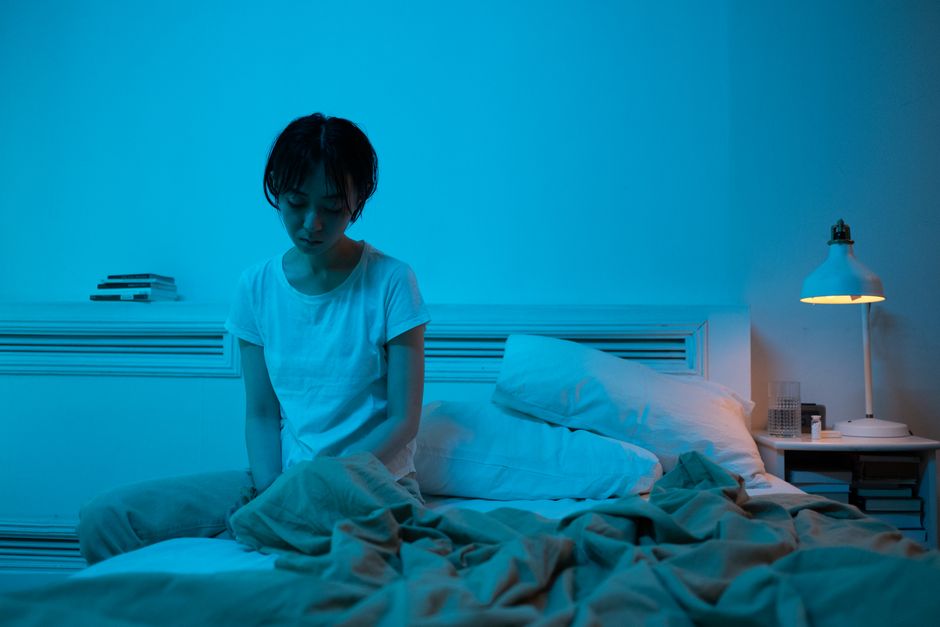
Staying awake for 24 hours does not cause lasting harm in most healthy adults, but your brain and body will not function normally. By the 24-hour mark, reaction time slows, attention becomes unstable, and your ability to judge your own performance gets worse. Most people recover after a good night’s sleep, though some effects on mood and thinking can linger for a day or two.
What surprises many people is that the impairment is not steady. It comes in waves. You may feel fine for a stretch, then hit a wall without warning. That pattern is part of why sleep loss is linked to accidents.
What Happens If You Don’t Sleep For 24 Hours?
The clearest effects show up in attention and reaction time. Research on sleep deprivation consistently finds that sustained attention breaks down first. You struggle to stay focused on a task. Your mind drifts. You may read the same sentence twice without taking it in.
Reaction time slows. If you are driving, that gap between seeing a brake light and pressing your own pedal gets longer. The danger is not just being slower. It is that you feel more alert than you actually are.
Your brain also starts to slip into brief moments of sleep while you are awake. Researchers call these microsleeps. They last a few seconds and you often do not notice them. On a 24-hour stretch without sleep, these become more likely, especially during boring or low-stimulation tasks.
Mood shifts too. Irritability, a shorter fuse, and feeling emotionally raw are common. Some people feel anxious or low. These mood changes are usually temporary and lift after sleep.
How Does Your Brain Change After 24 Hours Awake?
Your brain does not switch off. It keeps working, but the way it works changes. The prefrontal cortex, the area behind your forehead that handles planning, focus, and self-control, becomes less effective at coordinating with other brain regions. That shows up as poorer decision-making and a harder time holding back impulses.
Memory is affected as well. Forming new memories depends on a process called consolidation, and much of that happens during sleep. After a full night without sleep, your ability to take in and hold onto new information drops. You can still learn something in the moment, but it is less likely to stick.
One detail people rarely hear: your brain does not simply get “sleepier” in a straight line. Sleep pressure builds the longer you stay awake, driven partly by a chemical called adenosine that accumulates in the brain. But your body clock also pushes back with a wake signal during the day. The two forces fight each other. That is why you can feel foggy at 3 p.m. and oddly more alert at 8 p.m., even though you have been awake longer.
After roughly a full day awake, the sleep drive usually wins. The push to sleep becomes hard to resist.
What Physical Symptoms Can You Expect?
Most physical symptoms after 24 hours are uncomfortable rather than dangerous. You may notice:
- Heavy, gritty, or dry eyes
- Yawning and a dull headache
- Slower reflexes and clumsier movement
- Muscle aches or a general sense of fatigue
- Changes in appetite, sometimes eating more than usual
- Feeling cold or slightly off in body temperature regulation
These are signs of strain, not damage. In a healthy adult, the body handles one missed night without injury. The bigger risk is behavioral. You are more likely to make a mistake, trip, or have a lapse behind the wheel.
Some people with certain health conditions may feel worse. If you have a heart condition, diabetes, or a seizure disorder, losing sleep can affect your symptoms. Talk with your doctor about how sleep loss affects you specifically.





Is It Dangerous to Stay Awake for 24 Hours?
For most healthy adults, a single night without sleep is not dangerous in itself. The real danger is what you do while impaired. Drowsy driving is a serious hazard. Research consistently links sleep loss to higher crash risk, and the effect is comparable to driving while intoxicated in terms of slowed reaction and lapses in attention.
Operating machinery, making high-stakes decisions, or caring for others while severely sleep deprived raises risk too. The problem is that judgment is one of the things that suffers, so you may not recognize your own impairment.
There is a rare genetic condition called fatal familial insomnia in which people cannot sleep and the condition is progressive and life-threatening. This is extremely rare and unrelated to ordinary sleep loss. Going 24 hours without sleep does not cause it. Ordinary sleep deprivation is not fatal.
One honest limit: the safe amount of sleep loss varies by person, and there is no reliable way to predict exactly how impaired you will be. The conservative approach is to treat any significant sleep loss as a reason to avoid driving and demanding tasks.
How Long Does It Take to Recover?
Recovery from one night without sleep is usually quick. Most people feel noticeably better after a single full night of sleep. Full return to normal thinking and mood often takes a little longer, sometimes a day or two.
Your body tends to catch up by sleeping more deeply on the first recovery night. You may sleep longer than usual. That is normal and helpful. Trying to “power through” the next day without adjusting your sleep can prolong the fog.
A few things reliably support recovery:
- Get a normal night’s sleep as soon as you reasonably can.
- Avoid relying on large amounts of caffeine to push through, which can make the following night’s sleep harder.
- Keep your usual sleep and wake times in the days after.
Short naps can take the edge off while you wait for bedtime, but a long late nap can make it harder to fall asleep at night. If you nap, keep it brief and early.
What About Sleep Debt and Repeated Short Nights?
One missed night is a single event. Repeatedly sleeping too little is a different matter. Sleep debt builds when you consistently get less sleep than your body needs, and it does not fully cancel out with one long weekend lie-in.
Chronic short sleep is linked in research to a range of health concerns, including effects on mood, metabolism, and cardiovascular health. The evidence for these links is substantial, though the exact mechanisms are still being studied. The key point for this article: a 24-hour stretch without sleep is a short-term stress, not the same as an ongoing pattern of too little sleep.
If you regularly cannot sleep, or you find yourself staying awake for long stretches often, that is worth raising with a doctor. Ongoing insomnia and other sleep problems are treatable, and professional support helps.
When Should You Get Help?
Occasional lost sleep happens to most people. Reach out to a healthcare professional if any of the following apply:
- You cannot sleep most nights for weeks
- Sleep loss is affecting your work, mood, or safety
- You feel very low, anxious, or hopeless
- You have a health condition that sleep loss seems to worsen
Sleep problems are common and treatable. Getting help is not a sign of weakness. If you are having thoughts of harming yourself, contact a crisis line or emergency services right away.
For everyday sleep, the basics hold up well: a consistent schedule, a dark and cool room, and limiting screens and caffeine close to bedtime. These are widely recommended because the evidence behind healthy sleep habits is strong.
Frequently Asked Questions
Can you die from not sleeping for 24 hours?
No, going 24 hours without sleep is not fatal for a healthy adult. The main risks come from accidents and poor decisions while impaired, not from the sleep loss itself.
How long does it take to recover from 24 hours awake?
Most people feel much better after one full night of sleep. Thinking and mood usually return to normal within a day or two.
Is it safe to drive after being awake for 24 hours?
No, it is not considered safe. Sleep loss slows reaction time and causes brief lapses in attention, which raises crash risk.
Does coffee help after 24 hours without sleep?
Caffeine can improve alertness for a while, but it does not restore normal thinking or reaction time. It can also make it harder to sleep when you finally try.
