
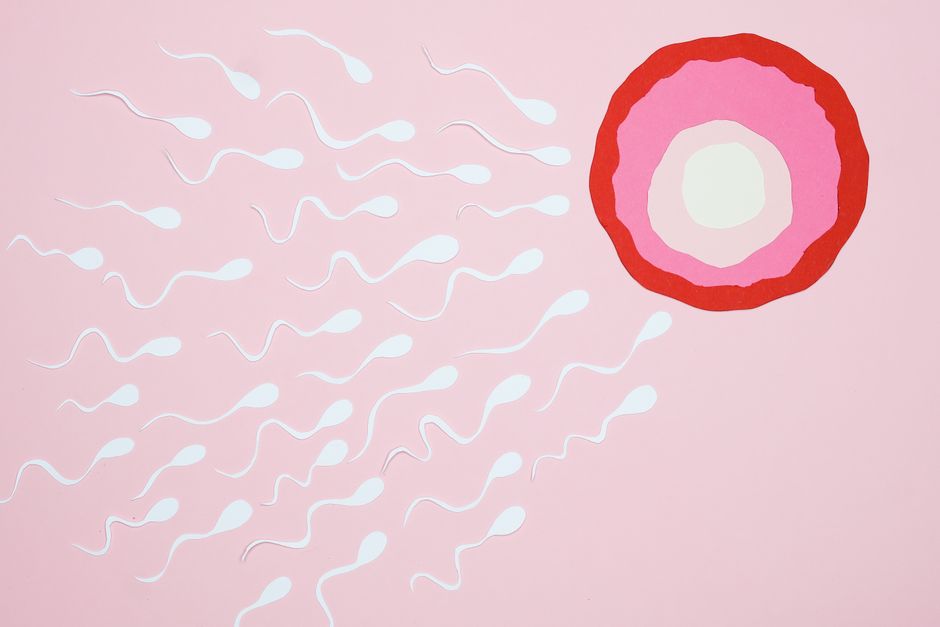
Ovulation is not a slow, gradual event. It is a relatively quick rupture of a mature follicle that releases an egg from the ovary. The “ovulation apex” is the brief window when that egg is released and becomes available for fertilization. In most people who menstruate, this happens roughly midway through the cycle, though the exact timing varies widely from person to person and even from cycle to cycle.
Understanding what happens during this window matters for anyone trying to conceive, tracking their cycle, or simply making sense of changes in mood, temperature, and cervical mucus. The key facts: the egg survives about 12 to 24 hours after release, sperm can survive up to five days in the reproductive tract, and ovulation itself is triggered by a sharp surge in luteinizing hormone (LH) roughly 24 to 36 hours before the follicle ruptures.
What Happens During The Ovulation Apex?
The ovulation apex is the peak moment when a mature egg breaks free from its follicle and leaves the ovary. This is the culmination of a chain of hormonal events that began weeks earlier.
In the days before ovulation, rising estrogen from the growing follicle signals the brain to release a surge of luteinizing hormone from the pituitary gland. That surge is the trigger. Within roughly 24 to 36 hours of the LH peak, the follicle wall weakens and ruptures, releasing the egg along with some surrounding fluid and cells.
The egg is then swept up by the fimbriae — finger-like projections at the end of the fallopian tube. From there, it begins moving toward the uterus. If sperm are present in the tube, fertilization can occur. If not, the egg degenerates.
One detail often misunderstood: ovulation is not always felt, and when it is, the sensation varies. Some people notice a mild twinge on one side of the lower abdomen, sometimes called mittelschmerz. Others feel nothing at all. Neither sensation confirms or rules out ovulation.
How Long Does Ovulation Last?
The actual release of the egg is quick — the rupture itself takes only minutes. But “ovulation” as a fertile window is usually described more broadly.
The egg remains viable for about 12 to 24 hours after release. After that, it can no longer be fertilized. This short window is why timing matters so much for conception.
Sperm, by contrast, can survive in the female reproductive tract for up to five days under favorable conditions. That means the fertile window — the days when intercourse can lead to pregnancy — spans roughly five days before ovulation plus the day of ovulation itself.
This is a critical point. Many people assume the fertile window is centered on ovulation day. In reality, it extends backward more than forward.
What Are The Signs Of Ovulation?
There is no single reliable sign that confirms ovulation. Instead, several physical changes tend to cluster around it, and tracking more than one gives a clearer picture.
Common signs include:
- Cervical mucus changes — mucus becomes clear, stretchy, and slippery, similar to raw egg white
- Basal body temperature shift — a slight rise of about 0.5 to 1 degree Fahrenheit occurs after ovulation, not before
- LH surge — detected by urine test strips, usually 24 to 36 hours before ovulation
- Mild pelvic pain — one-sided twinge in some people
- Libido changes — some report increased interest around ovulation
Note the timing problem with basal body temperature. The temperature rise happens after ovulation has already occurred. It confirms that ovulation happened, but it does not predict it. For predicting ovulation, LH testing and cervical mucus changes are more useful.
How Does Ovulation Fit Into The Menstrual Cycle?
Ovulation divides the menstrual cycle into two phases. The follicular phase comes first, from the start of menstruation to ovulation. The luteal phase follows, from ovulation to the next period.
The luteal phase is more consistent in length than the follicular phase. It typically lasts around 14 days, though 12 to 16 days is considered normal. The follicular phase is where most cycle-to-cycle variation happens. That is why “day 14” is a rough average, not a rule.
Cycle length itself varies. A typical adult cycle runs between 21 and 35 days. Someone with a 28-day cycle may ovulate near day 14. Someone with a 35-day cycle may ovulate closer to day 21. Someone with a 21-day cycle may ovulate around day 7.
This is where many people get tripped up. Assuming ovulation always happens on day 14 leads to mistimed conception attempts and unnecessary worry.
Can You Ovulate More Than Once In A Cycle?
In most cycles, only one egg is released. But there is a nuance worth understanding.
Sometimes two or more follicles mature and rupture within a short window — typically within 24 hours of each other. This is how fraternal (non-identical) twins can form. It is not the same as ovulating on two separate days weeks apart.
True double ovulation at different times in the same cycle is rare and not well documented. The hormonal cascade that triggers one ovulation generally does not repeat within the same luteal phase.
What Can Disrupt Ovulation?
Ovulation depends on a precise hormonal sequence. When any part of that sequence is disrupted, ovulation can be delayed, skipped, or stopped.
Common factors that can affect ovulation include:
- Polycystic ovary syndrome (PCOS) — a common cause of irregular or absent ovulation
- Thyroid disorders — both overactive and underactive thyroid can interfere with ovulation
- Significant weight loss or gain — body fat changes affect hormone signaling
- Extreme exercise — intense training can suppress ovulation in some people
- High stress — sustained stress can disrupt the hormonal cascade
- Perimenopause — ovulation becomes less regular and eventually stops
Anovulation — a cycle without ovulation — does not always mean no bleeding. Some people have bleeding from estrogen withdrawal without having released an egg. This is one reason cycle tracking alone is not a reliable confirmation of ovulation.
How Is Ovulation Confirmed?
No home method confirms ovulation with certainty. Each tool has limits.
| Method | What It Detects | Limitation |
|---|---|---|
| LH urine test | Surge before ovulation | Predicts, does not confirm |
| Basal body temperature | Temperature rise after ovulation | Confirms only in hindsight |
| Cervical mucus tracking | Fertile window changes | Subjective, affected by other factors |
| Mid-luteal progesterone blood test | Progesterone rise after ovulation | Requires a clinician and correct timing |
| Ultrasound | Follicle development and rupture | Clinical setting, not home use |
A mid-luteal progesterone blood test is generally considered the most reliable single indicator that ovulation occurred. It is typically drawn about seven days before the expected next period. Because the luteal phase is fairly consistent, this timing works across different cycle lengths.
Does Ovulation Affect Mood And Energy?
Some people notice changes in mood, energy, or libido around ovulation. The evidence for a consistent pattern is mixed.
Estrogen peaks just before ovulation, and some research suggests this may influence mood and social behavior in subtle ways. Testosterone also rises slightly around ovulation in some people. But individual experiences vary widely, and many people notice no mood changes at all.
What is better established is that the hormonal shifts of the menstrual cycle as a whole can affect mood, sleep, and energy. Ovulation is one part of that picture, not the whole story.
When Should You Talk To A Doctor About Ovulation?
Irregular cycles, absent periods, or difficulty conceiving are reasons to seek medical advice. A clinician can assess hormone levels, check for conditions like PCOS or thyroid disorders, and recommend appropriate next steps.
If you are under 35 and have been trying to conceive for 12 months without success, or over 35 and have been trying for 6 months, evaluation is generally recommended. If your cycles are consistently shorter than 21 days or longer than 35 days, that is also worth discussing.
Tracking ovulation can be helpful, but it is not a substitute for medical evaluation when something seems off.
Frequently Asked Questions
How long after ovulation can you get pregnant?
The egg is viable for about 12 to 24 hours after release. Pregnancy is possible only if sperm are already present or arrive within that window.
Can you ovulate without noticing any symptoms?
Yes. Many people ovulate with no noticeable signs at all. Symptoms like mittelschmerz or cervical mucus changes are common but not universal.
Does ovulation always happen on day 14?
No. Day 14 is a rough average based on a 28-day cycle. Ovulation timing varies with cycle length and can shift from month to month.
Can you ovulate twice in one cycle?
Two eggs can be released within about 24 hours of each other, which can lead to fraternal twins. True double ovulation at separate times in the same cycle is rare.
