
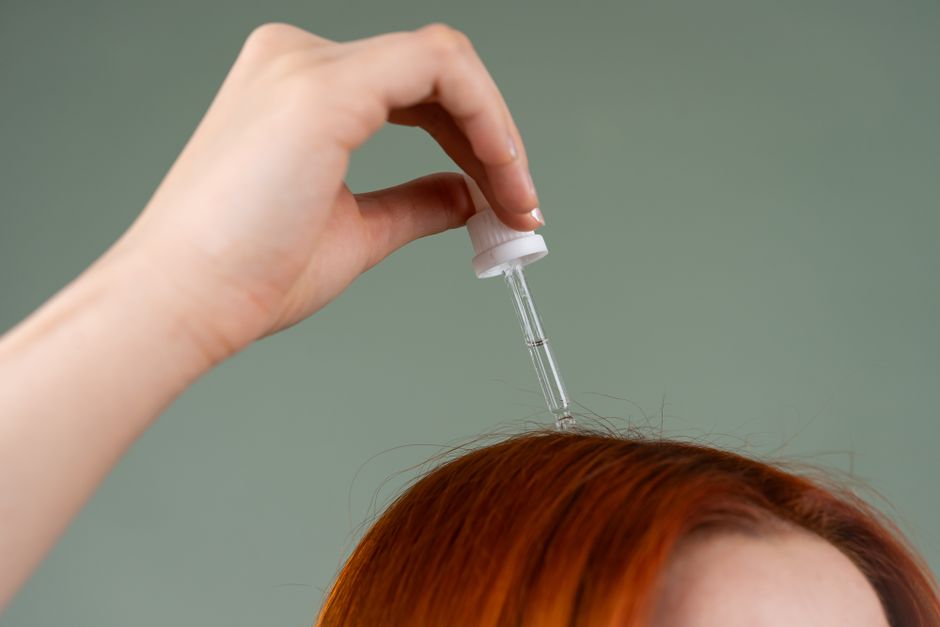
No oil has been proven to grow new hair. That is the honest starting point. What some oils can do is reduce breakage, add shine, and in a few specific cases address a known cause of shedding. If you are looking for a product that regrows hair on a receding hairline, no over-the-counter oil currently meets that standard.
That said, the question is not pointless. Hair oils fall into two very different groups. One group coats the hair shaft and improves how it looks and feels. The other group has some biological activity that may affect the scalp or the hair follicle. Knowing which group a product belongs to tells you what it can realistically do.
What Hair Oil Is Good For Hair Growth?
The most studied oil for hair is rosemary oil. A randomized trial published in the journal Skinmed compared rosemary oil with minoxidil 2% in people with androgenetic alopecia and found similar increases in hair count after six months of use. That is a meaningful finding. It is also a single trial, and minoxidil 2% is a lower concentration than the 5% version most adults use.
Peppermint oil has shown hair-promoting effects in animal studies. Human data is lacking. Coconut oil has been studied mainly for its ability to reduce protein loss from hair during washing, not for follicle stimulation. Castor oil, argan oil, jojoba oil, and almond oil have essentially no human trial evidence for hair growth.
The oils with the most credible evidence fall into this order:
- Rosemary oil — one human trial showing comparable results to low-dose minoxidil over six months
- Peppermint oil — animal data only; no confirmed human trials
- Coconut oil — reduces breakage and protein loss; does not appear to stimulate follicles
- Castor oil, argan oil, jojoba oil — traditional use and cosmetic benefit; no clinical evidence for growth
If someone tells you a specific oil is “clinically proven to regrow hair,” ask which trial. In most cases, there is not one.
How Do Hair Oils Actually Work on the Scalp?
Most oils work on the surface. They coat the hair shaft, fill in gaps in the cuticle layer, and reduce friction between strands. This makes hair feel smoother and look shinier. It also reduces breakage during combing, which matters more than most people realize.
Breakage is not the same as shedding. A hair that snaps mid-shaft never reaches its full length. If your hair seems to stop growing at a certain point, breakage is often the reason, not slow growth from the follicle.
A smaller number of oils have compounds that may influence the follicle itself. Rosemary oil contains carnosic acid and rosmarinic acid, which have shown anti-inflammatory and circulation-related effects in laboratory work. Peppermint oil contains menthol, which appears to affect blood flow to the scalp in animal models. How these translate to human hair growth is not fully understood.
One clarification worth making: increased blood flow to the scalp does not automatically mean more hair. That assumption is common in marketing. The relationship between scalp circulation and follicle activity is more complicated than “more blood equals more growth.”
Do Essential Oils Work Better Than Carrier Oils?
Essential oils are concentrated plant extracts. Carrier oils are the base oils — coconut, jojoba, argan, almond — that dilute them. The distinction matters because essential oils are far more likely to cause irritation when applied undiluted.
Rosemary and peppermint are essential oils. They are usually mixed into a carrier oil before being applied. A typical dilution in aromatherapy practice is a small number of drops per tablespoon of carrier oil, though no standard dilution has been established specifically for scalp use in clinical guidelines.
Carrier oils alone are unlikely to stimulate hair growth. Their role is cosmetic and protective. They make hair easier to manage and less prone to snapping. That is a real benefit, just not the one most people are searching for.
Can Hair Oils Help With Thinning and Shedding?
It depends entirely on why the hair is thinning. Androgenetic alopecia — pattern hair loss — is driven by genetics and hormones. Telogen effluvium is a temporary shedding phase often triggered by illness, surgery, severe stress, or nutritional deficiency. Alopecia areata is an autoimmune condition. Traction alopecia comes from tight hairstyles pulling on follicles over time.
These have different causes and different responses to treatment. Rosemary oil has been studied specifically in androgenetic alopecia. There is no comparable evidence that it helps with alopecia areata or traction alopecia.
If shedding is sudden and widespread, the cause is more likely internal than topical. No oil applied to the scalp addresses a thyroid problem, low ferritin, or a medication side effect. Those need to be evaluated by a clinician.
Some clinicians recommend rosemary oil as a complementary option for mild pattern thinning, particularly for people who prefer to avoid or cannot tolerate minoxidil. That is a reasonable position given the trial data. It is not the same as saying rosemary oil is a replacement for proven treatments.
What Does the Evidence Actually Show About Specific Oils?
Here is a plain breakdown of what is known and not known for the most commonly recommended oils.
| Oil | Human evidence | What it likely does |
|---|---|---|
| Rosemary | One randomized trial vs. minoxidil 2% | May support follicle activity in pattern hair loss |
| Peppermint | Animal studies only | Unknown in humans |
| Coconut | Studies on hair shaft damage | Reduces protein loss and breakage |
| Castor | None | Cosmetic; may cause irritation in some people |
| Argan | None for growth | Conditioning and shine |
| Jojoba | None for growth | Scalp conditioning; chemically similar to sebum |
Rosemary oil is the only one on this list with human trial data for hair growth. Everything else either has animal data, cosmetic data, or no data at all.
How Should You Apply Hair Oil If You Want to Try It?
There is no established clinical protocol for applying hair oil. What follows reflects common practice, not a guideline.
Most people apply oil to the scalp and massage it in for a few minutes, then leave it on for anywhere from 30 minutes to overnight before washing. Some rinse it out after a short time. Frequency varies widely.
Two practical points are worth knowing. First, leaving oil on the scalp for long periods can trigger irritation or seborrheic dermatitis in people prone to it. Second, oil does not replace washing. A scalp that stays oily for days can become uncomfortable and flaky.
If you are trying rosemary oil, the trial used a diluted preparation applied daily. If you have sensitive skin, patch test on your inner arm first. Essential oils can cause contact dermatitis, and peppermint oil in particular can burn if it touches the eyes or broken skin.
What Actually Works Better Than Hair Oil?
For androgenetic alopecia, two treatments have far stronger evidence than any oil. Minoxidil is a topical solution or foam approved for this use. Finasteride is an oral prescription medication for men. Both have been studied in large trials and are considered first-line options by most clinicians.
Other options with supporting evidence include low-level laser therapy and, for some patients, platelet-rich plasma injections. These are not universally effective and results vary.
None of this means hair oil is useless. It means hair oil is not in the same category as these treatments. If your goal is regrowth on a thinning scalp, oil alone is unlikely to get you there. If your goal is healthier-looking hair with less breakage, oil can help.
Nutrition matters too. Iron deficiency, low vitamin D, and protein insufficiency can all affect hair. Correcting a deficiency can restore normal growth. Adding oil on top of a deficiency will not.
Frequently Asked Questions
Does rosemary oil really grow hair?
One randomized trial found rosemary oil performed similarly to minoxidil 2% for hair count over six months in people with pattern hair loss. It is the only hair oil with human trial evidence for growth, but that evidence comes from a single study.
Is coconut oil good for hair growth?
Coconut oil has not been shown to stimulate hair follicles or increase growth. It can reduce protein loss from the hair shaft during washing, which helps prevent breakage and may help hair retain length.
How often should I oil my scalp?
No clinical guideline establishes a frequency for scalp oiling. Common practice ranges from once a week to daily, and the right amount depends on your scalp type and how your skin reacts to oil.
Can hair oil regrow hair on a receding hairline?
No hair oil has been proven to regrow hair on a receding hairline. Minoxidil and finasteride are the treatments with strong evidence for pattern hair loss, and neither is an oil.
