
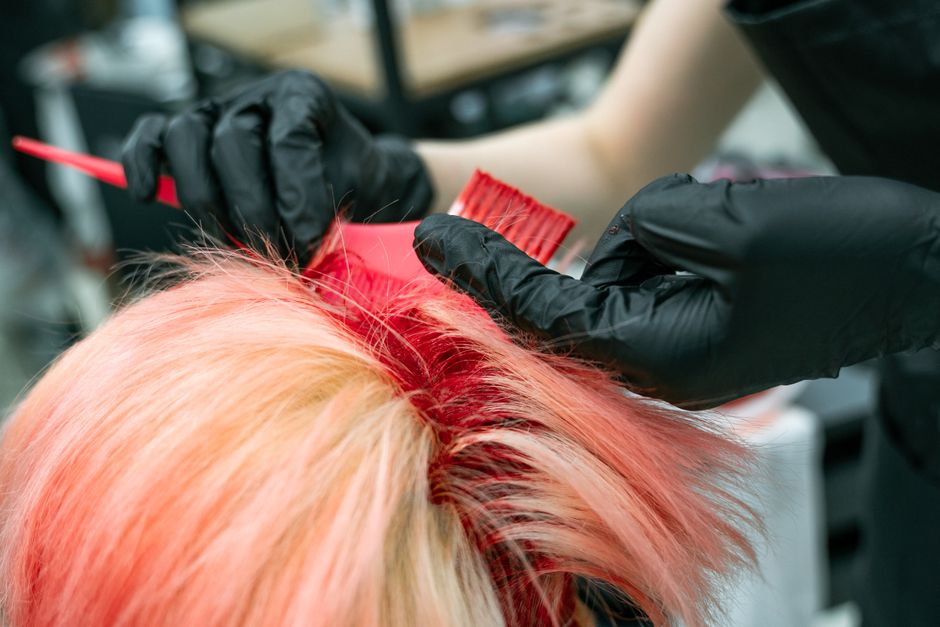
Walk into a salon and the colorist is probably reaching for one of a handful of professional brands: Wella, Redken, L’Oréal Professionnel, Schwarzkopf, Matrix, Goldwell, Joico, Pravana, or Pulp Riot. These are the names that dominate salon color lines in the US. What sets them apart from drugstore dye is mostly how they are sold and mixed, not some secret ingredient.
Professional color is typically sold to licensed stylists only and mixed on site. Many lines rely on a developer (hydrogen peroxide) that the stylist combines with dye in different strengths. That flexibility is the main reason salons use them. It lets a colorist adjust lift, deposit, and tone for each client.
What Hair Dyes Do Salons Use Top Professional Brands?
The short answer is a small group of manufacturers that supply most salon color. Wella and L’Oréal Professionnel are among the most widely used worldwide. Redken, Matrix, and Schwarzkopf are common in US salons. Goldwell has a strong following. Joico, Pravana, and Pulp Riot are popular for vivid and fashion shades.
These brands are not identical, but they share a business model. They sell to professionals, publish technical education, and design their products to be mixed by a trained hand. The label “professional” refers to that channel and training, not to a regulated safety standard. No government body certifies a dye as salon-grade.
That point matters. A salon brand is not automatically gentler or safer than a box dye. The difference is usually the skill of the person mixing and applying it, and the ability to customize the formula.
How Is Professional Hair Color Different From Box Dye?
The biggest difference is the developer. Most permanent box dyes come with one fixed developer strength built into the kit. Salon color lets the stylist choose the developer volume, which changes how much the dye lifts the natural pigment.
Permanent color works by opening the hair’s outer layer (the cuticle) so the dye and developer can reach the cortex, the inner part of the strand. The developer, hydrogen peroxide, lightens the natural melanin while the dye molecules deposit new color. Higher developer volumes lift more but stress the hair more. A stylist picks the lowest strength that will do the job.
Box dye typically uses a single strength for everyone. That is convenient, but it removes the ability to fine-tune. A salon formula can also be adjusted with toners, fillers, and bond-building additives that box kits do not include.
- Developer strength is chosen by the stylist, not fixed by the kit.
- Color can be custom-blended for the client’s base and history.
- Toners and glosses can be added after lifting.
- Application is done by a trained professional who can manage the scalp and timing.
What Are the Main Types of Salon Hair Color?
Salon color falls into a few categories, and each behaves differently. Knowing the type helps you understand what your stylist is proposing.
Permanent color lifts and deposits at the same time and lasts until the hair grows out. It uses developer and opens the cuticle. It is the most common choice for covering gray or going lighter.
Demi-permanent color deposits color with low or no lift. It fades over time and is often used for toning, blending gray, or refreshing ends. It uses a low-volume developer.
Semi-permanent color sits mostly on the surface and washes out gradually. It causes little to no cuticle damage and is popular for fashion shades.
Bleach and lightener are not dyes but are used alongside them. They remove natural pigment so a new color can be deposited. Lightening is the most damaging step in any color service.
Which Brands Are Known for What?
Brands build reputations around specific strengths, though most offer a full range. This is a general guide, not a ranking.
- Wella is known for its Koleston and Illumina permanent lines and broad shade range.
- L’Oréal Professionnel is widely used for Majirel permanent color and Dialight demi-permanent.
- Redken is known for Shades EQ, a demi-permanent gloss many stylists use for toning.
- Schwarzkopf offers Igora and BlondMe lines, with BlondMe aimed at lightening.
- Matrix is common in salons for its SoColor line.
- Goldwell is known for Topchic and Colorance.
- Pravana, Pulp Riot, and Joico are popular for vivid and creative shades.
Brand loyalty in salons often comes down to education and what a stylist trained on. A skilled colorist can get good results from several lines. The brand matters less than the formulation and the hands applying it.
Are Salon Hair Dyes Safer Than Drugstore Dye?
Not necessarily. The evidence does not show that salon brands are inherently safer. The ingredients that raise health questions, including some dyes and the developer, appear in both professional and consumer products.
What differs is control. A stylist can choose a lower developer strength, limit scalp contact, and manage timing. That can reduce damage and irritation, but it is about technique, not a safer chemical.
Some people react to a dye ingredient called PPD (paraphenylenediamine), which is common in permanent color. Reactions can range from mild irritation to a more serious allergic response. A patch test before coloring is the standard way to check for a reaction. Some clinicians recommend it, and many manufacturers instruct it. If you have had a reaction before, tell your stylist.
Federal rules limit certain ingredients in hair dye, and manufacturers must follow labeling requirements. That does not make any product risk-free. Anyone can react to any dye.
What Should You Ask Your Stylist Before Coloring?
Ask what type of color they plan to use and why. Permanent, demi-permanent, and semi-permanent have different effects on the hair and fade at different rates. Knowing the type helps you set realistic expectations.
Ask about the developer strength and whether a lower one would work. Ask how they will protect your scalp and how they will handle any prior color or bleach in your hair. Old color and lightener change how new color takes.
If you have allergies, a sensitive scalp, or a history of reactions, say so before the service. Ask whether a patch test is available. If you are pregnant or breastfeeding and have concerns about dye exposure, raise them with your stylist and your doctor. Guidance on coloring during pregnancy varies, and the evidence is limited.
Finally, ask about aftercare. Color-treated hair tends to lose moisture and can feel rougher, especially after lightening. A stylist can recommend products and a touch-up schedule that fit your hair.
Why Do Salons Use Professional-Only Lines?
Professional lines are sold through licensed channels partly for training and partly for business. Manufacturers want stylists to learn the correct mixing ratios and processing times. Selling to the public would remove that layer of guidance.
The “professional-only” label is a distribution choice, not proof of superior safety or results. A careful at-home user can get decent results from box dye, and a poor salon application can damage hair. The variable that matters most is the person doing the work.
One clarification worth knowing: many salon brands also make consumer products sold in stores. The formulas are not always the same, and the professional versions are usually stronger and meant to be mixed. Do not assume a store product and a salon product with a similar name behave the same way.
Frequently Asked Questions
What hair color brands do most salons use?
Wella, L’Oréal Professionnel, Redken, Schwarzkopf, Matrix, and Goldwell are among the most common. Joico, Pravana, and Pulp Riot are popular for vivid shades.
Is salon hair dye better for your hair than box dye?
Not automatically, but a stylist can choose a lower developer strength and customize the formula, which can reduce damage. The skill of the person applying it matters more than the brand.
Do salon dyes contain the same chemicals as drugstore dye?
Largely yes. Many of the same dye ingredients and developers appear in both. Professional products are often stronger and are mixed on site by a trained stylist.
Should I get a patch test before salon coloring?
A patch test is the standard way to check for a reaction to dye ingredients like PPD. Ask your stylist if one is available, especially if you have reacted before.
