
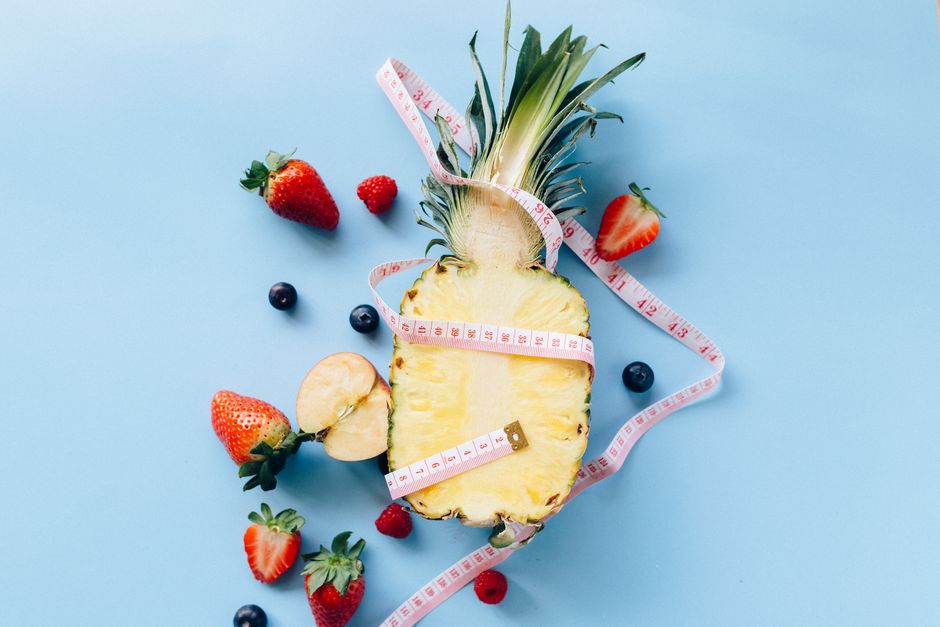
There is no fruit that burns fat. That idea belongs to marketing, not physiology. What fruit can do is help you eat less overall — because fruit carries water, fiber, and volume, and those three things make you feel full for very few calories. Some fruits do that job better than others.
Weight loss still comes down to eating fewer calories than you burn. Fruit helps by making that easier, not by overriding it. The fruits that tend to help most are whole, fresh, and eaten instead of higher-calorie snacks — not juiced, dried, or sweetened.
How Does Fruit Actually Help With Weight Loss?
Fruit helps through fullness, not through any special fat-burning property. A medium apple has roughly 95 calories and about 4 grams of fiber, and most of its weight is water. That combination stretches the stomach and slows eating, which is what makes you feel satisfied.
Fiber does more than add bulk. Soluble fiber — the kind in apples, pears, and citrus — forms a gel in the gut that slows digestion. That can soften hunger between meals. The effect is real but modest. No single food drives weight loss on its own.
Whole fruit also takes time to chew. That sounds trivial, but eating slowly gives your body time to register fullness. A glass of orange juice delivers similar calories in seconds with none of the chewing and far less fiber. That is one of the clearest differences between fruit and fruit products.
One clarification worth making: fruit sugar and added sugar are not the same thing in practice. Both contain fructose, but whole fruit packages it with fiber, water, and micronutrients that change how fast it is absorbed and how full you feel. The problem is usually added sugar, not the sugar inside a peach.
What Fruits Help U Lose Weight Best?
The best fruits for weight loss are high in water and fiber and low in calories per serving. These are the ones that give you the most fullness for the least energy.
- Apples. About 95 calories for a medium fruit, with roughly 4 grams of fiber. Portable and filling.
- Watermelon. Very high water content, so a large serving is still low in calories. Good for volume eating.
- Berries. Strawberries, blueberries, and raspberries are among the lowest-calorie fruits per cup, and berries carry useful fiber.
- Oranges and grapefruit. High water content and fiber when eaten whole rather than juiced.
- Pears. One of the higher-fiber common fruits. A medium pear with skin provides a meaningful share of your daily fiber.
- Kiwi. Modest calories, good fiber, and easy to eat whole.
- Melon (cantaloupe and honeydew). High water, low calorie density, naturally sweet.
None of these is magic. They work because they fit into a calorie-controlled day without leaving you hungry. A fruit that you enjoy and will actually eat beats a “better” fruit you avoid.
Which Fruits Should You Be Careful With?
No fruit is off-limits for weight loss, but some are easy to overeat because they are calorie-dense or come in forms that strip away fullness. Portion matters more than the type.
Dried fruit is the biggest trap. Removing water concentrates the calories. A small handful of raisins or dates can carry several times the calories of the fresh fruit it came from, and it is far less filling. That does not make dried fruit bad — it makes it easy to eat too much without noticing.
Fruit juice is similar. Juicing removes most of the fiber and the chewing, so the calories arrive fast and satisfy little. Whole fruit and juice are not interchangeable for appetite control.
Bananas, mangoes, and grapes are often flagged as “high sugar.” They are higher in calories per serving than berries, but they are still whole foods with fiber and nutrients. The issue is quantity, not the fruit itself. A banana is a reasonable snack. Three bananas on top of a full day of eating is where calories add up.
Avocados are technically a fruit and are nutritious, but they are high in fat and calorie-dense. That is fine in normal portions and easy to overshoot if you do not measure.
Does Eating Fruit Cause Weight Gain?
Eating whole fruit does not cause weight gain in the way many people fear. The concern comes from fructose, and it deserves a straight answer rather than a slogan.
Large amounts of fructose from added sugars and sweetened drinks are linked to health problems in research. Whole fruit is a different story. The amounts are smaller, the fiber is intact, and people who eat more fruit do not show higher rates of weight gain in most observational studies. Some studies suggest higher fruit intake is associated with lower body weight, though association is not the same as proof of cause.
The practical point: if you are gaining weight, look at total calories and added sugars before you blame an apple. Fruit is rarely the reason.
How Should You Use Fruit to Support Weight Loss?
Use fruit as a replacement, not an addition. Swapping a higher-calorie snack for a piece of fruit lowers your daily calories without feeling like a diet. Adding fruit on top of everything you already eat does not.
Whole fruit with skin where edible gives you the most fiber. Eat it as a snack, add berries to plain yogurt or oatmeal, or use fruit to satisfy a sweet craving after a meal. Starting a meal with a high-water fruit like melon or grapefruit can take the edge off hunger before the main course.
There is no established rule that fruit must be eaten before noon or avoided at night. That idea circulates widely but is not supported by clinical evidence. Timing matters far less than total intake.
Pair fruit with protein or fat when you want it to last longer — apple with peanut butter, berries with yogurt. The combination slows digestion and keeps you full. Just count those additions, since nut butters and full-fat dairy carry their own calories.
If you have diabetes or prediabetes, whole fruit is generally part of a healthy eating pattern, but how it affects your blood sugar varies by person and by fruit. Talk with your clinician or a dietitian about your own situation rather than cutting fruit out entirely.
The Bottom Line on Fruit and Weight Loss
Fruit supports weight loss by helping you feel full on fewer calories. High-water, high-fiber fruits — apples, berries, watermelon, oranges, pears, melon — do this best. Whole fruit beats juice and dried fruit for appetite control.
No fruit melts fat. If a product or plan promises that, the claim is not supported by evidence. What works is a overall eating pattern you can stick with, and fruit is one useful piece of it.
Frequently Asked Questions
What is the best fruit to eat to lose weight?
Apples, berries, watermelon, and citrus are strong choices because they are high in water and fiber relative to their calories. The best one is any whole fruit you will eat instead of a higher-calorie snack.
Can eating fruit at night make you gain weight?
No. Weight gain depends on total calories over time, not on the clock. The claim that evening fruit causes weight gain is not supported by clinical evidence.
Is fruit juice as good as whole fruit for weight loss?
No. Juice removes most of the fiber and the chewing, so it is far less filling for the same calories. Whole fruit supports appetite control better than juice.
Should I avoid bananas and mangoes if I want to lose weight?
No, you do not need to avoid them. They are higher in calories per serving than berries, so portion matters, but they are whole foods with fiber and nutrients.
