
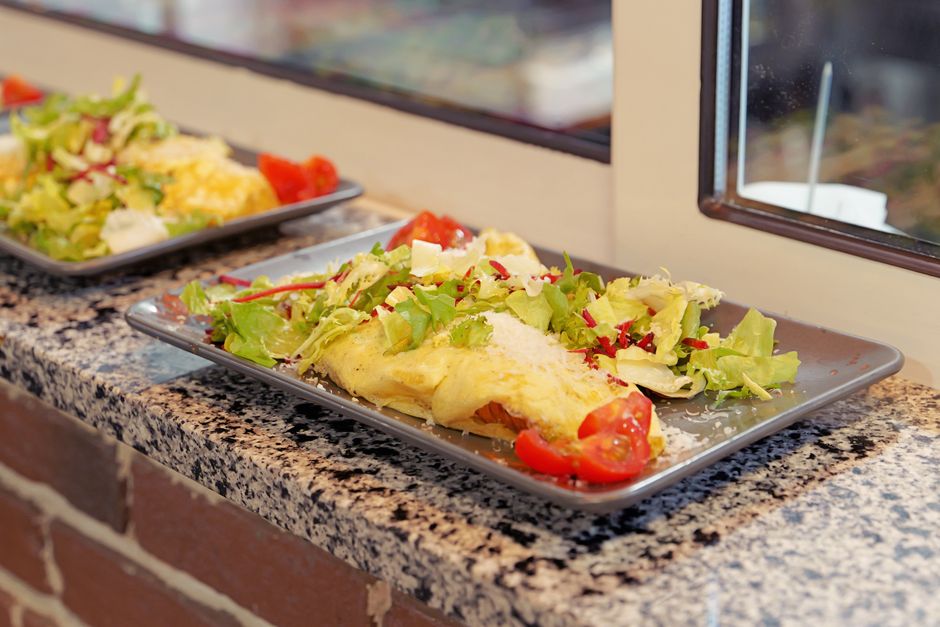
If you have irritable bowel syndrome, the foods that tend to sit best are plain, low-fat choices that are gentle on the gut: lean proteins like chicken and fish, eggs, plain rice, oats, potatoes, carrots, zucchini, bananas, and other foods low in certain fermentable carbohydrates. Many people also do well with lactose-free dairy or small portions of dairy. The catch is that IBS is not one condition, and the foods that calm one person’s gut can trigger another’s.
That is why no single list works for everyone. What helps most is understanding why certain foods cause symptoms, then testing foods in an organized way rather than cutting out everything at once.
Why Do Certain Foods Trigger IBS Symptoms?
IBS is a disorder of how the gut and brain communicate. The gut itself often looks normal on tests, but it reacts more strongly to normal events like stretching, gas, and movement. Food is one of the biggest triggers because it sets those events in motion.
Three mechanisms explain most food-related symptoms. The first is fermentable carbohydrates — short-chain sugars and fibers that gut bacteria break down quickly, producing gas. In a sensitive gut, that gas causes pain and bloating that other people would never notice. The second is fat, which slows stomach emptying and can intensify the gastrocolic reflex — the normal wave of contractions that moves contents through the colon after you eat. The third is meal size and speed. A large meal stretches the stomach and colon more than a small one.
This is why the same food can be fine for your friend and miserable for you. The problem is usually not the food itself. It is how your gut responds to it.
What Foods To Eat With IBS?
Start with foods that are low in fermentable carbohydrates and easy to digest. These are the staples most people with IBS tolerate well, though individual tolerance always varies.
- Lean proteins: chicken, turkey, fish, eggs, and firm tofu. Protein rarely causes gas on its own.
- Plain grains: white rice, oats, and quinoa. White rice is especially low in fermentable fiber.
- Root vegetables: potatoes, carrots, and parsnips.
- Gentle vegetables: zucchini, green beans, spinach, and bell peppers in modest amounts.
- Fruits low in fermentable sugars: bananas (firmer, less ripe ones), oranges, grapes, and kiwi.
- Lactose-free dairy or hard cheeses: cheddar and parmesan are naturally low in lactose.
Cooked vegetables are often easier than raw ones. Heat breaks down some fibers and makes them less fermentable, which can matter if raw salads cause bloating.
What Is the Low-FODMAP Diet and Should You Try It?
The low-FODMAP diet is the most studied dietary approach for IBS. FODMAP stands for fermentable oligosaccharides, disaccharides, monosaccharides, and polyols — the carbohydrates that ferment in the gut and draw water into it. Research consistently shows this diet reduces symptoms in a meaningful share of people with IBS, though not everyone.
Here is what most people get wrong. The low-FODMAP diet is not meant to be permanent. It has three phases:
- Elimination: remove high-FODMAP foods for a set period, usually a few weeks.
- Reintroduction: add foods back one group at a time to find your personal triggers.
- Personalization: build a long-term diet that restricts only what actually bothers you.
Staying in the elimination phase indefinitely is a real risk. It narrows your diet, can affect the gut microbiome, and makes eating social situations harder than it needs to be. The goal is a wider diet, not a narrower one. A dietitian trained in this approach can guide the process, and that guidance matters more than most people expect.
Which Foods Should You Limit or Avoid?
These are the foods most commonly linked to IBS symptoms. None of them are universally off-limits — they are the ones worth testing first.
- High-FODMAP foods: onions, garlic, wheat, apples, pears, watermelon, and many legumes.
- Sugar alcohols: sorbitol, mannitol, xylitol, and maltitol, found in sugar-free gum and candy.
- Very fatty foods: fried food, heavy cream sauces, and fatty cuts of meat.
- Carbonated drinks: the bubbles add gas directly.
- Caffeine and alcohol: both can speed up the gut and worsen diarrhea in some people.
Onions and garlic deserve a special mention. They are among the most common triggers because they are high in fructans, a fermentable carbohydrate. They also hide in almost every packaged food and restaurant dish, which makes them hard to spot.
Does It Matter Whether You Have Diarrhea or Constipation?
Yes. IBS comes in subtypes, and the food strategy shifts depending on which one you have. The same diet advice does not fit every case.
| IBS Subtype | Main Symptom | Food Focus |
|---|---|---|
| IBS-D (diarrhea) | Loose stools | Lower fat, limit caffeine and alcohol, soluble fiber like oats |
| IBS-C (constipation) | Hard or infrequent stools | More soluble fiber, adequate fluids, gradual fiber increase |
| IBS-M (mixed) | Both patterns | Steady meals, soluble fiber, identify triggers one at a time |
For constipation-predominant IBS, fiber helps — but the type matters. Soluble fiber, found in oats, psyllium, and peeled fruits, tends to soften stool without much gas. Insoluble fiber, found in wheat bran and vegetable skins, can worsen bloating in some people. If you have IBS-C, adding fiber slowly and choosing soluble sources is the more common approach.
For diarrhea-predominant IBS, large fatty meals are a common problem because fat amplifies the gastrocolic reflex. Smaller, lower-fat meals often help more than any single food swap.
How Should You Test Foods Without Driving Yourself Crazy?
Change one thing at a time. That is the whole method, and it is harder to follow than it sounds. People often cut out five foods at once, feel better, and then have no idea which change helped.
A practical approach looks like this. Keep a simple food and symptom log for a couple of weeks before changing anything, so you have a baseline. Then remove one suspect food or food group for a defined period. If symptoms improve, reintroduce it and watch. If nothing changes, put it back — there was no reason to lose it.
Two things are easy to underestimate. Stress changes gut function directly through the nervous system, so a food that bothers you on a bad week may be fine on a good one. And portion size matters as much as food choice. A small serving of a moderate-FODMAP food often causes no trouble, while a large serving of a “safe” food can.
When Should You See a Doctor?
IBS is a diagnosis of exclusion in the sense that other conditions must be ruled out first. Certain symptoms should prompt a medical visit rather than a dietary experiment.
- Blood in your stool or black stools
- Unexplained weight loss
- Fever
- Symptoms that wake you from sleep
- New symptoms after age 50
- A family history of colon cancer or inflammatory bowel disease
These are not typical IBS features. They point toward something that needs proper evaluation. If your symptoms are long-standing and you have already been evaluated, a dietitian can still help you build a workable eating plan.
Frequently Asked Questions
What is the best breakfast for IBS?
Oatmeal with a firm banana or eggs with plain toast are common choices because they are low in fermentable carbohydrates and gentle on the gut. Keep portions moderate and watch how you respond.
Can you eat bread with IBS?
Many people tolerate sourdough and white bread better than whole wheat, because whole wheat is higher in fermentable fiber. Tolerance varies, so test one type at a time.
Is yogurt good for IBS?
Plain yogurt works for some people and not others, since it contains lactose, which many with IBS handle poorly. Lactose-free yogurt is a reasonable alternative to try.
Do you have to stay on the low-FODMAP diet forever?
No. It is designed as a short elimination phase followed by reintroduction and a personalized long-term diet. Staying restricted long-term is not the goal and can narrow your diet unnecessarily.
