
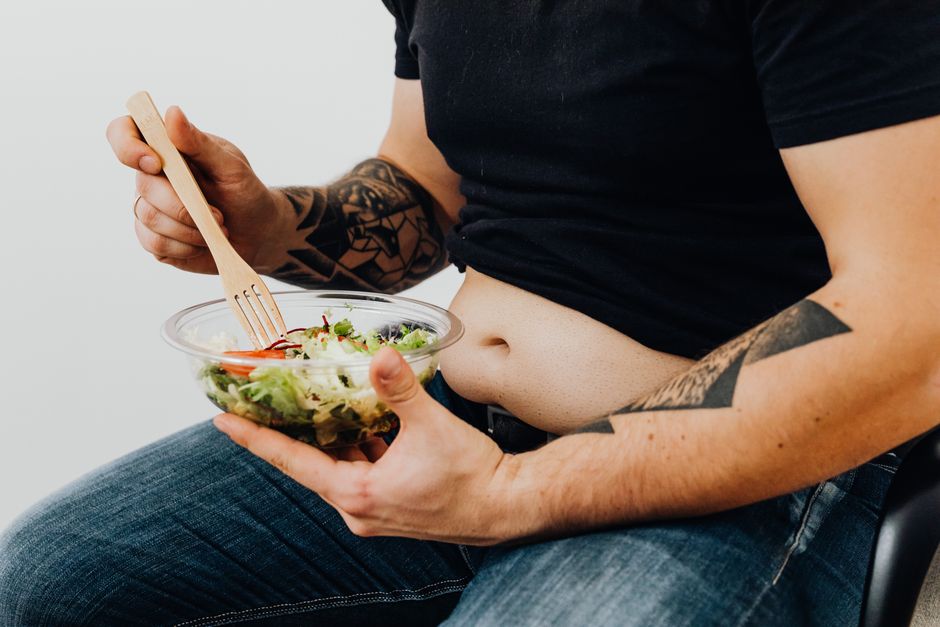
Belly fat builds when you consistently take in more calories than you burn, and certain foods make that easier to do. Sugary drinks, refined grains, fried foods, and alcohol are the biggest contributors. They pack a lot of calories into small portions and do little to keep you full. But the story is more specific than “junk food makes you fat.” Where fat lands on your body, and how harmful it is, depends on biology as much as diet.
What foods contribute to belly fat the most?
The foods most strongly linked to excess belly fat are the ones that deliver fast calories without satiety. Liquid sugar is at the top of that list. Regular soda, sweetened coffee drinks, energy drinks, and fruit juice concentrate calories in a form your body barely registers as food. You can drink several hundred calories and still feel hungry an hour later.
Refined carbohydrate foods follow close behind. White bread, pastries, crackers, and most packaged snack foods digest quickly and spike blood sugar. That spike and subsequent dip can drive hunger and overeating in some people, though the effect varies.
Fried foods and foods high in saturated fat and refined starch together — think fast-food burgers, pizza, and chips — tend to be calorie-dense and easy to overeat. Alcohol deserves its own mention. It adds calories, and heavy drinking is associated with increased waist circumference in observational studies.
None of these foods is uniquely “fattening” in a metabolic sense. The issue is calories, portion size, and how little they satisfy.
Why does belly fat matter more than fat elsewhere?
Fat stored around the abdomen is not the same as fat stored on your hips or thighs. Visceral fat — the fat packed around your internal organs — is metabolically active in ways that subcutaneous fat (the fat just under your skin) is not.
Visceral fat releases inflammatory signals and free fatty acids directly into the liver through the portal vein. This is one reason central obesity is linked more strongly to insulin resistance, type 2 diabetes, and cardiovascular disease than fat stored elsewhere. A person can have a normal body weight and still carry enough visceral fat to raise health risks.
Waist circumference is a practical way to estimate this risk. For men, a waist over 40 inches (102 cm) is generally considered elevated. For women, the threshold is 35 inches (88 cm). These are established clinical cutoffs, not estimates. They come from major health organizations and are used in routine medical screening.
This is where body mass index falls short. BMI does not tell you where fat is stored. Two people with the same BMI can have very different health risks depending on fat distribution. Waist measurement adds information that the scale cannot.
Do sugary drinks cause belly fat specifically?
Sugary drinks are among the most consistently linked dietary factors to weight gain and central fat accumulation. The mechanism is straightforward: liquid calories are less satiating than solid food calories. When you eat a 200-calorie snack, you feel it. When you drink a 200-calorie soda, you mostly don’t.
Fructose, a major component of many sweetened drinks, is metabolized primarily in the liver. High intakes can promote fat synthesis in the liver, which some research links to fat accumulation around the organs. This does not mean fructose from whole fruit is a problem — whole fruit contains fiber and far less sugar per serving — but large amounts of added fructose from drinks are a different matter.
Diet drinks are a separate question. The evidence on artificial sweeteners and belly fat is mixed. Some studies suggest they may help with weight control by replacing sugar calories. Others raise questions about metabolic effects. The evidence is not settled, and anyone claiming certainty in either direction is overstating what we know.
Are carbs the problem, or is it calories?
Calories still matter. No macronutrient — carbs, fat, or protein — bypasses energy balance. But the type of carbohydrate matters for how easy it is to control calories.
Highly processed carbohydrates are easy to overeat. They are low in fiber, digest fast, and are often paired with fat and salt in ways that make them hard to stop eating. Whole-food carbohydrates — beans, whole grains, vegetables, fruit — contain fiber and water that slow digestion and increase fullness.
Research published in the American Journal of Clinical Nutrition and elsewhere has compared diets of varying carbohydrate content. The general finding is that weight loss depends more on adherence and calorie deficit than on macronutrient ratio. Low-carb diets are not superior for fat loss when calories are matched, though some people find them easier to stick to.
What matters for belly fat is the pattern: a diet heavy in refined carbs and added sugar tends to promote overeating. A diet built on whole foods makes it harder to overeat. That is not a metabolic trick. It is a satiety effect.
What about alcohol and late-night eating?
Alcohol contributes to belly fat in two ways. It adds calories — about 7 calories per gram, close to fat — and it tends to increase appetite and reduce dietary restraint. Heavy drinking is associated with increased central fat in observational studies, particularly in men.
The “beer belly” label is not a myth, but it is not specific to beer. Any alcohol in excess can contribute. Moderate drinking is a different conversation, and the health tradeoffs there are more complex than a single article can settle.
Late-night eating is often blamed for belly fat, and there is some logic to it. Eating close to bedtime may disrupt sleep and lead to poorer food choices. But the evidence that timing alone causes fat gain independent of total calories is limited. What you eat and how much still matter more than when.
What should you eat instead?
Foods that support a healthy waistline are not exotic. They are the ones that fill you up without flooding your system with fast calories.
- Vegetables and fruit — high in fiber and water, low in calorie density
- Beans and legumes — fiber and protein together, very filling
- Whole grains — oats, brown rice, whole wheat, quinoa
- Lean protein — chicken, fish, eggs, tofu, Greek yogurt
- Nuts and seeds — calorie-dense, so portions matter, but satisfying
Protein deserves special attention. It is the most satiating macronutrient per calorie. Higher-protein diets have been shown in multiple trials to help preserve muscle during weight loss and reduce hunger. That does not mean high-protein is a magic approach — calories still count — but it makes the calorie deficit easier to sustain.
No single food causes belly fat. No single food melts it away. The pattern of what you eat most of the time is what shapes your waist over months and years.
Frequently Asked Questions
Can certain foods target belly fat directly?
No. No food burns fat from a specific area. Spot reduction through diet is not supported by evidence. A calorie deficit reduces fat overall, and where you lose it first is largely genetic.
Is fruit bad for belly fat because of sugar?
No. Whole fruit contains fiber and water that slow sugar absorption and increase fullness. The sugar in whole fruit is not the same as added sugar in drinks and processed foods.
Does skipping meals help reduce belly fat?
Not necessarily. Skipping meals can lead to overeating later and does not reliably reduce total calorie intake. Consistent meal patterns that control hunger tend to work better than erratic eating.
How long does it take to lose belly fat?
There is no fixed timeline. Fat loss depends on the size of your calorie deficit, your starting point, and individual factors. Visceral fat tends to respond to sustained dietary change, but visible results typically take weeks to months, not days.
