
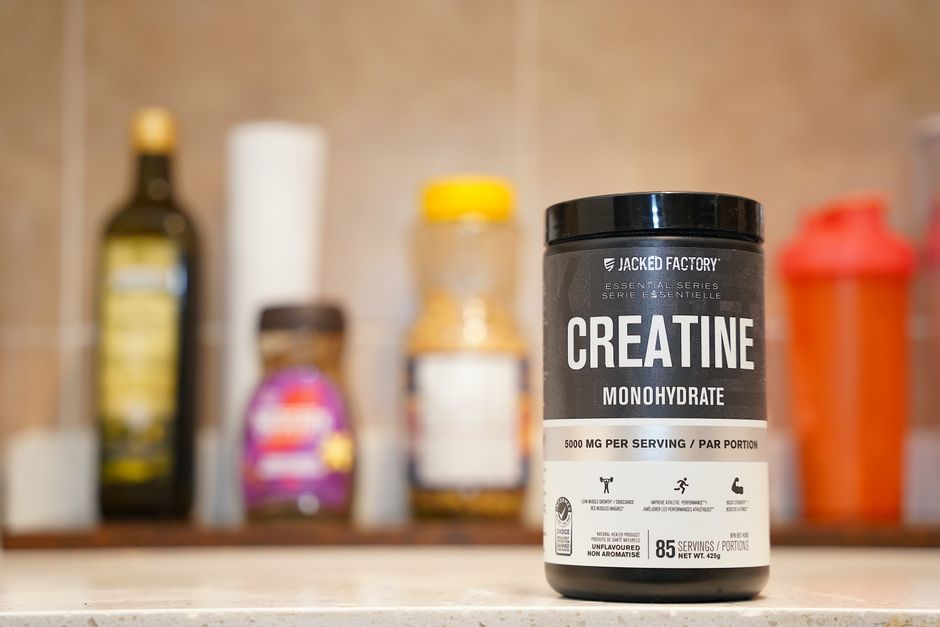
Creatine is one of the most studied supplements in sports nutrition, but you do not need a powder or pill to get it. Your body also makes it naturally, and you can find it in everyday foods. The highest concentrations are in animal products, particularly red meat and seafood. If you eat a standard omnivorous diet, you likely get about half of your daily creatine needs from food alone.
What Foods Contain Creatine?
Creatine is found almost exclusively in animal tissues. Plants do not contain meaningful amounts. The richest sources are skeletal muscle and organ meats because that is where the body stores creatine.
Here are the foods with the highest creatine content per serving:
- Herring — one of the most concentrated sources available
- Beef — especially lean cuts like sirloin or flank
- Pork — similar levels to beef in most cuts
- Salmon — a solid fish source with additional omega-3 fats
- Tuna — comparable to salmon in creatine content
- Chicken — contains creatine but less than red meat
- Cod — a white fish with moderate amounts
- Venison and game meats — often higher than farm-raised beef
Cooking does not destroy creatine, but boiling can leach some into the cooking water. Grilling, roasting, or pan-searing preserves more of the creatine in the meat itself. The difference is modest, so do not overthink your cooking method.
How Much Creatine Is in Meat and Fish?
Creatine content varies by animal, cut, and diet. As a general rule, red meat contains more creatine than poultry, and fish falls somewhere in between depending on the species.
Rough estimates per 100 grams (about 3.5 ounces) of raw meat:
- Herring: approximately 6–8 grams
- Beef: approximately 4–5 grams
- Salmon: approximately 4–5 grams
- Tuna: approximately 3–4 grams
- Pork: approximately 4–5 grams
- Chicken: approximately 3–4 grams
- Cod: approximately 2–3 grams
These numbers fluctuate. Grass-fed beef sometimes shows slightly higher creatine than grain-fed, but the difference is not large enough to change your dietary strategy. The practical takeaway is simple: if you want more creatine from food, eat more red meat and fatty fish.
Why Your Body Needs Creatine
Creatine is not just for bodybuilders. It plays a central role in cellular energy production. Your muscles use a molecule called ATP for quick, powerful movements. When ATP is used, it loses a phosphate group and becomes ADP. Creatine phosphate donates a phosphate back to ADP, regenerating ATP so your muscles can keep contracting.
This system matters most during short bursts of intense activity — think sprinting, heavy lifting, or jumping. It does not fuel endurance exercise like marathon running. That is why creatine is most studied for strength and power sports.
Your body synthesizes creatine from three amino acids: arginine, glycine, and methionine. The liver and kidneys produce about 1–2 grams per day. The rest comes from your diet. Vegetarians and vegans tend to have lower muscle creatine stores because they do not eat animal products, which is why some research has looked at supplementation in these populations.


Can You Get Enough Creatine From Food Alone?
It depends on your goals and your baseline diet. A typical omnivorous diet provides roughly 1–2 grams of creatine per day from food. That is enough to maintain normal muscle stores for general health and everyday activity.
For athletic performance, the picture is different. Studies on creatine supplementation typically use 3–5 grams per day. To get that amount from food alone, you would need to eat more than a pound of beef or salmon every single day. That is not realistic for most people, and it would come with significant calories, saturated fat, and cost.
If you are a recreational exerciser eating a balanced diet with meat or fish most days, your food intake is probably sufficient. If you are training for strength or power sports, supplementation is the practical way to reach the doses used in research. There is no evidence that food sources of creatine are superior to supplements — the creatine molecule is identical regardless of source.
What About Vegetarians and Vegans?
Plant foods contain no creatine. Vegetarians and vegans rely entirely on their body’s internal production of roughly 1–2 grams per day. Research consistently shows that vegetarians have lower muscle creatine stores than omnivores.
This is not necessarily a problem. Lower baseline stores do not automatically mean poor health or performance. Some research suggests vegetarians may respond more strongly to creatine supplementation because they start from a lower baseline, but the evidence is not definitive.
For vegetarians and vegans who train intensely, supplementation is worth discussing with a healthcare provider or sports nutritionist. For general health, no clinical guidelines currently recommend creatine supplements for plant-based eaters. The body’s natural production appears adequate for most daily functions.
Does Creatine From Food Improve Performance Like Supplements?
The research on creatine supplementation is extensive and consistent. Studies have repeatedly shown that 3–5 grams per day increases muscle creatine stores and improves performance in high-intensity exercise. The research on food-based creatine specifically is much thinner.
What we know is that dietary creatine does raise muscle creatine levels. Studies measuring creatine intake from food have found a dose-dependent relationship — more dietary creatine means higher muscle stores, up to a saturation point. Beyond that point, the body excretes excess creatine in urine.
No large clinical trials have directly compared performance outcomes between food-only creatine and supplementation. The logical assumption is that food creatine would produce similar effects at equivalent doses, but that comparison has not been rigorously tested. If you are relying on food alone, you are likely getting 1–2 grams daily, which is below the range shown to enhance performance in most studies.
Are There Risks From Eating High-Creatine Foods?
Creatine from food is safe at normal dietary levels. Your body is designed to handle it, and excess is excreted by the kidneys. No established upper limit for dietary creatine exists because food intake rarely reaches levels that would cause concern.
The more relevant concern is the source. A diet very high in red meat to maximize creatine intake also increases saturated fat and calorie consumption. Chronic high intake of processed meats is associated with health risks, though the causation is complex and not fully settled. Lean cuts of red meat and fish provide creatine without the excess saturated fat.
People with kidney disease need to be careful with creatine, whether from food or supplements. The kidneys filter creatine, and impaired kidney function can lead to elevated blood creatine levels. If you have kidney disease, discuss your protein and creatine intake with your doctor before making changes.
Frequently Asked Questions
Is creatine only found in meat?
Yes, creatine is found almost exclusively in animal products. Plant foods contain no meaningful amounts of creatine.
Do eggs contain creatine?
Eggs contain only trace amounts of creatine, not enough to meaningfully contribute to your daily intake.
How much creatine do you need per day?
Your body produces about 1–2 grams daily, and a typical omnivorous diet adds another 1–2 grams. Athletic performance studies typically use 3–5 grams per day from supplements.
Does cooking destroy creatine in meat?
No, cooking does not destroy creatine, but boiling can leach some into the cooking water. Grilling or roasting preserves more of the creatine in the meat.
