
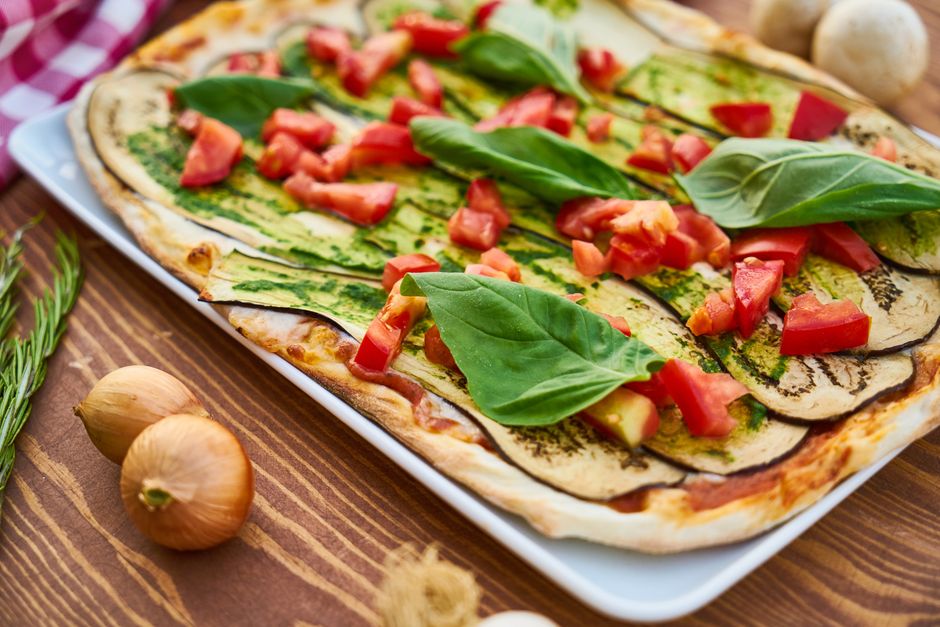
Italians eat pasta, bread, tomatoes, olive oil, vegetables, legumes, cheese, and fruit every day, with smaller amounts of fish, meat, and eggs. This pattern is close to what researchers call the Mediterranean diet. It is linked to lower rates of heart disease in large population studies, though the size of that benefit is debated. The everyday Italian plate is built on plants, with animal foods playing a supporting role.
The word “every day” matters here. Nutrition research keeps finding that steady patterns matter more than single foods. A bowl of pasta is not a health food on its own. Eaten with beans, vegetables, and olive oil most days, it fits into a pattern with real evidence behind it.
What Food Do Italians Eat Every Day?
Pasta is the most visible staple, but it is not the only one. A typical Italian day includes bread, tomatoes, olive oil, and seasonal vegetables. Fruit is a common snack. Legumes like beans, lentils, and chickpeas appear several times a week, often in place of meat.
Breakfast is usually light. Coffee with milk, bread, biscuits, or yogurt. Eggs are not a daily breakfast food in most Italian homes. Lunch tends to be the larger meal, and dinner comes later in the evening.
Cheese is eaten daily but in small amounts. A grating of parmesan, a slice of mozzarella, a spoon of ricotta. Fish and meat are not daily centerpieces for most families. They show up a few times a week, often in smaller portions than a US or UK dinner plate would carry.
- Grains: pasta, bread, rice, polenta, depending on the region
- Vegetables: tomatoes, zucchini, greens, peppers, eggplant, onions
- Legumes: beans, lentils, chickpeas
- Olive oil: the main added fat
- Fruit: often seasonal and local
- Cheese: daily but modest
- Fish, meat, eggs: a few times a week, not every day
Regional differences are real. Northern Italy uses more butter, rice, and polenta. The south leans harder on olive oil, tomatoes, and vegetables. Sicily and Sardinia have their own patterns. There is no single “Italian diet” — the common thread is plant-based eating with olive oil as the main fat.
Is the Everyday Italian Diet the Same as the Mediterranean Diet?
Mostly yes, but with a caveat. The Mediterranean diet as researchers define it is a pattern observed in Greece, southern Italy, and other Mediterranean regions in the mid-20th century. Modern Italian eating has drifted from that baseline.
Processed foods, more meat, and more sugar have entered the Italian diet, especially among younger people and in cities. Consumption of sweets and snack foods has risen. So the everyday Italian plate today is not identical to the one studied in the 1960s.
This is a non-obvious point that often gets lost. When studies show health benefits, they are usually describing the older pattern, not what a family in Milan eats in 2024. The traditional pattern is what carries the evidence. The modern version is a partial copy.
The core of the traditional pattern is well established: high intake of vegetables, legumes, fruit, nuts, whole grains, and olive oil. Moderate fish. Low red meat. Low processed food. That is the shape of the diet that research has examined.
What Does the Evidence Say About the Nutritional Impact?
The strongest evidence comes from large observational studies and one major randomized trial. A landmark trial published in the New England Journal of Medicine in 2013, called PREDIMED, assigned people at high cardiovascular risk to a Mediterranean diet with extra olive oil, a Mediterranean diet with extra nuts, or a control diet. Both Mediterranean groups had fewer major cardiovascular events than the control group.
That trial has been criticized and re-analyzed since. Some participants were not fully randomized, and a corrected analysis softened the findings. Even so, the direction of the effect held. It remains one of the better pieces of evidence for any dietary pattern.
Observational studies consistently link Mediterranean-style eating to lower rates of heart disease, stroke, and type 2 diabetes. The evidence for cancer is weaker and more mixed. Evidence for weight loss is modest — the diet is not a weight-loss plan, and calorie intake still matters.
Two honest limits. First, most evidence is observational, which means healthier people may simply be more likely to eat this way. Second, “Italian food” in the US is often not this pattern at all. A plate of pasta with cream sauce and a side of garlic bread is not the diet that was studied.




Why Does Olive Oil Matter So Much?
Olive oil is the main added fat in the traditional Italian diet, and that single swap changes the fat profile of every meal. Extra virgin olive oil is high in monounsaturated fat and contains polyphenols — plant compounds with antioxidant activity.
Replacing butter, lard, or seed oils with olive oil is one of the more consistent findings in nutrition research. It is associated with better blood lipid profiles and lower cardiovascular risk in observational studies. The PREDIMED trial specifically tested extra virgin olive oil as part of the diet.
Portion still matters. Olive oil is calorie-dense at about 120 calories per tablespoon. The traditional pattern uses it generously but on vegetables and grains, not as a pour-over on fried food. The fat replaces other fats rather than adding on top of them.
How Do Pasta and Bread Fit Into a Healthy Pattern?
Pasta and bread are carbohydrate foods, and they are eaten daily. What matters is portion size, what accompanies them, and whether they are refined or whole grain.
Traditional Italian pasta portions are smaller than American restaurant servings. A typical Italian first course is often around 80 to 100 grams of dry pasta — roughly half of a standard US restaurant portion. The pasta is usually the opening act, not the whole meal.
Pasta is also cooked al dente, which gives it a lower glycemic index than soft-cooked pasta. That means a slower rise in blood sugar. The effect is real but modest. It does not turn pasta into a low-carb food.
Whole grain pasta and bread carry more fiber and a lower glycemic response than refined versions. Traditional Italian diets included both, but whole grains were more common in rural settings. Modern Italian consumption of refined bread and pasta is higher than the historical pattern.
Bread is often eaten plain or dipped in olive oil, not slathered in butter or covered in processed spreads. That difference in what goes on the bread matters as much as the bread itself.
What About Meat, Cheese, and Fish?
These foods are present but not dominant. The traditional pattern treats meat as a flavoring or a once-or-twice-a-week dish, not a daily centerpiece. A small piece of chicken, some prosciutto in a pasta dish, or a few meatballs with polenta.
Fish appears more often in coastal regions. Sardines, anchovies, and other small oily fish are common and are a good source of omega-3 fatty acids. Inland regions eat less fish.
Cheese is daily but in small amounts. A grating of hard cheese on pasta adds flavor and some calcium and protein. It also adds saturated fat and sodium. The traditional pattern keeps the portion small — a garnish, not a main ingredient.
This is where modern Italian eating and modern American “Italian food” diverge most. A US plate often centers on meat or a large portion of cheese. The traditional plate centers on plants, with meat and cheese as accents.
What Can You Take From This Pattern?
The transferable elements are simple and do not require an Italian kitchen. Use olive oil as your main added fat. Build most meals around vegetables, legumes, and whole grains. Eat fruit for snacks. Keep meat portions small and less frequent. Use cheese as flavor, not as a main dish.
The pattern is not a cure and not a guarantee. It is a well-studied way of eating that is associated with better cardiovascular outcomes in large populations. The evidence is strongest for heart health and weaker for other outcomes.
One practical caution: the health benefits in the research come from the whole pattern, not from any single ingredient. Adding olive oil to a diet of processed food does not reproduce the studied effect. The pattern works as a package.
Frequently Asked Questions
What food do Italians eat every day?
Pasta, bread, tomatoes, olive oil, vegetables, fruit, legumes, and small amounts of cheese are eaten daily in most Italian homes. Fish, meat, and eggs appear a few times a week rather than every day.
Is pasta healthy if you eat it every day?
Pasta can fit into a healthy diet when portions are moderate and it is eaten with vegetables, legumes, and olive oil. Refined pasta eaten in large portions with creamy or meat-heavy sauces is a different food pattern with weaker evidence behind it.
Is the Italian diet the same as the Mediterranean diet?
Traditional Italian eating closely resembles the Mediterranean diet that research has studied, but modern Italian diets include more processed food, meat, and sugar than the historical pattern. The health evidence applies mainly to the traditional version.
Does olive oil really make a difference?
Replacing butter or other fats with olive oil is linked to better blood lipid profiles and lower cardiovascular risk in large studies. The effect is consistent but modest, and portion size still matters because olive oil is calorie-dense.
