
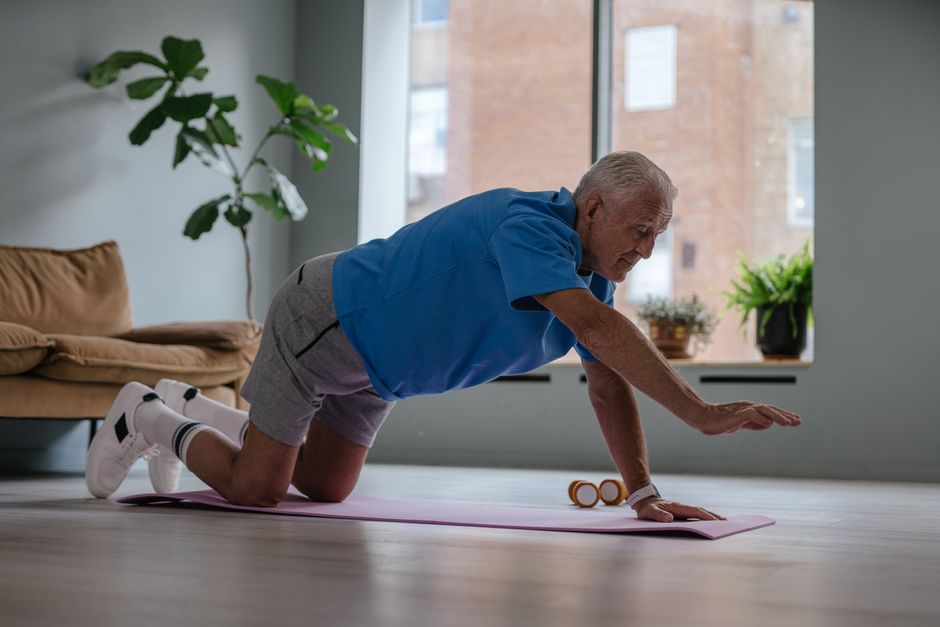
There is no single exercise you must do every day, but the strongest evidence supports daily movement of three kinds: aerobic activity to train your heart and lungs, strength work for your muscles and bones, and stretching or mobility to keep joints moving. A practical daily habit combines a brisk walk, a few functional strength moves like squats or push-ups, and a short stretch. The key is consistency, not intensity. Doing something moderate most days beats doing something extreme once a week.
What Exercises Should I Do Every Single Day?
The honest answer is that no single exercise is mandatory every day, and some are better done a few times a week rather than daily. What matters most is that you move your body regularly and cover the main types of activity: aerobic, strength, and flexibility.
Federal physical activity guidelines for adults recommend at least 150 minutes of moderate-intensity aerobic activity per week, or 75 minutes of vigorous activity, plus muscle-strengthening activities on two or more days per week. That works out to roughly 30 minutes of moderate movement on five days a week. Stretching is recommended as part of a broader routine rather than a strict daily requirement, though many people find daily gentle mobility helps them feel better.
So if you want a daily habit, the sensible approach is to make aerobic movement your daily anchor, fold in strength work two or three times a week, and use stretching or mobility on the days between. You do not need to do everything every day.
Why Daily Movement Matters More Than a Perfect Workout
Your body responds to frequency. Blood vessels, muscles, and joints adapt to the demand you place on them, and that adaptation fades when the demand stops.
Regular aerobic activity trains your heart to pump more efficiently and helps your blood vessels stay flexible. Strength training signals your muscles to maintain and build mass, which matters more as you age because muscle mass naturally declines over time. Flexibility work helps maintain range of motion in your joints.
The catch is that these benefits are not permanent. Stop moving for a few weeks and some of the gains begin to slip. This is why a moderate routine you actually stick with tends to serve people better than an intense plan that burns out in a month.
One clarification worth knowing: “daily” does not mean “hard every day.” Rest and lighter days are part of a sound routine. Muscles repair and grow during recovery, not during the workout itself. Pushing the same muscle groups to exhaustion seven days a week works against you.
What Should a Daily Exercise Routine Include?
A well-rounded daily routine has three parts, even if each part is short. Aerobic movement, functional strength, and mobility. You can do all three in one session or spread them across the day.
Aerobic movement means anything that raises your heart rate and breathing for a sustained stretch. A brisk walk is the most accessible option for most people. Cycling, swimming, dancing, and stair climbing all count. Aim for a pace where you can talk but not sing.
Functional strength means movements that mirror real life: sitting down and standing up, pushing, pulling, carrying. Bodyweight squats, wall or knee push-ups, and a controlled sit-to-stand from a chair cover a lot of ground. These do not need to be daily for the same muscle groups.
Mobility and stretching means gentle movement through your joints. Hip circles, shoulder rolls, a slow forward fold, and calf stretches take a few minutes. Static stretches held for 30 seconds or so are generally recommended after activity or when muscles are warm, not as a cold-start before vigorous exercise.
- Brisk walk: 20 to 30 minutes most days
- Bodyweight strength: two or three days per week
- Stretching or mobility: daily is fine, especially when warm
- Balance work: helpful for older adults, a few times weekly
How Much Is Enough Each Day?
Thirty minutes of moderate movement on most days is a reasonable target, and it lines up with the weekly guidelines of 150 minutes. But the total picture matters more than any single day.
Short bouts count. Research consistently shows that activity accumulated in chunks of a few minutes throughout the day adds up to real health benefit. If you cannot carve out 30 minutes, three 10-minute walks provide similar aerobic value for most people.
For strength, two sessions a week that work the major muscle groups is the standard recommendation. More is fine if you recover well and vary the muscles you target.
Here is where people commonly go wrong: they treat the guidelines as a ceiling to reach once and then stop, rather than a floor to maintain. Some activity is always better than none, and the biggest health gains tend to come from moving from inactive to moderately active, not from moderately active to elite.
Can You Exercise Too Much Every Day?
Yes. Daily exercise is healthy, but daily intense exercise without adequate recovery is not. The body needs time to repair.
Signs you may be overdoing it include persistent fatigue, trouble sleeping, lingering soreness that does not resolve, a rising resting heart rate, and a drop in performance. These are general signs, not a diagnosis, and they can have other causes. If they persist, it is worth talking to a clinician.
You can protect against overtraining by alternating hard and easy days, varying which muscle groups you work, and taking at least one lighter day each week. Sleep and nutrition are part of recovery too. Exercise does not build fitness in a vacuum.
How Do You Build a Daily Habit That Sticks?
Start smaller than you think you should. The most common reason daily routines fail is that people begin at a level they cannot sustain.
Attach the new habit to something you already do. A walk after your morning coffee or a stretch before your evening shower ties movement to an existing cue. Keep the first version almost too easy, then build once it feels automatic.
Track it simply. A calendar with a checkmark works. So does a note on your phone. The point is to see the streak and notice when it breaks.
Expect interruptions. Illness, travel, and busy weeks will happen. The people who keep moving long-term are not the ones who never miss. They are the ones who restart quickly without treating a missed day as a failure.
Choose activities you do not dread. Enjoyment is not a soft factor. It is one of the strongest predictors of whether a routine survives past the first few weeks.
When Should You Check With a Doctor First?
Talk to a clinician before starting a new routine if you have a known heart condition, uncontrolled high blood pressure, diabetes, joint problems, or you are recovering from surgery or injury. This is standard guidance, not a sign anything is wrong.
Stop and seek medical attention if you feel chest pain or pressure, severe shortness of breath, dizziness, or faintness during activity. These are warning signs that should not be pushed through.
If you are older, have been inactive for a long time, or are pregnant, a conversation with your doctor about what is appropriate for you is reasonable. Established guidance exists for exercise during pregnancy, and it generally supports staying active, but the specifics depend on your situation and should come from your own clinician.
Frequently Asked Questions
What is the single best exercise to do every day?
Walking is the most practical daily exercise for most people because it is accessible, low-impact, and easy to sustain. It counts toward the recommended 150 minutes of moderate aerobic activity per week.
Is it okay to do strength training every day?
Not the same muscle groups at high intensity. Muscles need recovery to repair, so most guidance recommends strength work two or more days per week with rest between sessions for the same muscles.
How many minutes should I exercise daily?
About 30 minutes of moderate activity on most days meets the adult guideline of 150 minutes per week. Shorter bouts throughout the day count toward the total.
Do I need to stretch every day?
Daily gentle stretching is fine and many people find it helps them feel better, but it is not a strict requirement. Static stretches are best done when muscles are warm.
