
Testosterone levels naturally decline as men age, but exercise is one of the few lifestyle factors with solid evidence behind it for supporting healthy levels. Heavy resistance training and high-intensity interval training show the most consistent effects. The type, intensity, and volume of exercise matter more than simply working out more often.
How Does Exercise Actually Affect Testosterone?
Exercise influences testosterone through several well-understood mechanisms. The most direct effect is acute — a single workout causes a temporary spike in testosterone that lasts anywhere from 15 to 30 minutes after you finish. This response is driven by the body’s need to adapt to physical stress.
Muscle contractions stimulate nerve signals that tell the brain to release more testosterone. This is why large muscle group exercises produce bigger responses than small isolation movements. The body treats heavy lifting as a signal that muscle tissue needs to grow or repair, and testosterone is a key part of that process.
Chronic training effects are less dramatic but more meaningful. Regular resistance training over months and years can raise baseline testosterone levels, especially in men who were previously sedentary. The effect is modest but clinically relevant, particularly for men with lower starting levels.
What Exercises Increase Testosterone Levels Most?
Compound movements that use multiple large muscle groups produce the strongest hormonal response. These exercises place the greatest total demand on the body, which triggers a larger testosterone release.
- Squats — activate the largest muscle mass in the body, including quads, hamstrings, glutes, and core
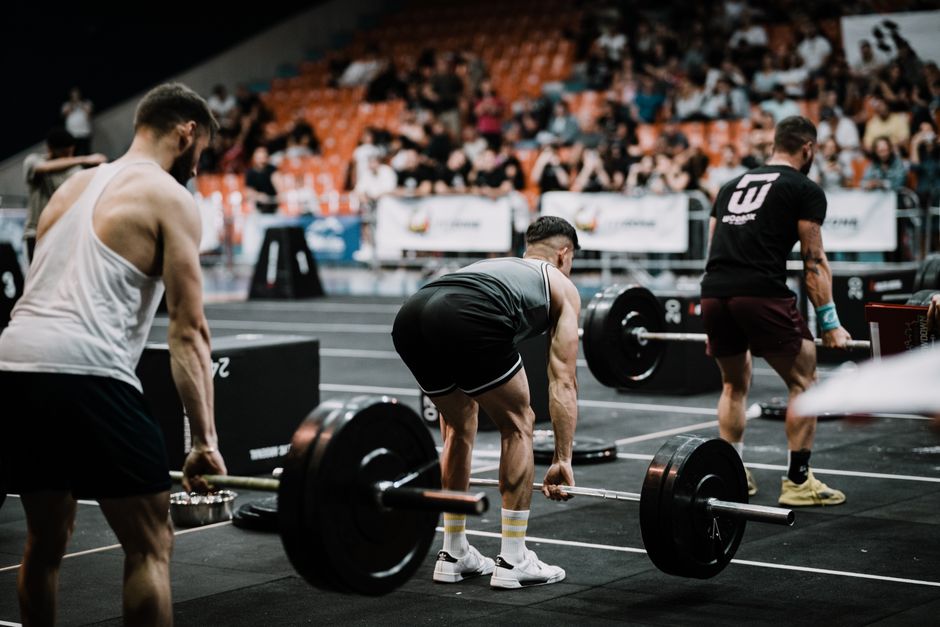
- Deadlifts — recruit nearly every major muscle group and produce one of the strongest hormonal responses
- Bench press — engages chest, shoulders, and triceps with heavy loads
- Overhead press — works shoulders and upper back with significant total-body tension
- Rows and pull-ups — target back and biceps while requiring core stability
Exercise order matters. Studies show that performing compound lifts early in a session, when energy levels are highest, produces a greater testosterone response than doing the same exercises after fatigue has set in. The body responds more strongly to heavy loads when it is fresh.
Research consistently shows that free weights produce a larger hormonal response than machines. This is because free weights require more stabilization, which recruits additional muscle fibers. That extra demand translates into a bigger testosterone spike.
What Intensity and Volume Work Best?
The evidence points toward heavy loads in a moderate rep range. Lifting at roughly 70 to 85 percent of your one-rep maximum for 6 to 12 reps per set appears to optimize the testosterone response. This is the range most commonly associated with muscle growth, and it also happens to be where hormonal responses peak.
Rest periods between sets matter more than most people realize. Shorter rest intervals of 60 to 90 seconds produce a larger acute testosterone response than longer rests of 3 minutes or more. The metabolic stress from incomplete recovery appears to amplify the hormonal signal.
Total training volume also plays a role. Multiple sets of an exercise produce a greater response than a single set. However, there is a ceiling — extremely high volumes with inadequate recovery can suppress testosterone. Overtraining is real and has the opposite effect of what most men are trying to achieve.
High-intensity interval training, or HIIT, also shows meaningful effects. Short bursts of maximal effort followed by brief recovery periods raise testosterone acutely. Sprint intervals of 30 seconds with 90 seconds of rest, repeated 6 to 8 times, is a commonly studied protocol that shows consistent results.





Does Cardio Help or Hurt Testosterone?
Steady-state cardio has a more complicated relationship with testosterone than resistance training. Moderate aerobic exercise — like jogging or cycling at a conversational pace — does not significantly raise testosterone. It also does not lower it in most cases.
Prolonged endurance training tells a different story. Men who log high weekly mileage, such as marathon runners or long-distance cyclists, often show lower baseline testosterone levels than sedentary men. The body appears to interpret extreme endurance work as a stress signal that prioritizes energy conservation over muscle maintenance.
This does not mean cardio is harmful. The cardiovascular benefits of regular aerobic exercise are well established and substantial. But if the goal is specifically raising testosterone, heavy resistance training is the more direct path. A balanced program that includes both is generally the wisest approach for overall health.
How Long Until You See Changes?
Acute changes happen immediately — testosterone rises during and right after a workout and returns to baseline within an hour. Chronic changes take longer. Most research studies that show meaningful baseline increases run for at least 8 to 12 weeks of consistent training.
One study published in the Journal of Strength and Conditioning Research found that previously sedentary men who began a resistance training program saw significant testosterone increases after 16 weeks of training three days per week. Men who were already trained showed smaller additional changes, suggesting that the biggest gains come from going from inactive to active.
Consistency beats intensity in the long run. One intense workout per week will not produce the hormonal changes that three moderate sessions will. The body adapts to regular, repeated stress — not occasional extreme effort.
What About Body Weight and Sleep?
Exercise does not work in isolation. Body composition and sleep are two factors that can either amplify or completely cancel out the hormonal benefits of training.
Excess body fat is associated with lower testosterone levels. Fat tissue contains an enzyme called aromatase that converts testosterone into estrogen. Men with higher body fat percentages tend to have lower testosterone and higher estrogen. Losing weight through a combination of diet and exercise can raise testosterone even without dramatic changes in training intensity.
Sleep deprivation directly suppresses testosterone. One well-known study found that men who slept only 5 hours per night for one week experienced a 10 to 15 percent drop in testosterone compared to those who slept 8 hours. This effect occurs quickly and reverses with adequate sleep.
The practical takeaway is straightforward — training hard while sleeping poorly and carrying excess body fat will produce disappointing results. Exercise is a powerful tool, but it works best as part of a broader approach that includes sleep, nutrition, and weight management.
Who Should Be Careful With High-Intensity Training?
Men over 40, or those with existing heart conditions, should approach high-intensity exercise with appropriate caution. The acute testosterone spike from heavy lifting is normal and healthy, but the cardiovascular demands of maximal effort are real. Anyone with known heart disease, uncontrolled high blood pressure, or other chronic conditions should discuss their exercise plan with a physician before starting.
Men with clinically low testosterone — defined as below roughly 300 ng/dL on a morning blood test — may not see enough improvement from exercise alone to resolve their symptoms. Exercise is beneficial and worth doing, but it is not a substitute for medical treatment when levels are clearly deficient. A doctor can determine whether testosterone replacement therapy is appropriate.
No supplement has been proven to meaningfully raise testosterone in men with normal levels. Products marketed as natural testosterone boosters are not supported by strong clinical evidence. The most reliable way to support healthy testosterone through lifestyle is regular heavy resistance training, adequate sleep, and maintaining a healthy body weight.
Frequently Asked Questions
How many times per week should I lift to raise testosterone?
Three to four resistance training sessions per week is the most commonly studied and effective frequency. More than five sessions without adequate recovery can suppress testosterone rather than raise it.
Do squats really boost testosterone more than other exercises?
Squats produce a strong response because they activate the largest muscle mass in the body. However, deadlifts and other compound movements show comparable effects — the key is using heavy loads with multiple large muscle groups.
How long does the testosterone spike last after a workout?
The acute spike typically lasts 15 to 30 minutes after exercise ends. This temporary rise is normal and is part of the body’s adaptation signal, not a lasting change in baseline levels.
Can exercise alone fix low testosterone?
Exercise can raise testosterone in men with normal or mildly low levels, especially if they were previously sedentary. Men with clinically low testosterone may need medical treatment in addition to lifestyle changes.
