
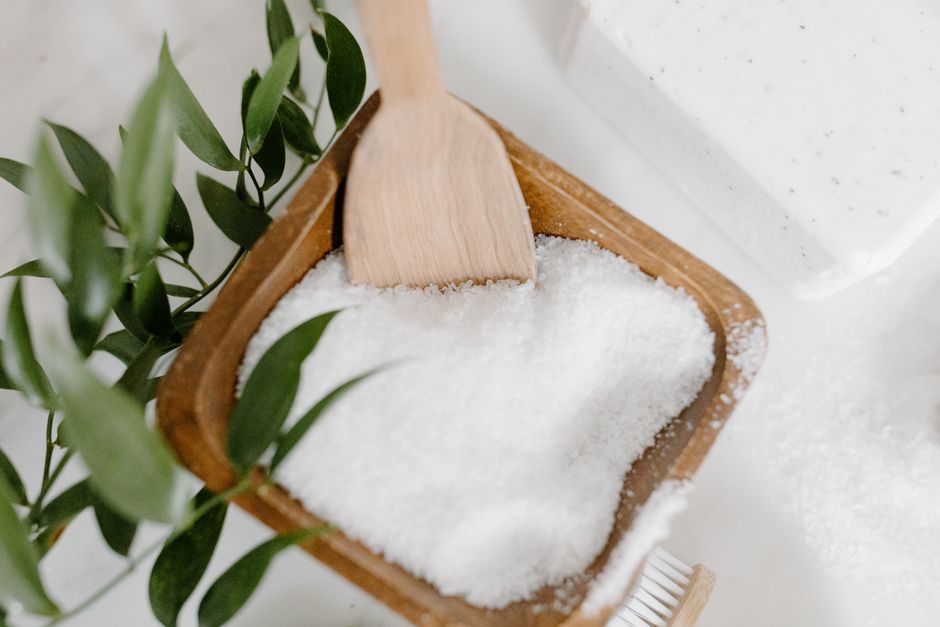
Epsom salt is magnesium sulfate, a naturally occurring mineral compound, not actually a salt in the table-salt sense. When you dissolve it in warm water, it breaks into magnesium and sulfate ions. What Epsom salt does depends entirely on how you use it — and the evidence for some popular uses is much stronger than for others.
People use it in baths, as a soak, as a laxative, and in gardening. The most common claim is that soaking in it relieves sore muscles and replenishes magnesium through the skin. That second part is where the science gets shaky.
What Is Epsom Salt Made Of?
Epsom salt is a chemical compound with the formula magnesium sulfate heptahydrate. It was named after Epsom, a town in England, where it was first discovered in the water of a local spring in the 1600s.
The compound consists of magnesium, sulfur, and oxygen. When dissolved in water, it separates into magnesium ions and sulfate ions. Neither of these is the same as sodium chloride, which is what most people mean when they say “salt.”
Magnesium is an essential mineral. It plays a role in more than 300 enzyme reactions in the body, including muscle contraction, nerve function, blood pressure regulation, and blood sugar control. Sulfate is also involved in various bodily processes, though it is not typically something people are deficient in.
The key distinction is between what magnesium does inside your body when you eat it versus what happens when you soak in it. These are two very different routes with very different evidence behind them.
Does Epsom Salt Actually Absorb Through Your Skin?
This is the central question, and the honest answer is that the evidence is limited. The idea that magnesium absorbs through the skin during an Epsom salt bath is widely repeated but not well supported by rigorous research.
Your skin is designed to be a barrier. It keeps water in and most substances out. The outer layer, the stratum corneum, is particularly effective at blocking large molecules and charged particles like magnesium ions.
Some small studies have measured changes in blood magnesium levels after Epsom salt baths. Results have been mixed and the studies were generally small. The evidence does not clearly show that meaningful amounts of magnesium cross the skin barrier from bathwater.
What we do know is that transdermal absorption of magnesium — meaning through the skin — is not a well-established route for supplementation. The magnesium in an Epsom salt bath may not reach your bloodstream in amounts that would matter for correcting a deficiency.
This does not mean the bath does nothing. Warm water itself can relax muscles. The ritual of soaking can reduce stress. But attributing those effects specifically to magnesium absorption goes beyond what the evidence shows.
Why Do People Use Epsom Salt Baths for Sore Muscles?
Warm water soaks are a traditional remedy for muscle soreness, and Epsom salt is often added to the water. The question is whether the Epsom salt adds anything beyond the warm water itself.
Warm water increases blood flow to the skin and underlying tissues. It can relax tense muscles and reduce the sensation of stiffness. These effects are real and well documented, but they come from the heat and the buoyancy of the water, not from magnesium absorption.
Some research suggests that magnesium deficiency is associated with muscle cramps and soreness. Correcting a deficiency through diet or oral supplements can help in those cases. But soaking in magnesium does not appear to be an effective way to correct a deficiency.
If you find Epsom salt baths helpful for sore muscles, the warm water is likely doing most of the work. That does not make the experience worthless — it just means the Epsom salt may be optional.





What Are the Legitimate Medical Uses of Epsom Salt?
Magnesium sulfate has well-established medical uses when administered under clinical supervision. These are entirely different from bath soaks and should not be confused with them.
- Intravenous magnesium sulfate is used in hospitals to treat certain types of seizures, severe asthma attacks, and pregnancy-related complications like preeclampsia. This is a controlled medical intervention with specific dosing and monitoring.
- Oral magnesium sulfate is sometimes used as a laxative. It draws water into the intestines, which stimulates bowel movements. This effect is well established but should not be used regularly without medical guidance.
- Topical magnesium sulfate is used in some wound care and anti-inflammatory preparations, though evidence for its effectiveness in these applications varies.
The medical uses of magnesium sulfate are not the same as soaking in a bath with it. When a doctor gives magnesium sulfate intravenously, it goes directly into the bloodstream at controlled doses. That is a completely different situation from skin exposure in bathwater.
Can Epsom Salt Help You Sleep Better?
Many people report sleeping better after an Epsom salt bath. The evidence for this is indirect and likely explained by other factors.
Warm baths before bed can help you fall asleep faster. This is thought to relate to the way body temperature drops after you get out of a warm bath, which may signal to your body that it is time to sleep. This effect has been studied and appears real, but it is not specific to Epsom salt.
Magnesium does play a role in sleep regulation. Some studies suggest that oral magnesium supplementation may improve sleep quality in certain populations, particularly older adults or those with deficiency. But again, that is oral magnesium, not magnesium absorbed through the skin.
If an Epsom salt bath helps you relax and sleep better, the warm water and the routine are the most likely reasons. There is no strong evidence that the magnesium in the bath is reaching your brain or affecting your sleep directly.
Is Epsom Salt Safe to Use?
Epsom salt is generally considered safe for external use in bathwater for most healthy adults. The main risks come from using it incorrectly or in excess.
Do not ingest Epsom salt unless directed by a healthcare provider. Oral magnesium sulfate is a laxative, and taking too much can cause diarrhea, dehydration, and in rare cases, dangerous changes in electrolyte levels. People with kidney disease should be especially cautious because impaired kidneys cannot clear magnesium effectively.
For baths, follow the package directions. Using more than recommended does not increase any benefit and may cause skin irritation in some people. If you have open cuts or skin infections, avoid soaking in Epsom salt until they heal.
Pregnant women should consult a healthcare provider before using Epsom salt baths, especially in the third trimester. While external use is generally considered low risk, no clinical guidelines specifically address Epsom salt baths during pregnancy.
Children can use Epsom salt baths, but the water should be comfortably warm, not hot, and they should be supervised. No clinical guidelines exist for specific Epsom salt amounts for children.
Does Epsom Salt Work for Plants?
Epsom salt is sometimes used in gardening to address magnesium deficiency in soil. This is one area where the chemistry makes sense.
Plants need magnesium to make chlorophyll, the pigment that enables photosynthesis. If soil is deficient in magnesium, plants may show yellowing between the veins of older leaves. Adding magnesium sulfate to the soil can correct this deficiency.
However, most garden soils already contain adequate magnesium. Adding Epsom salt when it is not needed does not help plants and may harm soil health over time by adding excess sulfur. A soil test is the only way to know if your soil is actually deficient.
The same logic applies to houseplants. Epsom salt is not a general plant tonic. It is a specific treatment for a specific deficiency that most plants do not have.
What About Epsom Salt for Constipation?
Oral Epsom salt is an osmotic laxative. It works by drawing water into the intestines, which softens stool and stimulates a bowel movement. This effect is well documented.
However, oral magnesium sulfate is not recommended for routine use. It can cause dehydration and electrolyte imbalances if used frequently. The FDA has warned against using Epsom salt as a laxative without medical supervision because of these risks.
If you are constipated, other approaches are generally safer and better studied. Increasing fiber and water intake, getting regular physical activity, and using over-the-counter laxatives specifically designed for regular use are more appropriate first steps. Talk to a healthcare provider if constipation persists.
What Does the Evidence Actually Support?
Separating what is proven from what is assumed helps clarify what Epsom salt does.
- Well established: Intravenous magnesium sulfate treats certain medical conditions under clinical supervision. Oral magnesium sulfate works as a laxative. Warm water baths relax muscles and may improve sleep.
- Some evidence: Oral magnesium supplementation may help with muscle cramps, sleep, and other conditions in people who are deficient. Soil magnesium sulfate corrects magnesium deficiency in plants.
- Limited or absent evidence: Magnesium absorbs through the skin in meaningful amounts from bathwater. Epsom salt baths correct magnesium deficiency. Epsom salt baths provide benefits beyond those of warm water alone.
This does not mean Epsom salt baths are useless. Many people find them pleasant and relaxing. But the specific claims about magnesium absorption and deficiency correction are not supported by strong evidence.
If you enjoy Epsom salt baths and find them helpful, there is little reason to stop. Just understand that the warm water is likely the active ingredient, not the magnesium.
Frequently Asked Questions
Does Epsom salt really draw toxins out of your body?
No. The idea that Epsom salt baths pull toxins through the skin is not supported by science. Your body removes waste through the liver, kidneys, and digestive system, not through your skin during a bath.
Can you absorb magnesium through an Epsom salt bath?
The evidence is limited and mixed. Some small studies suggest minor changes in blood magnesium after soaking, but most research does not show meaningful absorption through the skin. Oral magnesium is a more reliable way to raise your levels if needed.
How much Epsom salt should you add to a bath?
Most package directions suggest about 2 cups of Epsom salt in a standard bathtub of warm water. Using more does not increase any proven benefit and may irritate your skin.
Is it safe to use Epsom salt every day?
Soaking in an Epsom salt bath daily is generally considered safe for healthy adults. People with kidney disease or open wounds should avoid it, and anyone pregnant should check with a healthcare provider first.
