
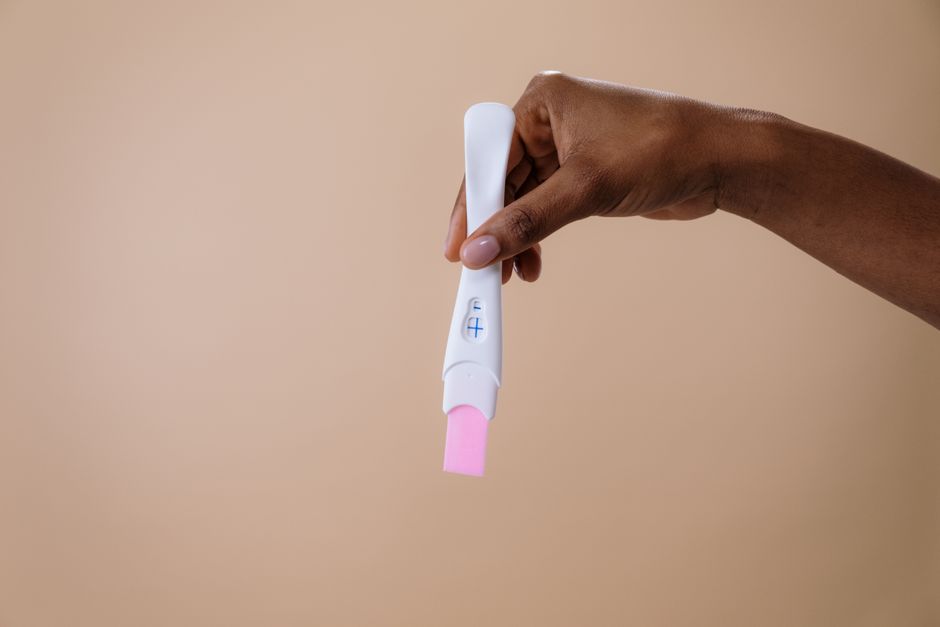
DPO stands for days past ovulation. It is the number of days since an egg was released from the ovary, and it matters because it lets you count forward to the two events that tell you whether you are pregnant: when a fertilized egg can implant, and when a pregnancy test can detect the hormone hCG. Implantation usually happens between 6 and 12 DPO, and most home urine tests can give a reliable result around 12 to 14 DPO. Testing before about 8 DPO almost always gives a negative result, even in a pregnancy that will go on to be healthy.
Understanding the DPO timeline removes most of the guesswork. It also explains why so many early tests come back negative and why waiting a few more days changes the answer.
What DPO Can You Test for Pregnancy Odds by Day?
The odds of a positive test rise steadily as DPO increases, because two things have to happen first: the embryo must implant in the uterine lining, and the body must make enough hCG for a test to detect it.
Here is the general pattern by day. These are typical ranges, not guarantees, and individual timing varies.
- 1 to 5 DPO: The egg is traveling through the fallopian tube and has not implanted. A pregnancy test cannot be positive yet because no hCG is being produced.
- 6 to 7 DPO: Implantation is possible but uncommon this early. Even if it happens, hCG levels are usually too low for a home test to pick up.
- 8 to 10 DPO: A small share of pregnancies can show a faint positive on a sensitive early test. Most will still read negative at this point.
- 11 to 12 DPO: The chance of a positive result climbs as implantation becomes more likely and hCG has had time to build.
- 12 to 14 DPO: This is when most home tests become reliable. By 14 DPO, a missed period usually lines up with a dependable result.
- After 14 DPO: If you have not tested positive and your period has not started, testing again in a couple of days is reasonable.
The key point: a negative test at 9 DPO does not mean you are not pregnant. It often means you tested too early. The same test two or three days later can flip to positive.
Why Does Implantation Timing Matter So Much?
Implantation is the step that starts hCG production. Until the embryo attaches to the uterine lining, there is no hormone for a test to detect, no matter how sensitive the test is.
After ovulation, the egg survives for roughly 12 to 24 hours if it is not fertilized. If sperm fertilizes it, the resulting embryo takes several days to travel down the fallopian tube and reach the uterus. That journey, plus the time needed to implant, is why implantation typically falls between 6 and 12 DPO.
Once the embryo implants, cells around it begin releasing hCG. Levels start low and roughly double every two to three days in early pregnancy. A home urine test needs a certain minimum concentration of hCG to register a positive. That threshold is why the earliest days after implantation often read negative.
This is also why the timing of implantation shifts your test date. An embryo that implants at 6 DPO will produce detectable hCG sooner than one that implants at 11 DPO. Two people at the same DPO can get different results for this reason alone.
How Accurate Are Early Pregnancy Tests at Different DPO?
Home pregnancy tests are highly accurate when used correctly and when enough time has passed since ovulation. The catch is the phrase “enough time.”
Most standard urine tests are designed to detect hCG at concentrations around 25 mIU/mL, and some early-response tests advertise sensitivity at 10 mIU/mL or lower. A lower detection threshold means a positive can appear slightly earlier, but it does not change the biology of when hCG is produced. A very sensitive test used at 8 DPO may still be negative simply because there is not yet enough hormone in the urine.
Early testing also carries a higher chance of a false negative than a false positive. False negatives happen when hCG is present but below the test’s detection limit. False positives are uncommon but can occur with certain medications, medical conditions, or a very early loss.
One detail many people miss: the concentration of hCG in urine depends partly on how diluted it is. Testing first thing in the morning, when urine is most concentrated, can improve the chance of detecting low levels of hCG. This matters most in the earliest days.
What Symptoms Should You Expect by DPO?
Early pregnancy symptoms are unreliable as a guide because the hormone that causes most of them, progesterone, is also high in the second half of every menstrual cycle, whether or not you are pregnant.
Progesterone rises after ovulation in all cycles. It can cause breast tenderness, bloating, fatigue, and mood changes. These are the same symptoms many people read as early pregnancy signs. That overlap is why symptom-spotting at 7 or 8 DPO cannot tell you whether you conceived.
True pregnancy symptoms tied to hCG usually do not appear until after implantation and a rise in hCG, which generally means after a missed period. Nausea, for example, is more commonly associated with rising hCG in the weeks after a positive test, not in the first few days past ovulation.
If you are tracking symptoms, treat them as information, not evidence. A test is the only way to know.
When Is the Best Day to Take a Pregnancy Test?
The most reliable day to test is the first day of a missed period. For most people with a regular cycle, that falls around 14 DPO.
Testing at 12 DPO is reasonable if you want an earlier answer and understand that a negative result may not be final. Testing before 10 DPO is more likely to give a false negative than a useful answer.
If you have an irregular cycle, DPO is harder to pin down because ovulation timing varies. Ovulation predictor kits, basal body temperature tracking, and cervical mucus changes can help estimate the day of ovulation, but each has limits. Without a reliable ovulation date, counting DPO is approximate, and the first missed period remains the simplest guide.
If a test is negative but your period does not come, wait two or three days and test again. If your period is significantly late and tests remain negative, a clinician can help evaluate what is going on.
What Can Throw Off Your DPO Count?
DPO assumes you know the exact day you ovulated. In reality, ovulation timing can shift from cycle to cycle, and many people estimate it rather than confirm it.
Ovulation predictor kits detect a surge in luteinizing hormone that usually precedes ovulation by about 24 to 36 hours, but the egg is not always released on a predictable schedule after that surge. Basal body temperature rises after ovulation, which confirms it happened but does not predict it in advance. These tools narrow the window but do not guarantee an exact DPO.
Stress, illness, travel, and changes in sleep can all shift ovulation timing. A cycle that is usually regular can occasionally surprise you. When in doubt, treat your DPO count as an estimate and lean on the missed-period rule for the most dependable test timing.
Frequently Asked Questions
Can you get a positive pregnancy test at 7 DPO?
It is possible but uncommon. At 7 DPO, implantation may not have happened yet, and even if it has, hCG levels are usually too low for a home test to detect.
Is 10 DPO too early to test?
It can be. Some sensitive tests may pick up a positive at 10 DPO, but most pregnancies will not show a positive until a few days later, so a negative at 10 DPO is not conclusive.
How accurate is a pregnancy test at 12 DPO?
A test at 12 DPO is fairly reliable for many people, though a negative result can still be too early in some cases. Testing again at 14 DPO or after a missed period gives a clearer answer.
What is the earliest DPO you can test positive?
The earliest a positive is realistically possible is around 8 to 9 DPO, and even then it is uncommon. Most positive results appear at 12 DPO or later.
