

Vitamin D is a fat-soluble nutrient your body needs to absorb calcium, build bone, and keep muscles working. Your body makes most of its vitamin D from sunlight hitting your skin. The rest comes from food and supplements. Few foods contain it naturally, so many people rely on fortified products or a supplement to reach recommended levels.
That short answer leaves out a lot. Sun exposure depends on where you live, the season, your skin tone, and how much skin you cover. Food sources are real but limited. Supplements come in two forms that behave differently in the body. Understanding where vitamin D actually comes from — and where it does not — helps you judge whether your own intake is likely adequate.
How Does Your Body Make Vitamin D From Sunlight?
Sunlight is the main source for most people. When ultraviolet B (UVB) rays from the sun penetrate your skin, they convert a form of cholesterol into a precursor molecule. That molecule then travels to the liver and kidneys, where it is converted into the active hormone your body uses.
This is why vitamin D is often described as a hormone rather than a simple vitamin. Your skin, liver, and kidneys all participate in producing it. The process is well established in human physiology.
Several factors determine how much vitamin D your skin actually makes:
- Time of day and season. UVB rays are strongest near midday and in summer months. In winter at higher latitudes, UVB may be too weak for skin to produce meaningful amounts.
- Latitude. People living far from the equator get less UVB, especially in winter.
- Skin tone. Melanin reduces UVB absorption. People with darker skin need more sun exposure to make the same amount of vitamin D.
- Age. Older skin produces vitamin D less efficiently than younger skin.
- Sunscreen and clothing. Both block UVB. That is protective for skin cancer risk, but it also limits vitamin D production.
- Glass. Windows block most UVB, so sitting indoors near a sunny window does not trigger vitamin D production.
There is no single recommended sun exposure time that works for everyone. Guidance from dermatology and public health organizations generally emphasizes getting some sun while avoiding sunburn, since UV exposure raises skin cancer risk. The trade-off between vitamin D production and skin damage is real and does not have a clean universal answer.
Which Foods Naturally Contain Vitamin D?
Very few foods contain vitamin D naturally. This is a key point that often gets lost. The list is short:
- Fatty fish. Salmon, trout, mackerel, tuna, and sardines are among the best natural sources. Amounts vary widely by species and whether the fish is wild or farmed.
- Fish liver oils. Cod liver oil is a concentrated source.
- Egg yolks. Contain small amounts, mostly vitamin D3.
- Some mushrooms. Mushrooms exposed to UV light can contain vitamin D2. Commercially grown mushrooms may or may not be treated this way.
Because natural food sources are so limited, most people in the United States get a meaningful share of their vitamin D from fortified foods rather than from naturally occurring sources.
What About Fortified Foods and Beverages?
Fortification is how many people reach their daily vitamin D intake without a supplement. In the US, several foods are commonly fortified:
- Cow’s milk. Most fluid milk is fortified with vitamin D. This has been standard practice for decades.
- Plant-based milk alternatives. Many soy, almond, and oat milks are fortified, but levels vary by brand. Not all are fortified equally.
- Breakfast cereals. Some are fortified, but amounts differ widely from product to product.
- Orange juice. Some brands are fortified.
- Yogurt and some cheeses. Fortification varies.
- Margarine. Often fortified.
Fortification levels are not uniform. Two brands of almond milk, for example, may contain very different amounts. Reading the nutrition label is the only reliable way to know what a specific product provides. The label lists vitamin D as a percentage of the Daily Value, which is currently set at 20 micrograms (800 IU) for adults and children aged 4 and older.




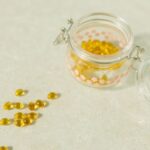
Are Supplements an Effective Source of Vitamin D?
Supplements are a reliable way to get vitamin D, and for many people they are the simplest route. Two main forms are sold:
- Vitamin D3 (cholecalciferol). Made from lanolin (sheep’s wool) or lichen. This is the same form your skin produces.
- Vitamin D2 (ergocalciferol). Made from yeast or mushrooms exposed to UV light. This is the form used in some prescription products.
Both forms raise blood levels of vitamin D. Some research suggests D3 raises and maintains blood levels slightly better than D2, but both are used clinically and both work. Vitamin D3 is more commonly sold in over-the-counter products.
Supplements are absorbed best when taken with a meal that contains some fat, since vitamin D is fat-soluble. Taking them on an empty stomach may reduce absorption.
Dosing is where caution matters. The recommended dietary allowance for most adults is 600 IU (15 micrograms) per day, rising to 800 IU (20 micrograms) for adults over 70. These are established values from the National Academies. Higher doses are sometimes prescribed for deficiency, but that decision belongs with a clinician. Vitamin D is not harmless at very high doses — excessive intake can raise blood calcium to dangerous levels.
How Much Vitamin D Do You Actually Need?
Recommended intake is expressed in International Units (IU) or micrograms. The two are easy to confuse, so here is the conversion: 1 microgram of vitamin D equals 40 IU.
| Group | Recommended Daily Intake |
|---|---|
| Infants 0–12 months | 400 IU (10 mcg) |
| Children and adults 1–70 years | 600 IU (15 mcg) |
| Adults over 70 | 800 IU (20 mcg) |
These figures assume minimal sun exposure. If you get regular sun, your actual need from food and supplements may be lower, though it is difficult to measure sun-derived vitamin D precisely.
Blood levels are measured as 25-hydroxyvitamin D. A level below 12 ng/mL is generally considered deficient. Levels between 12 and 20 ng/mL are sometimes called insufficient, though experts disagree about where the cutoff for “enough” should be. This disagreement is genuine and ongoing in the medical literature.
Who Is Most Likely to Fall Short?
Some groups are at higher risk of low vitamin D, based on well-documented factors:
- People with darker skin living at higher latitudes
- Older adults, whose skin makes vitamin D less efficiently
- People who rarely go outside or cover most of their skin
- People with conditions that impair fat absorption, such as celiac disease or Crohn’s disease, since vitamin D needs fat to be absorbed
- People with obesity, because vitamin D can be sequestered in fat tissue
- Exclusively breastfed infants, who need a supplement because breast milk does not contain enough vitamin D
For exclusively breastfed infants, the American Academy of Pediatrics recommends a daily supplement of 400 IU starting soon after birth. This is established guidance, not a gray area.
Being in a risk group does not guarantee deficiency, and being outside these groups does not guarantee sufficiency. A blood test is the only way to know your actual level.
Can You Get Vitamin D From a Tanning Bed?
Tanning beds emit UV radiation, and some emit UVB, which can trigger vitamin D production in the skin. The problem is that tanning beds also emit UVA, which is strongly linked to skin cancer and premature skin aging. Health agencies, including the FDA and the World Health Organization, advise against using tanning beds, and none recommend them as a vitamin D source. The skin cancer risk outweighs any vitamin D benefit.
The Bottom Line on Where Vitamin D Comes From
Vitamin D comes from three places: sunlight on your skin, a small number of natural foods, and fortified products or supplements. Sunlight is the largest source for most people, but it is unreliable depending on season, latitude, and skin tone. Food alone rarely provides enough. Supplements fill the gap for many people, and they are the recommended source for certain groups, including breastfed infants.
If you are unsure whether your intake is adequate, a blood test gives a clear answer where guesswork cannot. Talk to a clinician before starting high-dose supplements, since more is not automatically better and very high doses carry real risks.
Frequently Asked Questions
What is the best natural source of vitamin D?
Sunlight on your skin is the largest natural source for most people. Among foods, fatty fish like salmon and mackerel contain the most vitamin D naturally.
Can I get enough vitamin D from food alone?
It is difficult for most people, because very few foods contain vitamin D naturally. Fortified foods and supplements are how many people reach recommended intake.
How much vitamin D do adults need per day?
Most adults need 600 IU (15 micrograms) daily, and adults over 70 need 800 IU (20 micrograms). These are established recommendations assuming minimal sun exposure.
Do I need a supplement if I get regular sun?
Not necessarily, but sun exposure varies too much by season, latitude, and skin tone to rely on it alone. A blood test is the only way to know your actual level.
