
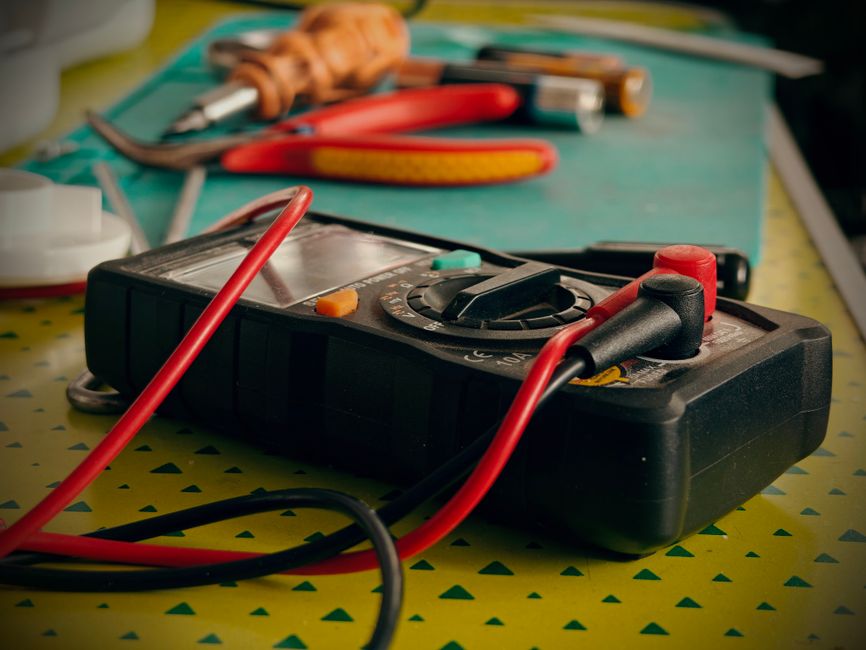
When you set a multimeter to a voltage setting, you will likely see the letters VDC or V⎓ on the dial or screen. VDC stands for Volts Direct Current. It measures the electrical potential difference in a circuit where current flows in one constant direction. To measure it, you set your meter to the VDC setting, connect the black probe to COM and the red probe to the VΩmA port, and touch the probes to the circuit’s positive and negative points.
What Does VDC Mean On A Multimeter And How To Measure It?
VDC is the abbreviation for Volts Direct Current. Direct current is electricity that flows steadily in a single direction. This is different from alternating current (AC), which reverses direction many times per second. Batteries, solar panels, and most electronic circuits run on DC power. When you measure VDC, you are checking the pressure of that one-way electrical flow.
On a multimeter, the VDC setting is often marked with a “V” and a straight line or dashed line above it. Some meters write “DCV” instead. The symbol matters because it tells the meter what kind of voltage to expect. If you use the wrong setting, the reading will be meaningless or the meter may show zero.
How Is VDC Different From VAC?
VAC stands for Volts Alternating Current. Household wall outlets supply AC power. The current changes direction about 50 or 60 times per second, depending on where you live. This reversal is why AC can be transmitted over long distances efficiently. DC does not reverse direction. It flows from the negative terminal of a battery to the positive terminal through a circuit.
This difference matters for measurement. A multimeter set to VDC will not give a useful reading on an AC outlet. It may show zero or an unstable number. Conversely, setting the meter to VAC on a battery will often read zero or a very low value, even though the battery has real voltage. You must match the setting to the power source type.
Where Do You Find DC Voltage?
DC power is everywhere in modern life. Common sources include:
- AA, AAA, C, and D batteries
- Car batteries (typically around 12.6 volts when fully charged)
- Laptop and phone chargers (they convert AC to DC internally)
- USB ports (5 volts DC)
- Solar panels
- Most electronic circuit boards
Understanding where DC exists helps you know when to use the VDC setting. If a device runs on batteries or plugs into a USB port, it uses DC power. If it plugs directly into a wall outlet without a power brick, it uses AC power.
How To Measure VDC Safely
Measuring DC voltage is one of the safest electrical tests you can do, but you still need to follow basic rules. Start by identifying what you are measuring. Check the battery or power supply label for its rated voltage. This tells you what range to expect.
Set the dial to the VDC position. If your meter has manual ranges, choose one higher than the expected voltage. For a 9-volt battery, select the 20-volt range if available. For a car battery, select the 20-volt or 200-volt range. If you pick a range too low, the meter will show “OL” for overload. That is not dangerous, but it means you need to switch to a higher range.
Insert the black probe into the COM port and the red probe into the VΩmA port. Touch the black probe to the negative side of the circuit or battery. Touch the red probe to the positive side. The meter will display the voltage. If the reading is negative, you have the probes reversed. That is not harmful for most measurements, but it means the red probe is on the negative side.
What Is a Good VDC Reading?
A good reading depends entirely on what you are measuring. A fresh AA alkaline battery should read about 1.5 volts. A fully charged car battery should read about 12.6 volts. A USB port should read about 5 volts. These are reference values, not exact guarantees.
Batteries lose voltage as they discharge. A AA battery at 1.2 volts is mostly depleted. A car battery at 12.2 volts is only about half charged. Many devices stop working below a certain voltage threshold, even if the battery still shows some charge. This is because the device needs a minimum voltage to operate.
If you measure a battery and get a reading significantly lower than its rated voltage, the battery is weak or dead. If you get zero, either the battery is completely dead or you have the probes on the wrong terminals.
Common Mistakes When Measuring VDC
The most common mistake is using the wrong setting. People often leave the meter on VAC and wonder why their battery reads zero. Always check the dial before testing. The second most common mistake is using the wrong ports. The red probe must be in the VΩmA port for voltage measurement. If it is in the 10A port, you will not get a proper reading.
Another mistake is touching the probes together while measuring. This creates a short circuit between the two test points. It will not damage the meter in voltage mode, but it will give a reading of zero. Some people also measure voltage across a component while it is still in a circuit. This is fine and often useful, but the reading reflects the voltage drop across that component, not the total circuit voltage.
Digital multimeters have high input impedance, usually around 10 megohms. This means they draw almost no current from the circuit being measured. That is good because it does not affect the circuit’s operation. But it also means the meter can show “ghost” voltages from nearby wires or electromagnetic interference. If you get a strange reading on a disconnected wire, it is likely induced voltage, not real power.
Why Does VDC Matter for Electronics Work?
DC voltage is the language of electronics. Every integrated circuit, microcontroller, and sensor runs on DC power. When you troubleshoot a circuit, you check whether the correct DC voltage reaches each component. If a chip needs 5 volts and you measure 3 volts at its power pin, you have found a problem.
Measuring VDC also helps you verify power supplies. A wall adapter rated for 12 volts DC should output close to that when tested under load. If it outputs only 8 volts, the adapter is failing or undersized for the device. This kind of testing is routine for anyone repairing electronics, building circuits, or installing car audio systems.
What About VDC on a Car Battery?
Car batteries are a common reason people buy multimeters. A healthy, fully charged car battery reads about 12.6 volts with the engine off. With the engine running, the alternator raises the system voltage to about 13.8 to 14.4 volts. This higher voltage is what charges the battery while you drive.
If your car struggles to start, measuring the battery voltage is a good first step. A reading below 12.4 volts suggests the battery is not fully charged. A reading below 12.0 volts means it is significantly discharged. However, voltage alone does not tell you everything about battery health. A battery can show 12.6 volts at rest but fail under load. For a complete picture, you would need a load tester, which applies a heavy draw while measuring voltage drop.
Frequently Asked Questions
What does the V⎓ symbol mean on a multimeter?
The V⎓ symbol stands for volts direct current. The straight line and dashed line above the V indicate DC, while a wavy line (~) indicates AC.
Can I measure a car battery with a multimeter set to VDC?
Yes. Set the meter to the 20-volt DC range and place the red probe on the positive terminal and the black probe on the negative terminal. A healthy battery reads about 12.6 volts with the engine off.
Why does my multimeter show a negative voltage reading?
The probes are reversed. The red probe is touching the negative side and the black probe is touching the positive side. Swap the probes for a positive reading.
What happens if I measure AC voltage with the VDC setting?
You will get a zero or unstable reading. The meter is not designed to interpret alternating current on the DC setting, so the result will not reflect the actual voltage.
