
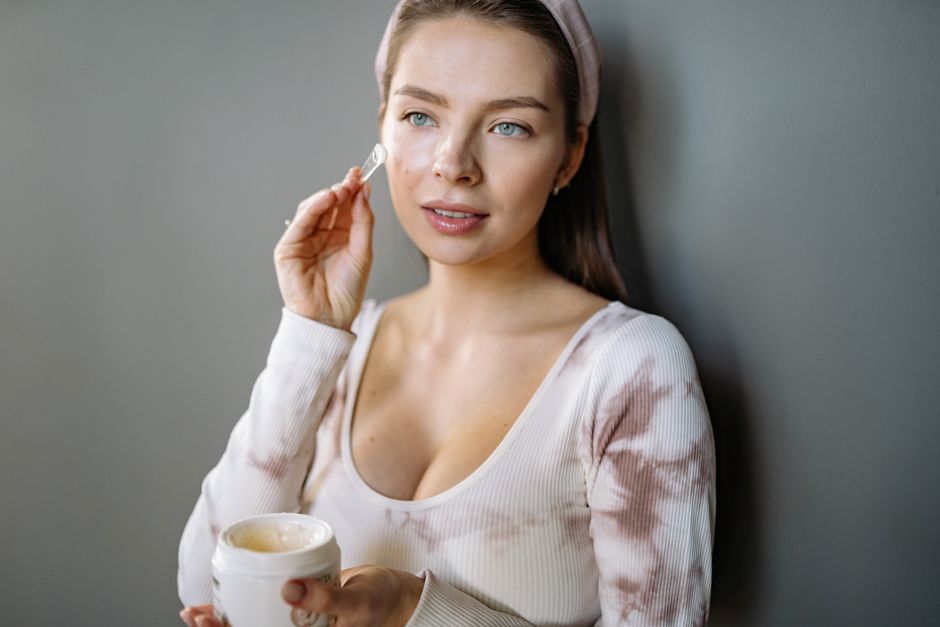
Vaseline—petroleum jelly—does one main thing for your face: it seals in moisture. It forms a breathable, water-repelling barrier on the skin’s surface that slows water loss and protects irritated or broken skin while it heals. It is not a moisturizer in the usual sense, it does not add water to your skin, and it will not clear acne or erase wrinkles. What it does, it does very well.
What Does Vaseline Do For Your Face?
Petroleum jelly is a mix of mineral oils and waxes refined into a thick, semi-solid gel. Smear a thin layer on your face and it creates a physical film over the skin. That film is the whole mechanism.
Your skin constantly loses water into the air, a process called transepidermal water loss. The outer layer of skin, the stratum corneum, normally holds water in with its own lipids and proteins. When that barrier is dry, cracked, or stripped by harsh cleansers, water escapes faster and skin feels tight, flaky, and rough. A layer of petroleum jelly sits on top and blocks much of that escape. It does not soak in and it does not supply water or oil to the skin. It traps what is already there.
Here is the non-obvious part: petroleum jelly is one of the most effective barrier sealants available. It reduces water loss through the skin by a very large margin—among the highest of any topical product studied. That is why dermatology has leaned on it for decades for wound care and for protecting damaged skin.
What it does not do matters just as much. It is not an exfoliant, not an antibacterial, not a source of vitamins or antioxidants, and not a treatment for acne, rosacea, or pigmentation. It is a seal, not an active ingredient.
Is Putting Vaseline on Your Face Safe?
For most people, yes. Petroleum jelly is well tolerated and has a long safety record in skin care and wound healing. Allergic reactions to it are uncommon because it is highly refined and chemically inert—your immune system largely ignores it.
Two caveats are worth knowing. First, “cosmetic grade” petroleum jelly is refined to remove impurities, and that is the kind sold for skin use. Unrefined industrial petroleum products are a different material and are not for your face. Second, the main risk is not toxicity—it is trapping things you do not want trapped.
If you apply it over dirty skin, sweat, or a developing breakout, the seal can hold that environment against your skin. It can also trap bacteria in a clogged pore. That does not mean it causes acne in everyone, but people prone to breakouts often find heavy occlusives make things worse. Patch test on your jaw before using it across your whole face, especially if your skin is oily or acne-prone.
Can Vaseline Help Dry, Flaky Skin?
Yes. Dry, flaky skin is largely a water problem, and sealing water in is exactly what petroleum jelly does best. For very dry patches, cracked lips, or skin raw from winter wind, a thin layer can calm tightness and reduce visible flaking.
The order matters. Petroleum jelly works as a sealant, so apply it after any water-based product—ideally on slightly damp skin. If you put it on bone-dry skin, you are sealing in dryness rather than moisture. A light moisturizer first, then a thin film of Vaseline on top, gives the seal something to hold onto.
Use it sparingly. A pea-sized amount warmed between your fingers spreads a long way. A thick mask of it is rarely necessary for the whole face and feels heavy for most people.





Does Vaseline Clog Pores or Cause Acne?
Petroleum jelly is generally considered non-comedogenic in the sense that it does not directly block pores the way some oils and waxes do. Its molecules are large and sit on the surface rather than sinking into the pore. That is why it is often listed as safe for acne-prone skin in principle.
In practice, the picture is more mixed. The same sealing action that holds moisture in can also hold sweat, oil, and bacteria against the skin. For someone with active acne or very oily skin, that environment can aggravate breakouts even though the ingredient itself is not the direct cause. The evidence does not support calling petroleum jelly a reliable acne trigger across the board, but it also does not support promising it will never cause a problem.
If you are breakout-prone, treat it as a product to test carefully rather than a default. Use it on dry areas—cheeks, around the mouth, lips—rather than across an oily T-zone.
What About Vaseline for Wrinkles and “Slugging”?
Vaseline will not reduce wrinkles. Wrinkles come from sun damage, loss of collagen and elastin, and the natural thinning of skin with age. A surface sealant does not change any of those. It can make skin look temporarily plumper and smoother because well-hydrated skin reflects light differently, but that effect fades when the moisture does. No evidence supports petroleum jelly as an anti-aging treatment.
“Slugging”—applying a thick layer of an occlusive like Vaseline as the last step of a nighttime routine—has become popular. The idea is to lock in the products underneath and prevent overnight water loss. The concept is sound in principle, since occlusives do reduce water loss. But there is no strong clinical trial evidence that slugging with petroleum jelly produces better long-term skin outcomes than a normal moisturizer, and for acne-prone or oily skin it can backfire by trapping oil and sweat overnight.
Some clinicians recommend it for people with very dry or compromised skin; others advise against it for anyone prone to breakouts or clogged pores. It is widely done but not strongly supported by trials as a routine.
How Should You Use Vaseline on Your Face?
Keep it simple and targeted. A few practical points:
- Apply a thin layer, not a thick coating, unless a clinician has told you otherwise for a specific skin issue.
- Put it on last, after lighter water-based products, ideally on slightly damp skin.
- Focus on dry zones—lips, cheeks, around the nose and mouth—rather than the whole face if your skin is oily.
- Patch test on a small area for a few days before wider use if you are acne-prone or have sensitive skin.
- Do not apply it over broken skin that looks infected, and do not use it as a substitute for sunscreen—it offers no meaningful UV protection.
One clarification worth stating plainly: Vaseline is not a sunscreen and does not protect against sun damage. It can even make skin look shiny, which some people mistake for protection. It is not.
When Should You Not Put Vaseline on Your Face?
Skip it on skin that is actively infected, oozing, or showing signs of a spreading rash—sealing that in can make a bacterial or fungal problem worse. Avoid it if you have had a reaction to petroleum-based products. And be cautious if you have very oily or acne-prone skin, where the seal can work against you.
For serious or persistent skin problems—cystic acne, eczema flares, suspected infection—talk to a dermatologist rather than relying on an occlusive. Vaseline is a useful tool for sealing moisture and protecting healing skin. It is not a treatment for skin disease, and it will not fix what a barrier alone cannot.
Frequently Asked Questions
Does Vaseline actually moisturize your face?
Not in the usual sense—it seals in moisture rather than adding water to your skin. It works best applied over a moisturizer or on slightly damp skin.
Can I put Vaseline on my face every night?
Many people can use a thin layer nightly without problems, but those with oily or acne-prone skin should test it first. It is not necessary for everyone and can trap oil and sweat overnight.
Will Vaseline make my acne worse?
It can for some people, because the seal may trap oil, sweat, and bacteria against the skin. The ingredient itself is not considered a direct acne trigger, so response varies.
Does Vaseline help with wrinkles?
No. It can make skin look temporarily smoother when well hydrated, but it does not reduce wrinkles or change the underlying causes like sun damage and collagen loss.
