
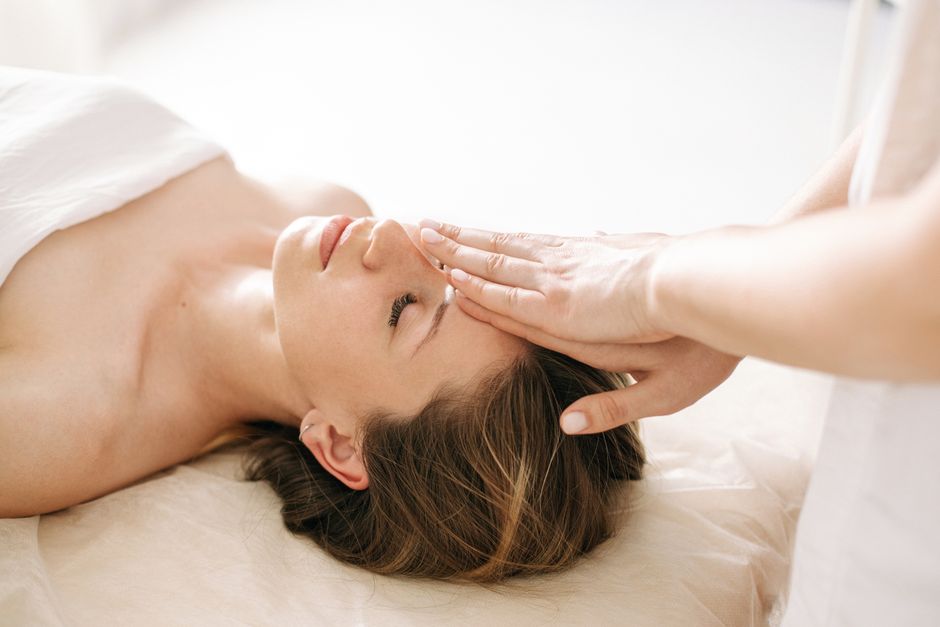
The pineal gland is a small, pinecone-shaped organ deep in the center of your brain. It makes melatonin, the hormone that helps regulate your sleep-wake cycle. It is also one of the most mythologized structures in the human body.
For something roughly the size of a grain of rice, the pineal gland has collected an unusual amount of folklore. Some of it comes from its location. Some comes from its name. And some comes from a genuine misunderstanding about what it does and does not control. Here is what the anatomy and physiology actually show.
What Does The Pineal Gland Do?
The pineal gland’s main job is to produce and release melatonin, a hormone that signals to your body that it is nighttime. It sits near the center of the brain, behind and above the brainstem, in a region called the epithalamus. Despite being buried deep, it receives a direct signal from your eyes.
That connection matters. Specialized light-sensing cells in the retina send information along a pathway that reaches the pineal gland through a series of relay stations in the brain. When light hits your eyes, that signal suppresses melatonin production. When it gets dark, the suppression lifts and melatonin output rises.
This is why the pineal gland is sometimes described as part of the body’s internal clock system. It does not generate the clock itself. The master timing structure is a cluster of cells in the hypothalamus called the suprachiasmatic nucleus. The pineal gland is more like the messenger that carries the clock’s signal to the rest of the body by way of melatonin.
Melatonin affects far more than sleepiness. Receptors for it are found throughout the body, and it appears to influence the timing of many biological processes. That said, the precise role of melatonin in each of those processes varies, and not all of it is fully understood.
How Is the Pineal Gland Connected to Sleep?
The pineal gland is central to how your body tracks day and night. Melatonin levels typically begin rising in the evening, stay elevated through the night, and fall back down near morning. This rhythm is driven by light exposure, not by willpower or habit.
Because of this, the pineal gland is sensitive to the light you take in during the evening. Bright light at night can delay melatonin release and shift your internal timing. That is one reason sleep specialists often suggest dimming lights and limiting bright screens before bed, though the strength of the effect from screens specifically is debated and likely smaller than the effect of overall room lighting.
It is worth separating two ideas that often get blurred together. Melatonin helps set the timing of sleep. It is not a sedative. Taking melatonin does not knock you out the way a sleep medication might. It shifts when your body expects to feel sleepy, which is a different mechanism. This distinction matters because it explains why melatonin tends to work better for jet lag and shift work than for general trouble falling asleep.
The pineal gland also tends to accumulate calcium deposits as people age. These deposits, sometimes called corpora arenacea or “brain sand,” are visible on imaging scans and are common in adults. They are generally considered a normal part of aging. Whether they meaningfully affect melatonin production is not firmly established, and researchers continue to study the question.
Does the Pineal Gland Have a “Third Eye”?
No. The pineal gland does not see, and it is not a hidden eye. The “third eye” idea is a mix of philosophy, spiritual tradition, and a misunderstanding of anatomy.
The comparison likely started because the pineal gland does respond to light, just not by forming images. It detects light indirectly through signals from the retina. It has no lens, no retina of its own, and no ability to produce vision. In some animals, like certain reptiles and fish, there is a related structure called the parietal eye that does detect light more directly. In humans, that structure is not present in a functional form.
There is also a historical thread. The philosopher René Descartes wrote about the pineal gland in the 1600s and proposed it as the seat of the soul, partly because it is one of the few brain structures that sits as a single midline organ rather than in mirrored pairs. His idea was philosophical, not scientific, and it has not held up. Modern neuroscience does not assign the soul or consciousness to any single structure.
So when you see claims about “activating the third eye” or “decalcifying the pineal gland,” understand what is being mixed together. There is a real organ with a real function. There is also a layer of spiritual and wellness marketing built on top of it that does not come from medical evidence.





Can You “Decalcify” or “Activate” the Pineal Gland?
The evidence does not support these ideas. There is no established method to remove calcium deposits from the pineal gland, and no clinical evidence that doing so would improve health or cognition.
Claims about decalcification usually come with a list of suggested remedies, such as certain supplements, filtered water, avoiding fluoride, or specific diets. None of these have been shown in human trials to reduce pineal calcification or to change pineal function in a meaningful way.
Fluoride deserves a direct note because it comes up often. The concern is usually that fluoride builds up in the pineal gland and harms it. While fluoride does accumulate in calcified tissue to some degree, the claim that this damages the pineal gland or disrupts melatonin in humans is not supported by strong evidence, and public health authorities continue to regard community water fluoridation as safe at recommended levels. This is a case where a plausible-sounding mechanism has been stretched well beyond what the data show.
What actually supports pineal function is unglamorous. Regular light-dark patterns, consistent sleep timing, and limiting bright light at night all work with the gland’s natural rhythm rather than against it. If you have persistent sleep problems, that is a conversation for a clinician, not a supplement aisle.
What Happens When the Pineal Gland Goes Wrong?
Real pineal problems are rare. When they occur, they tend to fall into a few categories.
Pineal tumors are uncommon but can occur, most often in children and young adults. Because the gland sits near pathways that drain fluid from the brain, a tumor there can block that flow and cause symptoms like headaches, nausea, or vision changes. These symptoms are not specific to the pineal gland, which is part of why diagnosis can take time.
Pineal cysts are far more common and are usually found by accident on an MRI done for another reason. Most are harmless and require no treatment, though a doctor may monitor them. The key point is that finding a cyst is not the same as having a disease.
Melatonin rhythm disruption is the most common real-world issue, and it is usually not caused by the gland itself. It comes from behavior and environment, such as shift work, travel across time zones, or irregular sleep schedules. The gland is doing its job. The signals reaching it have been scrambled.
There is also a rare condition in which the pineal gland calcifies early and severely enough to affect melatonin production, but this is uncommon and is diagnosed by a specialist.
Common Myths About the Pineal Gland
Several claims about the pineal gland circulate widely and do not hold up. It helps to name them clearly.
- It is the “third eye” that can be opened. It has no visual function in humans and cannot be activated by any known method.
- It controls consciousness or spiritual awakening. No brain structure works this way, and the claim comes from philosophy, not neuroscience.
- It can be decalcified with supplements or diet. No human trials support this.
- It is the “master gland.” That term is sometimes used loosely, but the pituitary gland and hypothalamus play more central roles in hormone regulation. The pineal gland has a narrower, more specific job.
- Melatonin from the pineal gland makes you sleep. Melatonin helps time sleep. It does not force it.
The pattern across these myths is the same. A real biological fact gets simplified, then stretched into a claim that the evidence does not carry. The pineal gland is genuinely interesting. It just does not do most of what the internet says it does.
Frequently Asked Questions
What is the pineal gland’s main function?
Its main function is producing melatonin, the hormone that helps regulate your sleep-wake cycle. It responds to light signals from your eyes to time when melatonin is released.
Can you activate or decalcify your pineal gland?
No established method can do this, and no clinical evidence shows it would help. Claims about supplements or diet removing calcium deposits are not supported by human trials.
Is the pineal gland the third eye?
No, it is not a visual organ in humans. The “third eye” idea comes from philosophy and spiritual tradition, not from anatomy or neuroscience.
What happens if the pineal gland stops working?
Disruption usually affects melatonin timing, which can disturb sleep patterns. True pineal disease, such as a tumor, is rare and requires medical evaluation.
