
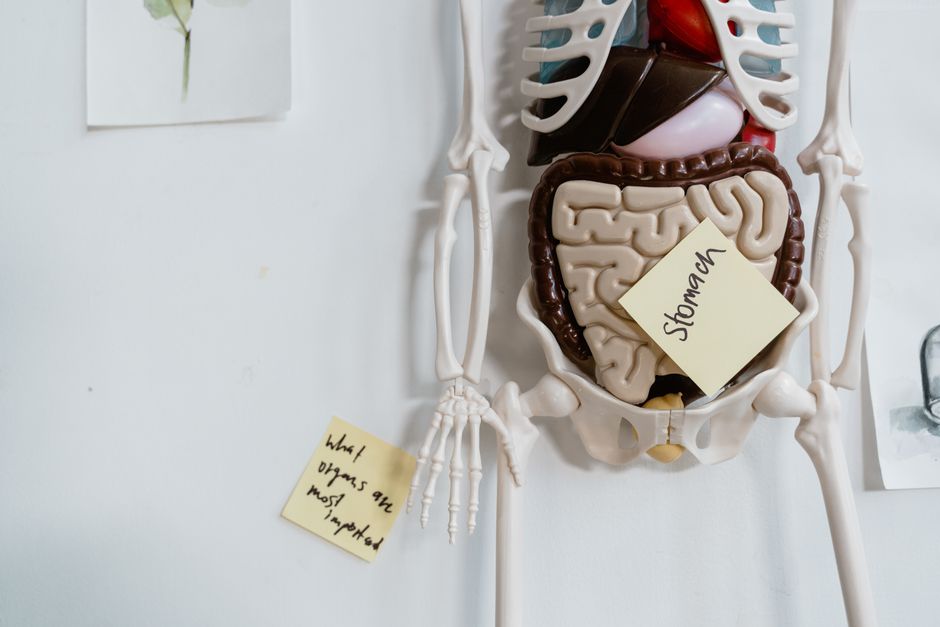
The large intestine is the last major section of your digestive tract, and it does far more than store waste. Its main jobs are to absorb water and electrolytes from what is left after digestion, house trillions of bacteria that ferment fiber and produce useful compounds, and form, store, and eventually eliminate stool.
Most people picture the colon as a passive holding tank. In reality, it is an active organ that recovers fluid your body would otherwise lose, feeds a resident microbial community, and helps regulate how often you go to the bathroom. When any of these functions break down, the results range from mild constipation to serious conditions like inflammatory bowel disease or colon cancer.
What Does The Large Intestine Do Functions Explained
The large intestine has four primary functions: absorbing water and electrolytes, housing and feeding gut bacteria, forming and storing stool, and moving waste out of the body through controlled muscle contractions.
By the time material reaches your large intestine, most nutrients have already been absorbed in the small intestine. What arrives is mostly liquid — water, undigested fiber, some proteins and fats, dead cells, and bile residue. The colon’s job is to turn that liquid into a formed stool while extracting things your body can still use.
Water absorption happens mainly in the first half of the colon. As water leaves, the remaining material becomes progressively more solid. If this absorption happens too slowly, stool stays loose. If it happens too quickly or too thoroughly, stool becomes hard and difficult to pass.
The colon also absorbs sodium, chloride, potassium, and short-chain fatty acids. Those fatty acids are not just waste products — they are produced by bacteria fermenting fiber, and they serve as a major energy source for the cells lining the colon.
How Long Is The Large Intestine And What Are Its Parts?
The large intestine is about 5 feet long in adults, roughly one-quarter the length of the small intestine, but it is wider in diameter, which is where the name comes from.
It has several distinct sections, each with a slightly different role:
- Cecum — a pouch at the start where the small intestine empties into the colon. The appendix hangs off it.
- Ascending colon — runs up the right side of the abdomen.
- Transverse colon — crosses the abdomen from right to left.
- Descending colon — runs down the left side.
- Sigmoid colon — an S-shaped section that connects to the rectum.
- Rectum — stores stool until a bowel movement.
- Anus — the opening where stool leaves the body.
The colon wall has a layer of muscle that contracts in waves, a process called peristalsis. These contractions push contents forward. In the colon, there is also a distinct pattern of slow, powerful contractions called mass movements, which often happen after a meal and create the urge to have a bowel movement.
What Role Do Gut Bacteria Play In The Colon?
The colon hosts the densest population of bacteria in the human body — trillions of microorganisms that together make up the gut microbiome.
These bacteria ferment fiber and other undigested carbohydrates that your own enzymes cannot break down. The main products of that fermentation are short-chain fatty acids, including butyrate, acetate, and propionate. Butyrate in particular is the preferred fuel for colon cells, and research has linked short-chain fatty acid production to colon health, immune regulation, and metabolic effects elsewhere in the body.
This relationship is real, but it is also easy to overstate. The microbiome is a genuinely active area of research, and many claims about specific bacterial strains and specific health outcomes are still being tested. What is well established is that the colon’s bacterial community is large, diverse in healthy people, and shaped by diet over time. What is not established is that any single supplement, food, or product reliably fixes a “bad” microbiome.
One practical point that often gets lost: the bacteria in your colon eat what you do not. A diet low in fermentable fiber gives them less to work with. This does not mean fiber is a treatment for any disease, but it does mean the colon’s bacterial population is partly a reflection of what you feed it.
How Does The Colon Form And Store Stool?
Stool formation is a balance between how much water the colon absorbs and how fast material moves through it.
Normal transit time through the colon varies widely between people. For many adults, it falls somewhere between roughly 12 and 48 hours, but this is a range, not a rule. Some people have naturally faster transit; others are slower. What matters clinically is usually whether your pattern is consistent for you and whether it causes symptoms.
When stool reaches the rectum, stretch receptors detect the pressure and trigger the urge to defecate. You can temporarily resist that urge by contracting the external anal sphincter, which is under voluntary control. If you repeatedly ignore the signal, stool can sit longer, more water gets absorbed, and it becomes harder to pass. This is one reason why chronic delaying of bowel movements can contribute to constipation.
Stool itself is roughly three-quarters water. The rest is a mix of undigested plant fiber, bacteria, dead cells, and small amounts of fat, protein, and mucus.
What Conditions Affect The Large Intestine?
The colon is vulnerable to a range of conditions, some common and mild, others serious.
- Irritable bowel syndrome (IBS) — a functional disorder causing cramping, bloating, and changes in bowel habits. It does not damage the colon, but it can significantly affect quality of life.
- Inflammatory bowel disease (IBD) — includes ulcerative colitis and Crohn’s disease, both involving chronic inflammation. Ulcerative colitis affects the colon and rectum specifically.
- Diverticular disease — small pouches form in the colon wall. Many people have them without symptoms; some develop inflammation or bleeding.
- Colorectal cancer — one of the most common cancers in the US. Screening is recommended starting at age 45 for average-risk adults, per major US guidelines.
- Constipation and diarrhea — often related to diet, medications, or transit speed rather than a structural problem.
Colorectal cancer screening deserves a direct mention. It is one of the few cancers where screening can both detect cancer early and prevent it by removing precancerous polyps before they become malignant. If you are 45 or older and have not been screened, that is worth a conversation with a clinician.
How Can You Support Large Intestine Health?
The most consistently supported steps for colon health are straightforward: eat fiber, drink enough water, stay physically active, and get screened for colorectal cancer on schedule.
Fiber from foods like vegetables, fruits, legumes, and whole grains supports regular bowel movements and feeds colon bacteria. The general US dietary recommendation is roughly 25 to 30 grams of fiber per day for adults, though most Americans eat considerably less. Increasing fiber suddenly can cause bloating and gas, so gradual increases tend to be tolerated better.
Physical activity is associated with lower risk of several colon-related conditions, including colorectal cancer, in observational studies. The relationship is consistent across many studies, though observational data cannot prove cause and effect.
What does not have strong evidence: colon “cleanses,” detox products, and most probiotic supplements marketed for general colon health. The evidence for probiotics is mixed and strain-specific, and no clinical evidence currently confirms that commercial colon cleanses improve colon function or remove toxins. The colon already does that job.
If you notice persistent changes in bowel habits, blood in stool, unexplained weight loss, or ongoing abdominal pain, those are reasons to see a clinician rather than adjust your diet and wait.
Frequently Asked Questions
What is the main function of the large intestine?
The main function is absorbing water and electrolytes from undigested material and forming stool. It also houses gut bacteria that ferment fiber and produce short-chain fatty acids.
How long is the large intestine in feet?
The large intestine is about 5 feet long in adults. It is shorter than the small intestine but wider in diameter, which is why it is called “large.”
Can you live without a large intestine?
Yes, people can live without a large intestine, but they often have more frequent, looser stools because water absorption is reduced. Surgical removal is sometimes necessary for conditions like severe ulcerative colitis or colon cancer.
Does the large intestine absorb nutrients?
The large intestine absorbs water, sodium, chloride, potassium, and short-chain fatty acids produced by bacteria. Most vitamins, minerals, and calories are absorbed earlier, in the small intestine.
