
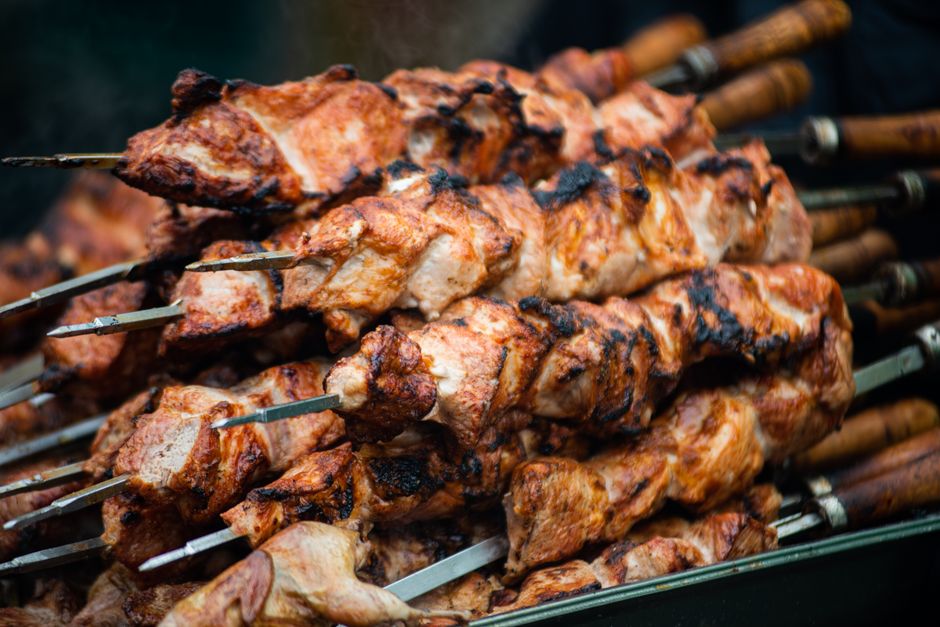
Tender meat is meat that gives way easily when you chew it, requiring little force to bite through or break apart. The word describes a physical property — how the muscle fibers and connective tissue respond to pressure — not a flavor or a level of doneness. Texture is the measurable result of how an animal’s muscles were built, how the meat was handled, and how it was cooked.
What Does Tender Meat Mean in Plain Terms?
Tenderness is about resistance. When you bite into a piece of meat, your teeth are breaking apart two main things: muscle fibers and the connective tissue that holds them together. Tender meat has fibers that separate with minimal force and connective tissue that has softened enough to stop fighting back.
Food scientists actually measure this. Instruments called texture analyzers and Warner-Bratzler shear devices record the force needed to cut or compress a sample. Higher shear force means tougher meat. This is not a matter of opinion — it is a repeatable physical measurement.
Two words get used loosely and are worth separating:
- Tender — low resistance to chewing. The meat yields.
- Soft or mushy — a lack of structure. The meat has broken down past the point of holding together.
These are not the same thing. A well-cooked braise is tender but still has body. Overcooked fish can be soft in a way that feels past its prime. Tender is the goal. Mushy is a failure mode.
What Makes Meat Tough or Tender?
Three factors decide most of it: the cut, the animal, and how the meat was aged or handled before you cook it.
Muscles that do a lot of work — the shoulder, the leg, the neck — build up more connective tissue and tend to be tougher. Muscles that do little work — the loin along the back — are naturally more tender. This is anatomy, not luck.
Connective tissue comes in two main forms. Collagen is the most abundant protein in the body and forms tough fibers. Elastin is rubbery and does not break down with heat the way collagen does. A cut high in elastin stays chewy no matter how long you cook it. That is why some working muscles never become fork-tender.
Age of the animal matters too. Older animals generally have more connective tissue and tougher muscle. This is one reason veal is more tender than beef from a mature animal.
After slaughter, muscle goes through a natural process. It first stiffens — a state called rigor mortis — then gradually relaxes as enzymes break down proteins. This is why aging meat improves tenderness. The enzymes do slow work that heat alone cannot fully replicate.
How Does Cooking Change Meat Texture?
Heat does two opposite things to meat, and which one wins depends on temperature and time.
At moderate heat, muscle proteins tighten and squeeze out moisture. This is why a steak cooked past medium gets drier and chewier. The fibers contract, water leaves, and the bite gets firmer.
At higher heat held for longer, collagen begins to dissolve into gelatin. This is the transformation behind pulled pork, braised short ribs, and slow-cooked stews. The tough connective tissue that made the cut chewy turns soft and slippery.
Here is the part many people miss: collagen needs both heat and moisture and time. A dry cooking method at high heat will not convert collagen the way a moist, slow method will. That is why the same cut can be tough roasted quickly and tender braised slowly.
Elastin, by contrast, does not convert. No amount of cooking turns it into gelatin. Cuts rich in elastin stay chewy.




Why Do Some Cuts Stay Tough No Matter What?
Because not all toughness comes from collagen. Elastin-rich cuts — certain shoulder and shank muscles, for example — contain connective tissue that resists heat breakdown. These cuts are better sliced thin against the grain than cooked whole.
There is also the matter of how the meat is cut. Slicing across the muscle fibers shortens them, so your teeth have less length to tear through. Slicing with the grain leaves long fibers intact and makes even tender meat feel stringy.
Resting meat after cooking matters as well. During cooking, juices are pushed toward the center. If you cut immediately, those juices run out and the meat can taste and feel drier. Letting it rest allows the moisture to redistribute.
Does Tender Always Mean Better?
No. Tenderness is one quality among several, and it is not the only thing that makes meat good.
Flavor, juiciness, and a satisfying chew all matter. Some people prefer a steak with a bit of resistance. Some cuisines prize texture that is firm or springy rather than soft. Tenderness is a preference, not a universal standard of quality.
There is also a real difference between tender and bland. A cut can be extremely tender and still lack flavor. Tenderness describes the physical bite, not the taste.
How Is Tenderness Measured and Graded?
In commercial meat production, tenderness is partly captured by grading and partly by mechanical testing.
In the United States, beef grades such as Prime, Choice, and Select reflect a combination of the animal’s age and the amount of marbling — the fat woven through the muscle. Marbling is associated with tenderness and juiciness, though it is not a perfect predictor of either.
Researchers also use shear force testing. A standardized blade cuts through a cooked sample, and the force required is recorded. Lower force means more tender meat. This gives a number rather than an impression.
For home cooks, there is no instrument. The practical signals are how easily a fork or knife passes through the meat and how much pressure your teeth need. These are subjective, but they track the same underlying property.
What Does Tender Meat Feel Like When You Eat It?
It separates with light pressure. A fork may pull it apart. Your teeth meet little resistance, and the fibers break down quickly rather than stringing out.
Tender meat can still be firm. A properly cooked medium-rare steak is tender but holds its shape. A slow-braised chuck roast is tender in a different way — it falls apart. Both are tender. They just express it differently.
What tender meat is not: chewy, rubbery, stringy, or dry. Those are the opposite signals. When meat fights back, something in the cut, the handling, or the cooking went the wrong way.
Can You Make Any Cut Tender?
You can make many cuts more tender, but not all of them, and not by the same method.
For collagen-rich cuts, slow moist cooking is the reliable approach. The connective tissue converts to gelatin over time. This is well established in food science and cooking practice.
For naturally tender cuts, the goal is the opposite — cook them quickly and do not overcook them, so you preserve the moisture and structure they already have.
Mechanical methods help too. Pounding, scoring, and slicing thin against the grain all reduce the work your teeth have to do. These do not change the meat’s chemistry, but they change how it feels in your mouth.
What does not work reliably: marinating in acid for tenderness. Acid can soften the surface, but it does not penetrate deeply enough to tenderize the interior of a thick cut. The evidence here is limited, and the effect is mostly superficial.
Frequently Asked Questions
What does tender meat mean?
Tender meat is meat that requires little force to bite through or break apart. It reflects how the muscle fibers and connective tissue respond to chewing, not the flavor or doneness.
Why is some meat tough even after long cooking?
Some cuts contain elastin, a connective tissue that does not break down with heat the way collagen does. These cuts stay chewy no matter how long you cook them.
Does tender mean the same as soft?
No. Tender means low resistance to chewing while keeping some structure. Soft or mushy means the meat has broken down past the point of holding together.
Can marinating make meat more tender?
Acid-based marinades can soften the surface of meat but do not penetrate deeply enough to tenderize the interior of a thick cut. The evidence for deep tenderizing from marinades is limited.
