
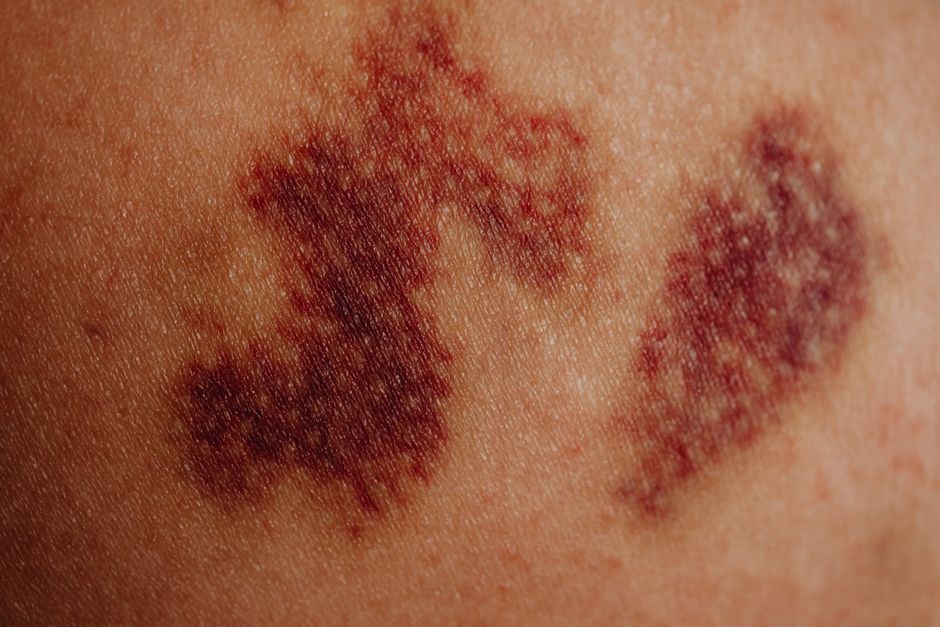
What Does Squamous Cell Carcinoma Look Like at the Very Beginning?
Early squamous cell carcinoma can be easy to miss. It often starts as a flat, scaly area of skin that feels rough, similar to sandpaper. The color is usually red or pink, but it can also be brown, or the same color as your natural skin tone.
Some early SCCs look like a small, crusty sore that never quite heals. Others resemble a wart that grows slowly. You might notice a patch of skin that bleeds easily when bumped or scratched, then scabs over, only to bleed again later. This cycle of crusting and bleeding is a common early warning sign.
A precancerous condition called actinic keratosis often precedes SCC. These appear as rough, dry patches on sun-damaged skin. While most actinic keratoses never turn into cancer, a small percentage do, and it is impossible to predict which ones will. If you have these patches, a dermatologist should examine them.
What Are the Most Common Visible Signs of Squamous Cell Carcinoma?
SCC is not one single look. It presents in several different forms, which makes self-diagnosis unreliable. The most frequently reported signs include:
- A scaly, red patch with an irregular border that does not heal
- An open sore that oozes or bleeds and persists for weeks
- A raised growth with a central depression that may crust over
- A wart-like bump that grows rapidly and develops a hard surface
- A firm, dome-shaped nodule that feels tender to the touch
The key feature across all these forms is persistence. A normal scrape or sore heals within a week or two. An SCC does not follow that timeline. If a spot has not healed after several weeks, or if it keeps returning in the same place, it warrants a medical evaluation.
SCCs on the lip are particularly dangerous. They often appear as a persistent, scaly patch or a sore that will not heal on the lower lip. They can feel like a rough spot that catches your tongue. Lip SCCs have a higher risk of spreading than those on other parts of the body.
How Does Squamous Cell Carcinoma Progress Through Its Stages?
Doctors stage SCC based on how far the cancer has grown and spread. The staging system helps determine treatment and gives a sense of prognosis. Understanding the stages requires knowing that SCC begins in the epidermis, the top layer of skin.
Stage 0: The cancer is confined to the epidermis and has not invaded deeper layers. This is called carcinoma in situ, sometimes referred to as Bowen’s disease. It looks like a slowly growing, scaly, reddish patch that may resemble psoriasis or eczema.
Stage 1: The tumor has grown into the dermis, the second layer of skin, but is smaller than 2 centimeters across. It has not spread to lymph nodes or other organs. These are considered low-risk lesions when they lack high-risk features.
Stage 2: The tumor is larger than 2 centimeters, or it has grown into deeper tissues of the skin. It may show signs of invading nerves or blood vessels. High-risk features include poor differentiation of cells, a specific depth of invasion, or location on the ear or lip.
Stage 3: The cancer has spread to nearby lymph nodes or has invaded bone or other nearby structures. This stage indicates regional spread and requires more aggressive treatment.
Stage 4: The cancer has metastasized to distant organs such as the lungs, liver, or other distant lymph nodes. This is advanced disease and is the most difficult to treat successfully.
Most SCCs are diagnosed at stage 0 or stage 1, where the cure rate is extremely high with surgical removal. The risk of metastasis is generally low but increases significantly with tumor thickness, nerve involvement, and location on the ear or lip.





When Should You See a Doctor About a Suspicious Spot?
The rule dermatologists teach is the ABCDE method for melanoma, but SCC does not fit neatly into that framework. SCC follows a different pattern, so you need a different set of criteria.
See a doctor if you have a sore that does not heal within four weeks. See a doctor if you have a rough, scaly patch that is growing or changing. See a doctor if you have a growth that bleeds repeatedly without clear cause. See a doctor if you have a spot that feels tender, itches persistently, or has developed a hard rim.
The location matters as much as the appearance. SCCs on the lips, ears, eyelids, and genitals behave more aggressively than those on the trunk or arms. If you notice anything unusual in these areas, do not wait to have it checked.
Dermatologists can often tell if a spot is suspicious just by looking at it with a dermatoscope, a special magnifying lens. The only way to confirm the diagnosis is a biopsy, where a small sample of tissue is removed and examined under a microscope. If the biopsy confirms SCC, your doctor will discuss treatment options based on the stage and location.
What Treatments Are Available for Squamous Cell Carcinoma?
Treatment depends on the stage, size, location, and how aggressive the tumor appears under the microscope. For early-stage SCC, surgical removal is the standard of care.
Mohs surgery is the most precise method. The surgeon removes the cancer layer by layer, examining each layer under a microscope until no cancer cells remain. This technique spares the most healthy tissue and has the highest cure rate for SCC, particularly for tumors on the face or in high-risk locations.
Simple excision involves cutting out the entire tumor along with a margin of normal skin. The margin is checked to ensure all cancer cells were removed. This works well for smaller, low-risk tumors.
Curettage and electrodesiccation involves scraping away the cancer with a curette and using an electric needle to destroy remaining cancer cells. This is used for small, superficial SCCs but is not appropriate for aggressive or deep tumors.
Radiation therapy is an option for patients who cannot undergo surgery or for tumors in difficult locations. It delivers high-energy beams to kill cancer cells. It is effective but requires multiple sessions and does not allow for tissue confirmation that all cancer was removed.
Topical chemotherapy creams such as fluorouracil (5-FU) are sometimes used for very superficial SCC in situ, though surgical removal is generally preferred because it allows for pathological examination of the entire lesion.
For advanced SCC that has spread, immunotherapy drugs called checkpoint inhibitors have shown effectiveness. These medications help the immune system recognize and attack cancer cells. They are reserved for cases where the cancer has metastasized or cannot be removed surgically.
Can Squamous Cell Carcinoma Be Prevented?
The primary cause of SCC is cumulative ultraviolet radiation exposure from the sun or tanning beds. This is one of the best-established facts in dermatology. The damage accumulates over decades, which is why SCC most often appears in older adults, though younger people with heavy sun exposure are increasingly affected.
Daily use of a broad-spectrum sunscreen with an SPF of 30 or higher reduces the risk of developing SCC. Sun protective clothing, wide-brimmed hats, and seeking shade during peak sun hours also reduce risk. Avoiding tanning beds entirely is strongly recommended, as they emit UV radiation that significantly increases skin cancer risk.
People with fair skin, light hair, and light eyes are at higher risk. So are organ transplant recipients, who take immunosuppressive medications that reduce the skin’s ability to fight off abnormal cell growth. People with a history of extensive sun exposure, previous skin cancers, or chronic skin ulcers also face elevated risk.
Regular skin self-examinations help catch suspicious spots early. The earlier SCC is treated, the simpler the treatment and the better the outcome. Monthly self-checks using a full-length mirror and a hand mirror to examine your back and scalp are a practical habit.
What Is the Outlook for People Diagnosed with Squamous Cell Carcinoma?
The prognosis for early-stage SCC is excellent. When caught and treated while still confined to the skin, the five-year cure rate exceeds 95 percent. Recurrence after proper treatment is uncommon but possible, which is why follow-up skin exams are recommended.
The outlook changes when SCC spreads to lymph nodes or distant organs. Metastatic SCC has a much lower survival rate, though recent advances in immunotherapy have improved outcomes for some patients. The exact survival statistics vary widely based on the location of metastasis and the patient’s overall health.
One important point is that having one SCC increases your risk of developing another. People who have had one skin cancer are significantly more likely to develop additional skin cancers in the future. This means ongoing dermatologic surveillance is not optional—it is a necessary part of long-term care after a diagnosis.
Frequently Asked Questions
Can squamous cell carcinoma look like a pimple?
Yes, some SCCs can resemble a pimple or an ingrown hair that never resolves. A persistent bump that does not come to a head, does not drain, and remains for more than a month should be evaluated by a doctor.
Do squamous cell carcinomas hurt?
Many early SCCs are painless, which is why they go unnoticed. As they grow deeper, they can become tender, itchy, or painful, particularly when they invade nerves or deeper tissue layers.
How fast does squamous cell carcinoma spread?
Most SCCs grow slowly over months, but some aggressive subtypes can spread within weeks. Tumors on the ear, lip, and those arising in scars or chronic wounds have a higher risk of rapid spread.
What happens if squamous cell carcinoma is left untreated?
If left untreated, SCC continues to grow deeper into the skin and can eventually invade blood vessels, nerves, and nearby tissue. From there it can spread to lymph nodes and distant organs, which significantly complicates treatment and lowers survival rates.
