
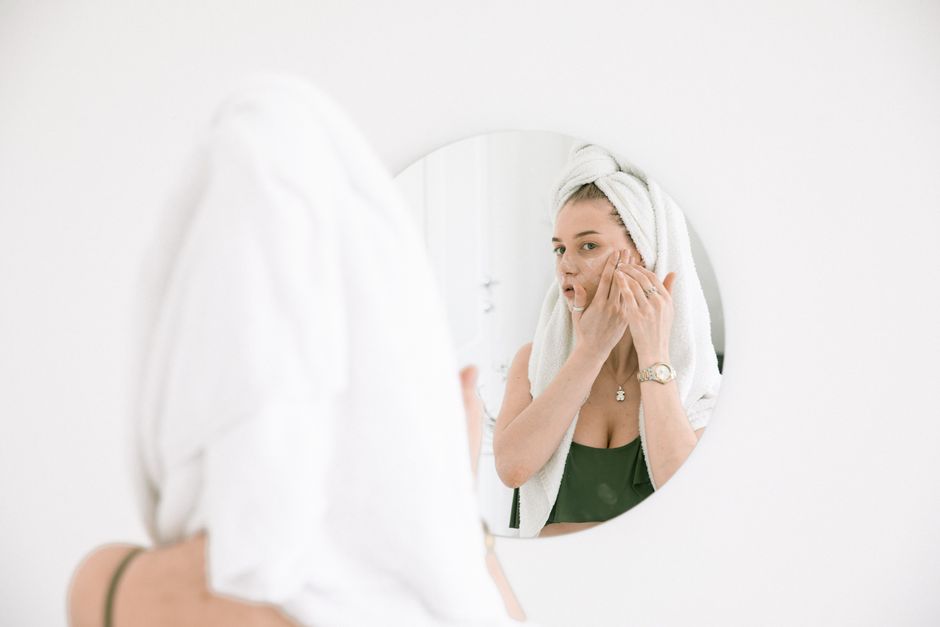
Skin purging looks like a sudden crop of small red bumps, whiteheads, or blackheads in the same area where you have been applying a new skincare product. It usually appears within a few weeks of starting an active ingredient and tends to show up in places you normally break out. The breakout is temporary, but it can look and feel almost identical to a product reaction that will not improve on its own.
That last point is the problem. Purging and irritation can look the same in the mirror. The difference is what causes them, where they appear, and what happens over the following weeks.
What Does Skin Purging Look Like?
Purging shows up as inflamed pimples, tiny bumps under the skin, or clogged pores concentrated in your usual breakout zones. People often describe it as a cluster of small whiteheads that surface quickly, sometimes overnight, in the same spots that tend to flare before a period or during a stressful stretch.
The bumps are not random. They follow the pattern your skin already tends to follow. If your chin and jaw are your problem areas, purging usually shows up there. If your forehead is where you normally get clogged pores, that is where the purge tends to appear.
What it generally does not look like:
- Redness, burning, or stinging across the whole face
- Dry, flaky, or peeling patches
- Itching or a rash-like texture
- Breakouts in places you have never broken out before
Those features point more toward irritation or a contact reaction than a true purge. That distinction matters because the right response is different for each.
Why Does Skin Purging Happen?
Purging is tied to how fast skin cells turn over. Ingredients that speed up cell turnover push existing clogged pores to the surface faster than they would have appeared on their own.
Here is the mechanism. Your pores already contain a mix of dead skin cells and oil, some of it sitting below the surface and not yet visible. When you start an active ingredient that accelerates shedding, those pre-existing blockages rise and become visible pimples. The breakout was going to happen anyway. The product just changed the timing.
This is why purging is most associated with ingredients that increase cell turnover. Retinoids are the classic example. Research on retinoid use has consistently shown that acne can worsen in the first weeks of treatment before it improves. That early worsening is a well-documented part of how these medications work.
Chemical exfoliants such as salicylic acid and glycolic acid can produce a similar effect. So can benzoyl peroxide in some people, though the pattern is less predictable.
A useful clarification: purging is a recognized clinical pattern, not a marketing term invented to excuse breakouts. Dermatologists have described the early-worsening phase of retinoid treatment for decades. What gets misused is the word itself — it is often applied to any breakout that follows any new product, including products that cannot cause a purge at all.
Which Ingredients Cause Purging?
Only ingredients that change how quickly skin cells turn over can cause a genuine purge. If a product does not do that, a breakout after using it is not purging.
Ingredients commonly linked to purging include:
- Retinoids — tretinoin, adapalene, tazarotene, and retinol
- Alpha hydroxy acids — glycolic acid, lactic acid, mandelic acid
- Beta hydroxy acids — salicylic acid
- Azelaic acid
- Benzoyl peroxide — less consistently, and more often via irritation
Ingredients that do not cause purging include most moisturizers, sunscreens, cleansers, and hydrating serums. If you break out after starting a plain moisturizer, that is not a purge. It is more likely irritation, a reaction to a specific ingredient, or a coincidence.
This matters because “it is just purging” is sometimes used to push through a product that is genuinely causing a problem. If the product cannot cause a purge by mechanism, the breakout is telling you something else.





How Long Does Purging Last?
Purging typically resolves within a few weeks to a few months, depending on the ingredient and how your skin responds. Retinoid purging tends to run longer than acid purging. Some people see it settle within two to four weeks. Others take closer to three months.
The pattern matters more than the calendar. A true purge follows a curve: it gets worse, plateaus, then gradually improves as the skin adjusts. If the breakout is still getting worse after a few months, or if it never starts improving, that is a signal to reconsider.
What purging does not do is continue indefinitely. A breakout that keeps worsening month after month is not a purge. Something else is going on — the product may be too irritating, the concentration may be too high, or you may be reacting to an ingredient.
How Can You Tell Purging Apart From a Reaction?
Purging and irritation are distinguished by location, timing, and accompanying symptoms. Location is usually the clearest clue.
Purging appears in your usual breakout areas. A reaction can appear anywhere, including areas you have never broken out in before. If you start a new serum and develop bumps on your cheeks when your breakouts have always been on your chin, that pattern points away from purging.
Timing also helps. Purging usually starts within the first few weeks of use and follows the worsen-then-improve curve. Irritation from a product can start within hours or days and often comes with redness, stinging, or dryness rather than distinct pimples.
Other signs that point toward a reaction rather than a purge:
- Burning or stinging when you apply the product
- Redness that spreads beyond the breakout areas
- Dryness, peeling, or flaking
- Itching or a rash-like texture
- Swelling around the eyes, lips, or mouth
If you have swelling of the face, lips, or throat, or trouble breathing, that is a medical emergency. Stop using the product and seek care right away.
What Should You Do While Your Skin Is Purging?
The most common advice from dermatologists is to keep using the product at the frequency your skin tolerates, rather than stopping and starting. Stopping resets the adjustment process, and restarting can bring the purge back.
That said, this is general clinical guidance, not a rule that fits everyone. Some people need to reduce how often they apply a retinoid — every other night or a few times a week — before building up. Slowing down is not the same as quitting.
Supportive steps that are widely recommended during a purge:
- Keep your routine simple. A gentle cleanser, a moisturizer, and sunscreen are enough.
- Do not add new active ingredients at the same time. Give your skin one variable at a time.
- Use a non-comedogenic moisturizer to reduce dryness from retinoids and acids.
- Wear sunscreen daily, since retinoids and acids increase sun sensitivity.
- Avoid picking. Manipulating active pimples increases the risk of scarring and dark marks.
Be cautious about stacking multiple exfoliating acids with a retinoid at the same time. That combination is a common cause of irritation that gets mistaken for a worsening purge.
When Should You Stop Using the Product?
Stop and reassess if the breakout keeps getting worse after a few months, if you develop redness, burning, or peeling, or if the bumps appear in areas you do not normally break out. Those patterns suggest irritation or a reaction rather than a purge.
Also stop if you develop swelling, hives, or any sign of a serious allergic reaction, and seek medical care.
If you are unsure whether what you are seeing is a purge or a problem, a dermatologist can help. This is a common question in clinical practice, and a visual exam usually clarifies it quickly. Prescription retinoids in particular are worth discussing with a clinician, since the early-worsening phase is expected and managing it well makes people far more likely to stick with treatment long enough to see results.
Frequently Asked Questions
How long does skin purging usually last?
Most purging settles within a few weeks to a few months, depending on the ingredient. Retinoid purging tends to run longer than purging from exfoliating acids.
Does skin purging happen in the same places you normally break out?
Yes. Purging typically appears in your usual breakout zones, such as the chin, jaw, or forehead. Bumps in areas you have never broken out in are more likely a reaction than a purge.
Can a moisturizer cause skin purging?
No. Purging only happens with ingredients that speed up skin cell turnover, such as retinoids and exfoliating acids. A breakout after starting a moisturizer points to irritation or a reaction instead.
Should you stop using a product if your skin is purging?
Most dermatologists recommend continuing at a frequency your skin can tolerate, since stopping and restarting can bring the purge back. If the breakout keeps worsening after a few months, or you develop redness, burning, or peeling, stop and reassess.
